
Natural Probiotic Foods: Sources, Benefits and How to Choose
From fermented foods to dietary supplements, discover how to choose the right natural probiotics for your needs. Science-backed advice, tailored for a Swiss audience.
What is a natural probiotic?
A natural probiotic is a live micro-organism that, when consumed in adequate amounts, confers a health benefit on the host. This reference definition, established by the ISAPP (International Scientific Association for Probiotics and Prebiotics) and published in Nature Reviews Gastroenterology in 2014, remains the international scientific consensus. The most well-documented genera are Lactobacillus, Bifidobacterium and Saccharomyces.
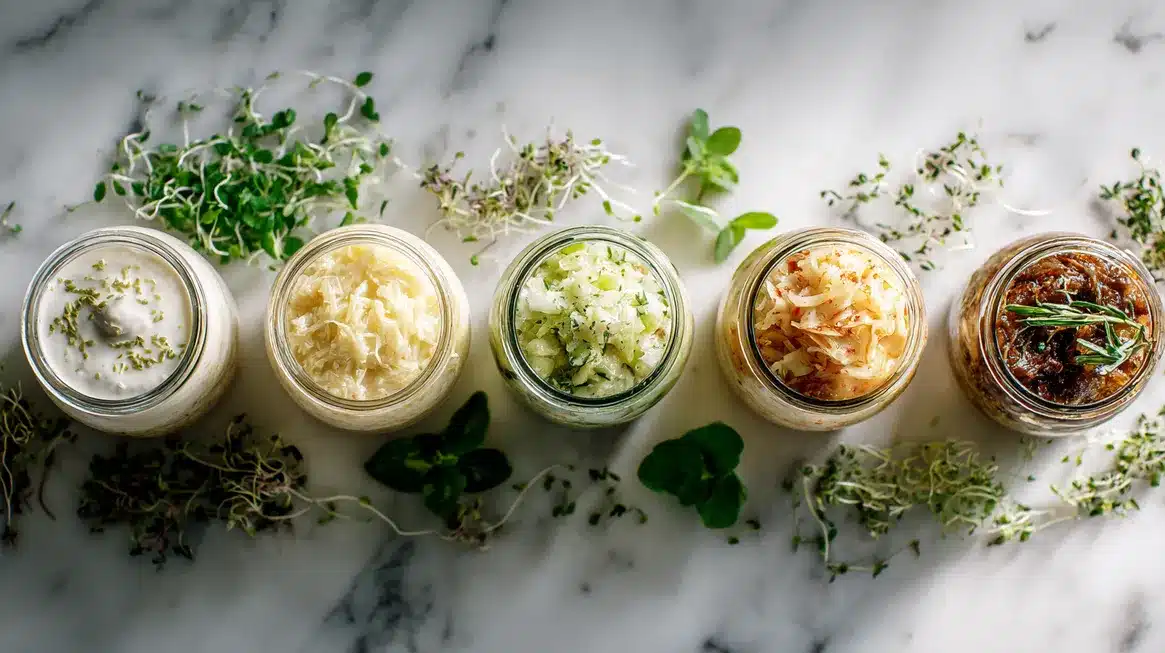
The term "natural" distinguishes probiotics derived from traditional fermentation processes — yoghurt, kefir, sauerkraut, miso — from those obtained through industrial laboratory culture. In both cases, it is the presence of live, identified strains that determines efficacy. They occur naturally in fermented foods but are also available in dietary supplements formulated with strains selected on the basis of published scientific literature.
What sets a simple fermented food apart from a genuine probiotic food is the guarantee that live micro-organisms are present in sufficient numbers at the point of consumption — and that they belong to strains whose benefits have been documented by research. Pasteurisation after fermentation destroys these micro-organisms and eliminates the probiotic effect.
💡 Key definition
A probiotic is not just any bacterium: it is a specific, live strain whose beneficial effect has been scientifically demonstrated. The genus (Lactobacillus), the species (plantarum) and the strain (299v) all matter.
What are the benefits of natural probiotics?
The benefits of probiotics for gut health are the best established. These micro-organisms play a central role in the digestive system: they help maintain a balanced gut microbiota — the ecosystem of bacteria lining the digestive tract. A healthy microbiota may support digestive comfort, help regulate bowel movement, reduce bloating and strengthen the intestinal barrier.
One of the most thoroughly documented effects concerns antibiotic-associated diarrhoea. According to a meta-analysis of 42 controlled trials published in BMJ Open (Goodman et al., 2021), co-administering probiotics with antibiotics reduces the risk of diarrhoea by 37 % in adults, particularly with Lactobacillus and Bifidobacterium strains. For irritable bowel syndrome, a meta-analysis of 82 trials in Gastroenterology (Goodoory et al., 2023) shows that certain strains — notably Lactobacillus plantarum 299v and E. coli Nissle 1917 — may help alleviate overall symptoms.
Probiotics may also contribute to the normal function of the immune system: around 70 % of gut-associated lymphoid tissue (GALT) is found in the digestive tract. A review published in Mucosal Immunology by researchers from ETH Zürich and PharmaBiome AG (Hitch, Slack et al., 2022) highlights the potential of microbiome-based interventions — probiotics, prebiotics and faecal transplantation — on immune system modulation. Emerging research also explores the gut-brain axis. A systematic review in International Journal of Molecular Sciences (Alli et al., 2022) reports that probiotics and synbiotics have been associated with a modest reduction in depressive symptoms, although further studies are needed.
Additional lines of research suggest that certain strains may influence lipid metabolism and may support weight management as part of a healthy lifestyle, though results remain modest. Probiotics may also help maintain a balanced vaginal flora, dominated by Lactobacillus species, and support absorption of certain B vitamins and vitamin K synthesised by gut flora.
| Benefit | Mechanism | Key strains studied |
|---|---|---|
| Digestive comfort | Microbiota balance, reduced bloating | L. acidophilus, B. lactis |
| Antibiotic diarrhoea | Restoring flora after treatment | S. boulardii, L. rhamnosus GG |
| Immune system | Modulating the intestinal immune response | L. casei, B. lactis |
| Irritable bowel | Supporting the intestinal barrier | L. plantarum 299v, B. infantis 35624 |
| Gut-brain axis | Influence on stress and mental health | L. helveticus, B. longum |
Which foods are naturally rich in probiotics?
The most accessible probiotic-rich foods in Switzerland are produced through lactic or alcoholic fermentation. Yoghurt, kefir and any unpasteurised fermented milk product are the primary everyday sources of natural probiotics. Natural yoghurt contains strains of the genera Lactobacillus bulgaricus and Streptococcus thermophilus, while kefir — made from milk and kefir grains — offers a broader microbial diversity thanks to the coexistence of lactic acid-producing bacteria and beneficial yeasts. A systematic review of 16 clinical trials (Kairey et al., Nutrition Reviews, 2023) describes kefir as a safe product with a unique microbiological profile among fermented foods.
Fermented vegetables are excellent plant-based sources: raw sauerkraut (rich in live Lactobacillus), Korean kimchi, and lacto-fermented vegetables preserved in glass jars. Fermented soy products — tempeh, miso and traditional soy sauce — provide different strains. Kombucha (a fermented tea drink) and raw-milk cheese complete the list. Note: unfiltered apple cider vinegar, despite its popularity, does not contain documented probiotic strains. Similarly, sourdough bread harbours lactobacilli during fermentation, but baking temperatures (>200 °C) destroy all live cultures.
A randomised clinical trial conducted at Stanford (Wastyk, Sonnenburg et al., Cell, 2021) showed that a diet rich in fermented foods increases gut microbiome diversity and reduces inflammatory markers — a key finding for overall health.
💡 The anti-pasteurisation check
Always check that the product has not been pasteurised after fermentation. Pasteurisation kills live micro-organisms. Look for versions in the chilled aisle and labels reading "live fermentation" or "active cultures".
What is the difference between natural probiotics and dietary supplements?
Natural probiotic foods — yoghurt, kefir, sauerkraut, kimchi — deliver live strains within a food matrix. This matrix (proteins, fats, fibre) plays a protective role during passage through the stomach and aids bacterial survival all the way to the small intestine. The downside: the delivered microbial composition varies from batch to batch, strains are not always identified, and the exact number of live micro-organisms is rarely guaranteed.
A probiotic dietary supplement, by contrast, offers standardisation: strains identified by genus, species and strain number, a guaranteed CFU (colony-forming units) count per capsule, and controlled storage conditions. Gastro-resistant capsules protect strains from gastric acidity and target their release in the small intestine — where they are most active. In Switzerland, dietary supplements are regulated under the LDAl and the NEM ordinance, overseen by the FSVO.
According to the scientific literature, the ideal approach is to combine both: a healthy diet rich in fermented foods on a daily basis, supplemented by a targeted probiotic course when circumstances call for it (after antibiotic treatment, during digestive troubles, periods of stress or travel). Our guide covers the selection criteria for probiotics in Switzerland. A review published in EMBO Molecular Medicine by researchers from ETH Zurich and the University of Basel (Cappio Barazzone, Slack et al., 2024) underlines that the transition from an empirical approach to rational microbiome engineering remains a major challenge — which is why choosing documented strains and controlled formulations makes all the difference.
| Criterion | Fermented foods | Dietary supplement |
|---|---|---|
| Identified strains | Variable, rarely specified | Yes, by strain and quantity |
| CFU count | Not standardised | Guaranteed per capsule/dose |
| Gastric protection | Natural (food matrix) | Gastro-resistant capsule |
| Convenience | Requires variety and consistency | 1 capsule/day, easy to integrate |
| Use case | Daily, lifestyle habit | Targeted course or regular support |
How to choose a good natural probiotic
To choose a natural probiotic that suits your needs — whether a food or a supplement — several criteria make the difference. The first is strain identification. The most well-documented probiotic strains belong to the genera Lactobacillus (L. acidophilus, L. plantarum, L. rhamnosus) and Bifidobacterium (B. longum, B. lactis, B. bifidum). Each strain exerts a specific action — a suitable probiotic is one that matches your particular need.
The second criterion is dosage. Clinical studies use dosages ranging from 1 to 25 billion CFU per day depending on the indication. For fermented foods, quality depends on the fermentation process: unpasteurised, kept chilled, free from additives. For supplements, check that the CFU count is guaranteed until the expiry date (not just "at manufacture"), that strains resist gastric acid, and that the manufacturer is transparent about the composition.
In Switzerland, make sure the product complies with FSVO guidelines and the NEM ordinance. Prioritise quality over price: products manufactured in Switzerland with batch-by-batch traceability offer stronger guarantees than poorly documented imports. All information about strains, dosage and storage should be clearly displayed on the label. If you have a pre-existing condition — Crohn's disease, severe irritable bowel syndrome — consult a healthcare professional before starting any supplementation.
FloraPro 7 — SwiLab's multi-strain probiotic
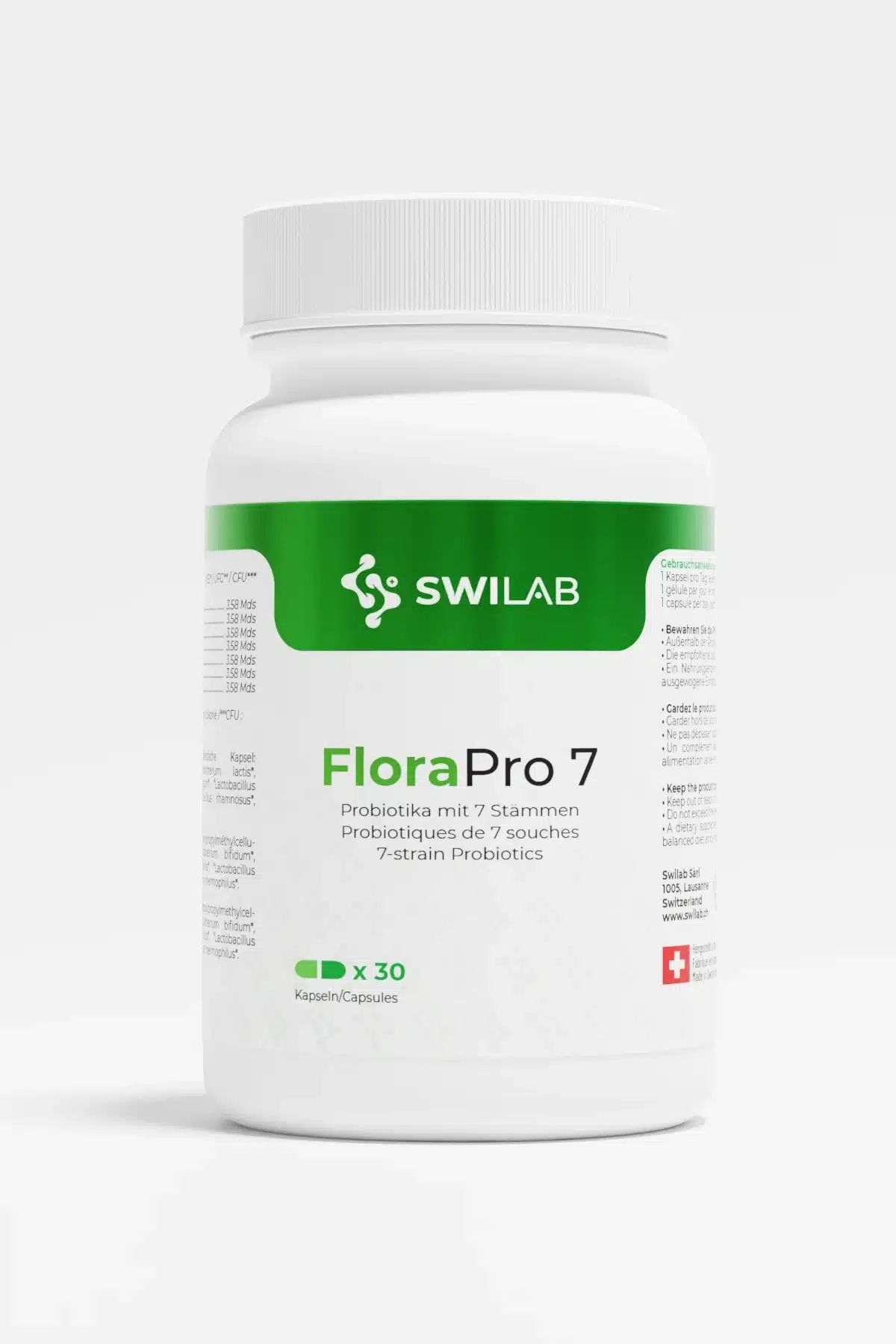
FloraPro 7 combines 7 strains from the Lactobacillus, Bifidobacterium and Streptococcus families, selected based on published scientific literature. 25 billion CFU per gastro-resistant vegetable HPMC capsule, freeze-dried strains.
- 7 strains identified on the label with exact quantities
- 25 billion CFU per gastro-resistant capsule
- Freeze-dried strains — viability controlled until expiry
- Manufactured and developed in Switzerland · FSVO compliant
- Vegetable HPMC capsule, no unnecessary additives
⚠️ Dietary supplement — does not replace a varied, balanced diet or a healthy lifestyle. Consult a healthcare professional for specific indications, pregnancy, breastfeeding or immunosuppression.
When and how to take a probiotic course
A probiotic course may be warranted in several well-identified situations. The most thoroughly documented: after antibiotic treatment, when the gut flora has been disrupted. The meta-analysis by Hempel et al. (JAMA, 2012 — 63 trials, 11,811 participants) showed a significant reduction in diarrhoea risk when probiotics are administered alongside antibiotics. Other contexts include irregular bowel movements, recurring bloating, periods of stress or travel.
Dosage depends on the product and the goal. For a supplement such as FloraPro 7, the recommendation is 1 capsule per day, preferably with or just before a meal — food buffers gastric acidity and improves strain survival through to the gut. Avoid hot beverages (coffee, tea) at the time of intake. The recommended course duration is a minimum of 4 to 8 weeks — the first measurable changes in the microbiome typically appear after approximately 4 weeks of regular consumption.
To maximise the effect, combine your probiotics with prebiotics — the fibres that feed beneficial bacteria. Prebiotic sources include garlic, onion, leek, banana and legumes. This synbiotic combination (probiotics + prebiotics) is considered one of the most effective strategies for supporting gut flora balance. The detailed course protocols in our probiotics guide cover each situation.
💡 Probiotics + prebiotics synergy
Combine your probiotics (yoghurt, kefir, sauerkraut or supplement) with prebiotics (garlic, onion, leek, banana, oats, legumes) for an optimal synbiotic effect on your microbiota.
Are there any precautions to take with probiotics?
Probiotics are considered safe for the vast majority of healthy individuals. The meta-analysis by Goodoory et al. (2023), covering over 7,000 patients across 55 trials, found no increased risk of adverse effects with probiotics compared to placebo. The most common side effects are transient and mild: bloating, gas or slight digestive discomfort during the first few days. These symptoms reflect the microbiota adjusting and typically subside within a few days.
⚠️ At-risk populations
Immunocompromised individuals, intensive care patients, premature infants and people with central venous catheters face a rare but documented risk of infection from probiotic strains. For these populations, medical consultation before any intake is essential.
Drug interactions are rare but possible — particularly with immunosuppressants. People with Crohn's disease, severe irritable bowel syndrome or a diagnosed severe dysbiosis should consult a healthcare professional before starting supplementation. A review published in Gut Microbes by gastroenterologists from Bern University Hospital (Inselspital) and Zurich University Hospital (Caparrós, Wiest, Scharl et al., 2021) details the interactions between dysbiosis, bacterial translocation and inflammation in Crohn's disease — underscoring the importance of medical guidance when a severe imbalance of the gut flora is involved. In Switzerland, the FSVO reminds consumers that dietary supplements are not medicines and must not be presented as such.
The primary precaution remains choosing a quality natural probiotic, correctly dosed, with identified strains and appropriate storage. Keep your supplements cool after opening, respect the recommended daily dose, and never use a dietary supplement as a substitute for a varied, balanced diet.
Scientific sources & references
Goodman C. et al. — Probiotics for the prevention of antibiotic-associated diarrhoea
BMJ Open, 2021, 11(8):e043054. 42 controlled trials (11,305 participants).
DOIHempel S. et al. — Probiotics for the Prevention and Treatment of Antibiotic-Associated Diarrhea
JAMA, 2012, 307(18):1959-69. 63 randomised trials, 11,811 participants.
DOIGoodoory V.C. et al. — Efficacy of Probiotics in Irritable Bowel Syndrome
Gastroenterology, 2023, 165(5):1206-1218. 82 trials (10,332 patients).
DOIWastyk H.C., Sonnenburg J.L. et al. — Gut-microbiota-targeted diets modulate human immune status
Cell, 2021, 184(16):4137-4153. Stanford randomised clinical trial.
DOIKairey L. et al. — The effects of kefir consumption on human health
Nutrition Reviews, 2023, 81(3):267-286. 16 clinical trials.
DOIRibera C. et al. — Probiotic, prebiotic, synbiotic and fermented food supplementation in psychiatric disorders
Neuroscience and Biobehavioral Reviews, 2024, 158:105561.
DOIHill C. et al. — ISAPP consensus statement on the definition and scope of probiotics
Nature Reviews Gastroenterology & Hepatology, 2014, 11:506-514.
DOIFSVO / BLV — Dietary supplements: Swiss regulations and recommendations
Federal Food Safety and Veterinary Office. Swiss regulatory framework (LDAl / NEM ordinance).
FSVOSolliard C. et al. — Dietary supplement consumption in Switzerland
Swiss Nutrition Bulletin, 2023. FSVO/BLV survey.
PDF🇨🇭 Hitch T.C.A., Slack E. et al. — Microbiome-based interventions to modulate gut ecology and the immune system
Mucosal Immunology, 2022, 15(6):1095-1113. ETH Zürich & PharmaBiome AG.
DOI🇨🇭 Cappio Barazzone E., Slack E. et al. — Diagnosing and engineering gut microbiomes
EMBO Molecular Medicine, 2024, 16(11):2660-2677. ETH Zurich & University of Basel.
DOI🇨🇭 Caparrós E., Wiest R., Scharl M. et al. — Dysbiotic microbiota interactions in Crohn's disease
Gut Microbes, 2021, 13(1):1949096. Inselspital Bern & Zurich University Hospital.
DOIThis content is provided for informational purposes only and does not constitute medical advice. For any health-related questions, consult a doctor or pharmacist. SwiLab · Developed and produced in Switzerland 🇨🇭