
Probiotics and gut flora: how to restore and protect your microbiome
Dysbiosis symptoms, situation-based restoration protocols and verified scientific data. A comprehensive guide for Switzerland.
What is gut flora?
Gut microbiota: an ecosystem at the heart of your health
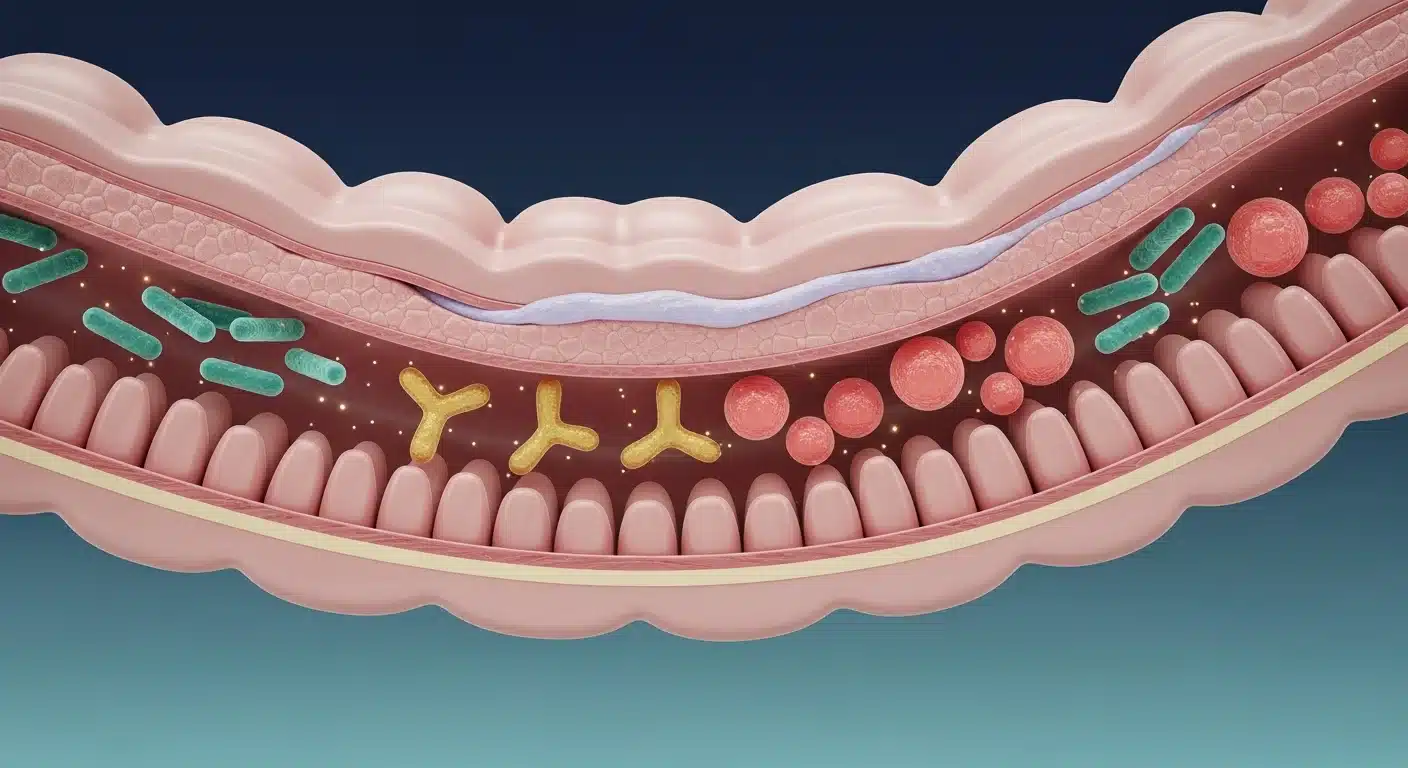
Gut flora, or gut microbiota, refers to all the microorganisms — bacteria, yeasts, viruses and fungi — that colonise our digestive system. This ecosystem, unique to each individual, weighs between 1 and 2 kg in the human body and includes over 800 different bacterial species. A large proportion of these microorganisms reside in the colon and small intestine. To maintain this balance, probiotics — living microorganisms with documented benefits — are one of the most studied approaches in research.
The 4 major bacterial families of the gut
The health of the microbiome depends less on quantity than on the diversity of species present. Four major groups (phyla) dominate:
| Phylum | Key bacteria | Main role |
|---|---|---|
| Firmicutes | Lactobacilli, enterococci | Carbohydrate fermentation, production of SCFAs that nourish the intestinal wall |
| Bacteroidetes | Bacteroides, Prevotella | Breakdown of complex fibres, metabolic regulation |
| Actinobacteria | Bifidobacteria | Vitamin synthesis, immune support — dominant in infants |
| Proteobacteria | E. coli, Helicobacter | A minority in healthy individuals — their increase signals dysbiosis |
Gut flora, microbiota, microbiome: what are the differences?
The microbiota refers to the microorganisms themselves. The microbiome encompasses their genetic material (150 times more genes than the human genome). The term "gut flora", although historically imprecise (bacteria are not plants), remains the most commonly used expression.
Why your gut flora is essential
The role of the microbiome extends far beyond simple digestion. Your gut flora is involved in three major vital functions.
Digestion and nutrient absorption
The microbiome plays a central role in digestive health. Gut bacteria break down dietary fibres that our own enzymes cannot process. They produce SCFAs (butyrate, propionate, acetate) that nourish the cells of the colon, regulate bowel movements and contribute to daily digestive comfort. They also synthesise essential vitamins: B12, K2, B9, B6.
70% of your immunity resides in the gut
The gut-brain axis: when flora influences mood
The gut communicates with the brain via the vagus nerve and the enteric nervous system. An imbalanced flora can accompany periods of stress, anxiety or emotional fatigue, with a direct impact on mental health. This is why it is referred to as the "second brain".
Imbalanced gut flora: how to recognise it
The symptoms of dysbiosis
Dysbiosis refers to the disruption of the balance between beneficial and pathogenic bacteria in the gut. The most common signs:
| Area | Common symptoms |
|---|---|
| Digestive | Bloating, gas, stomach pain, recurrent diarrhoea or constipation, digestive discomfort after meals |
| Immune | Frequent infections (colds, cystitis, vaginal thrush), increased allergies |
| Skin | Eczema, acne, psoriasis linked to systemic inflammation |
| General | Unexplained fatigue, mood disturbances, disrupted sleep |
Note: prolonged dysbiosis is also associated with more serious intestinal disorders such as irritable bowel syndrome or Crohn's disease, and can disrupt the vaginal flora in women. If you experience persistent digestive problems, it is essential to consult a healthcare professional to rule out other causes.
The causes that destroy gut flora
Several factors weaken the microbiome: certain medications such as antibiotics (which eliminate both pathogenic and beneficial bacteria indiscriminately), chronic stress (via cortisol secretion), a diet low in fibre and high in refined sugars, excessive alcohol consumption, lack of sleep, and natural ageing (bacterial diversity declines from age 65).
Did you know?
A single course of broad-spectrum antibiotics can eliminate up to 30% of intestinal bacterial species. Some of these do not return for 6 months, or ever. Conversely, a healthy and diverse diet is the first care you can give your microbiome.
Should you get a microbiome test in Switzerland?
Microbiome analyses using DNA sequencing are available in Switzerland, notably through specialised laboratories such as Medisyn or home kits. They provide an overview of bacterial diversity and potential imbalances. However, interpretation remains complex and "norms" vary from person to person. These tests do not replace a consultation with a gastroenterologist or nutritional physician. In Switzerland, the gastroenterology departments at University Hospital Zurich (USZ), Inselspital Bern or University Hospital Basel can support cases of severe dysbiosis or chronic digestive disorders.
What role do probiotics play in gut flora?
How probiotics work in the gut
Probiotics are living microorganisms that, when ingested in sufficient quantities, confer a health benefit. Available as food supplements (in capsule, powder or liquid form) or naturally present in certain foods, the most studied strains belong to the genera Lactobacillus, Bifidobacterium and the yeast Saccharomyces. To learn how to choose the right probiotic and understand their mechanism of action, read our guide to probiotics: strains, benefits and selection criteria.
In summary, probiotics colonise the intestinal mucosa, compete with pathogenic germs, produce lactic acid and antimicrobial substances, and help strengthen the intestinal barrier and the local immune response.
What the research says: a real but nuanced effect
Probiotics can thus help relieve gastrointestinal symptoms and prevent certain complications. However, a meta-analysis published in BMC Medicine (Éliás et al., 2023, 15 RCTs) shows that probiotics do not significantly improve microbial diversity during antibiotic treatment. The restoration of this diversity appears to occur naturally within 3 to 8 weeks, with or without probiotics.
⚠️ Important caveat
Probiotics primarily help reduce symptoms (diarrhoea, bloating, discomfort), but their impact on the overall diversity of the microbiome is still debated. They do not "recreate" a flora — they support it while it rebuilds itself.
Probiotics and prebiotics: an essential duo
Prebiotics are non-digestible fibres (inulin, FOS, GOS) that selectively nourish beneficial bacteria. The combination of probiotics + prebiotics (synbiotics) promotes the establishment and growth of good bacteria. The best dietary sources of prebiotics: garlic, onion, leek, banana, oats, legumes and chicory.
Restoring gut flora with probiotics: protocols by situation
After antibiotic treatment
Broad-spectrum antibiotics can reduce microbiome diversity by 30 to 50%. Certain species do not return for 6 months (Schwartz et al., Genome Medicine, 2020). When should you take probiotics in this case? The ideal time to start a multi-strain probiotic (L. rhamnosus GG, S. boulardii) is from the beginning of treatment, taken at least 2 hours apart from the medication, and continuing for 2 to 4 weeks after the course ends. Combine with a balanced diet rich in prebiotic fibres to accelerate recolonisation.
Irritable bowel syndrome (IBS)
A meta-analysis of 82 trials including over 10'000 patients (Goodoory et al., Gastroenterology, 2023) suggests that certain strains may relieve IBS symptoms: Escherichia strains with moderate evidence on global symptoms, and Lactobacillus plantarum 299v with low-level evidence. Bifidobacterium strains show a possible effect on abdominal pain. Recommended course duration: 4 to 12 weeks. The authors note, however, that the certainty of evidence remains overall low to very low. For any prolonged use, seek advice from your doctor.
Gut flora during pregnancy and in infants
The microbiome is established from birth, influenced by the mode of delivery and breastfeeding. Breast milk contains natural prebiotics (oligosaccharides) that nourish the infant's first bacteria. In pregnant women, probiotics support bowel regularity, help maintain the balance of the vaginal flora and promote an optimal microbiome passed on to the baby. In infants, L. reuteri is the most studied strain for colic. Any mother wishing to supplement her child should seek medical advice first.
Chronic stress and gut flora
The cortisol secreted during stress weakens the intestinal barrier and promotes pathogenic bacteria. Certain strains, known as "psychobiotics", are being studied for their positive effect on the gut-brain axis: L. helveticus R0052 and B. longum R0175 showed a reduction in psychological distress and urinary cortisol in a randomised clinical trial involving healthy volunteers (Messaoudi et al., British Journal of Nutrition, 2011). However, probiotics do not replace work on the root causes of stress, nor psychological support if needed.
Good to know: traveller's diarrhoea
When travelling to high-risk areas, traveller's diarrhoea is often caused by germs such as Escherichia coli. S. boulardii, started a few days before departure, may modestly reduce the risk. Consulting a healthcare professional before travelling is recommended.
Overview: which probiotic protocol for your situation?
After antibiotics
L. rhamnosus GG S. boulardii
From the start of treatment, 2 hours after the medication. Continue for 2 to 4 weeks after the course.
Pregnancy & infants
L. reuteri L. rhamnosus
Support for bowel regularity and vaginal flora. For babies: L. reuteri for colic. Medical advice required.
Irritable bowel syndrome (IBS)
L. plantarum 299v Bifidobacterium
Course of 4 to 12 weeks. Level of evidence: low to moderate. Medical supervision recommended.
Chronic stress
L. helveticus R0052 B. longum R0175
Effect on psychological distress and cortisol. A complement, not a substitute for psychological support.
Traveller's diarrhoea
S. boulardii
Start a few days before departure. Moderate effect with good tolerability.
Daily prevention
Multi-strain ≥ 10 bn CFU
Fibre-rich diet + fermented foods + physical activity. Course of 1 to 3 months if needed.
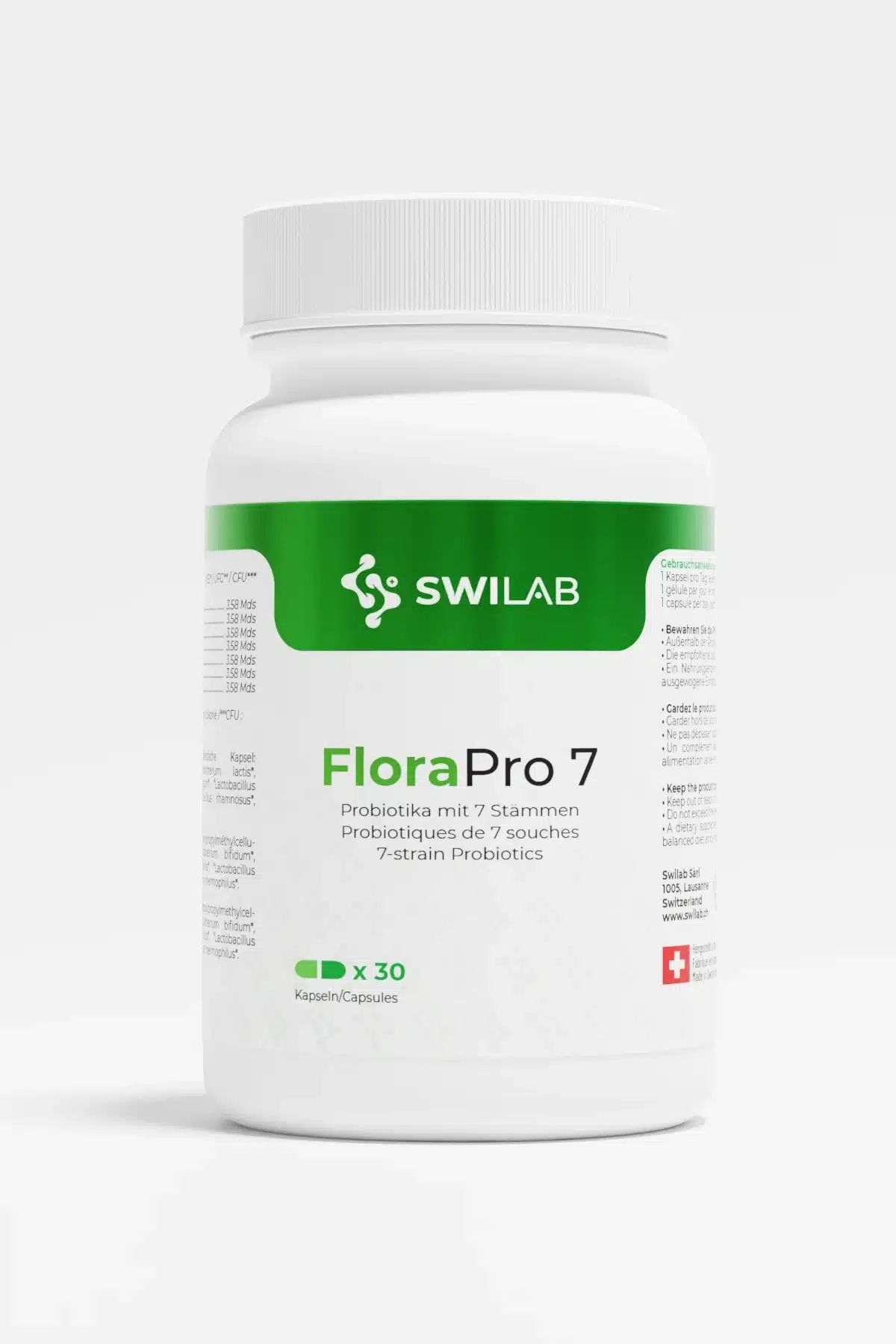
FloraPro 7 — Multi-strain probiotic by Swilab
Our formula contains the strains mentioned in these protocols: L. rhamnosus, B. lactis, L. plantarum and 4 other documented strains. 25 billion CFU per gastro-resistant vegetable capsule.
- L. rhamnosus — post-antibiotic support
- B. lactis · B. longum — Bifidobacterium family
- L. plantarum — digestive comfort
- Gastro-resistant HPMC capsules
⚠️ Food supplement. Does not replace a varied and balanced diet or a healthy lifestyle. If in doubt, consult a healthcare professional.
How long does it take to rebuild gut flora?
What the studies show
The duration of restoration depends on the cause of the imbalance, age and lifestyle. Here are the approximate timeframes from the scientific literature:
| Situation | Onset of improvement | Full restoration |
|---|---|---|
| After antibiotics (short course) | 2 to 4 weeks | 3 to 6 months |
| After antibiotics (long course) | 4 to 8 weeks | 6 to 12 months, sometimes longer |
| Stress / poor diet | 2 to 3 weeks | 2 to 3 months |
| Acute gastroenteritis | A few days | 2 to 4 weeks |
Lifestyle habits that protect your microbiome every day
Beyond probiotic courses, several habits help support the microbiome sustainably: a balanced and diverse diet rich in fibre (30 g/day recommended), regular consumption of natural probiotic foods and fermented drinks (kefir, kombucha), regular physical activity, quality sleep and stress management. In Switzerland, access to local fermented products (mountain yoghurts, raw milk cheeses) is an asset worth leveraging to maintain healthy gut flora.
FAQ — Probiotics and gut flora
How do I know if my gut flora is out of balance?
The most common signs are frequent bloating, irregular bowel movements (diarrhoea or constipation), persistent fatigue, recurrent infections or skin problems. If these symptoms last more than 2 to 3 weeks, consult a healthcare professional.
Does gut flora regenerate on its own?
Yes, the microbiota has a natural capacity for resilience. After a moderate imbalance, it can recover its initial composition within a few weeks. However, after severe or prolonged disruptions (broad-spectrum antibiotics, chronic stress), certain species may disappear permanently. Probiotics and a fibre-rich diet accelerate this recovery.
What is the best probiotic for gut flora?
There is no single "best" universal probiotic: the choice depends on your situation and needs. For general support, choose a quality multi-strain product (Lactobacillus + Bifidobacterium) dosed at a minimum of 10 billion CFU with gastro-resistant protection. Read our guide to choosing the right probiotic or discover our FloraPro 7 formula.
Gut flora and weight gain: is there a link?
Yes, the composition of the microbiota influences energy metabolism and fat storage. Studies show a modest effect of probiotics on weight (approximately –0.9 kg over 8 to 12 weeks). For a full analysis, read our article on probiotics and weight loss.
Do probiotics have side effects?
In terms of safety, probiotics are well tolerated by the vast majority of healthy individuals. Mild side effects (bloating, gas) may occur during the first few days — this is a temporary reaction related to the microbiome adapting. The risk is virtually zero, except for immunocompromised individuals, for whom professional advice is essential before taking any food supplement.
Where can I find natural probiotics for gut flora?
The best dietary sources of probiotics are fermented foods: plain yoghurt, kefir, unpasteurised sauerkraut, kimchi, miso and kombucha. For a complete guide, read our article on natural probiotics.
Scientific sources & references (PubMed)
Goodman C. et al. — Probiotics for the prevention of antibiotic-associated diarrhoea
BMJ Open, 2021, 11(8). 42 RCTs, 11'305 participants.
DOIÉliás A.J. et al. — Probiotic supplementation during antibiotic treatment is unjustified in maintaining the gut microbiome diversity
BMC Medicine, 2023, 21, 262. 15 RCTs. Meta-analysis and systematic review.
DOISchwartz D.J. et al. — Understanding the impact of antibiotic perturbation on the human microbiome
Genome Medicine, 2020, 12, 82. Comprehensive review.
DOIGoodoory V.C. et al. — Efficacy of Probiotics in Irritable Bowel Syndrome: Systematic Review and Meta-analysis
Gastroenterology, 2023, 165(5), 1206-1218. 82 RCTs, 10'332 patients.
DOIMessaoudi M. et al. — Assessment of psychotropic-like properties of a probiotic formulation (L. helveticus R0052 and B. longum R0175)
British Journal of Nutrition, 2011, 105(5), 755-764. Randomised double-blind clinical trial.
DOIHitch T.C.A., Slack E. et al. — Microbiome-based interventions to modulate gut ecology and the immune system
Mucosal Immunology, 2022. ETH Zürich / PharmaBiome AG.
This content is provided for informational purposes only and does not constitute medical advice. Food supplements do not replace a varied and balanced diet or a healthy lifestyle. Before starting any supplementation, consult a doctor or qualified healthcare professional. In Switzerland, food supplements are governed by the FoodA and supervised by the FSVO. Swilab · Developed and manufactured in Switzerland 🇨🇭