
Everything science knows about probiotics: from the definition to practical use. With an interactive quiz, a comparison table and verified references.
Summarykey takeaways
Efficacy depends on the strain, not just the genus. Quality probiotics combine strains backed by clinical trials, a dose expressed in billions of CFU and a gastro-resistant capsule that protects the freeze-dried bacteria on their way to the gut. FloraPro 7, made in Switzerland, brings together 7 strains and 25 billion CFU in one capsule a day. The right choice then depends on your situation and individual profile.
According to the international definition (FAO/WHO, 2001; updated by the ISAPP, 2014), probiotics are live micro-organisms that provide health benefits when consumed in adequate amounts.¹ The term covers specific bacteria, in particular lactic acid bacteria (lactic-acid cultures) of the genera Lactobacillus and Bifidobacterium, as well as yeasts such as Saccharomyces boulardii.²
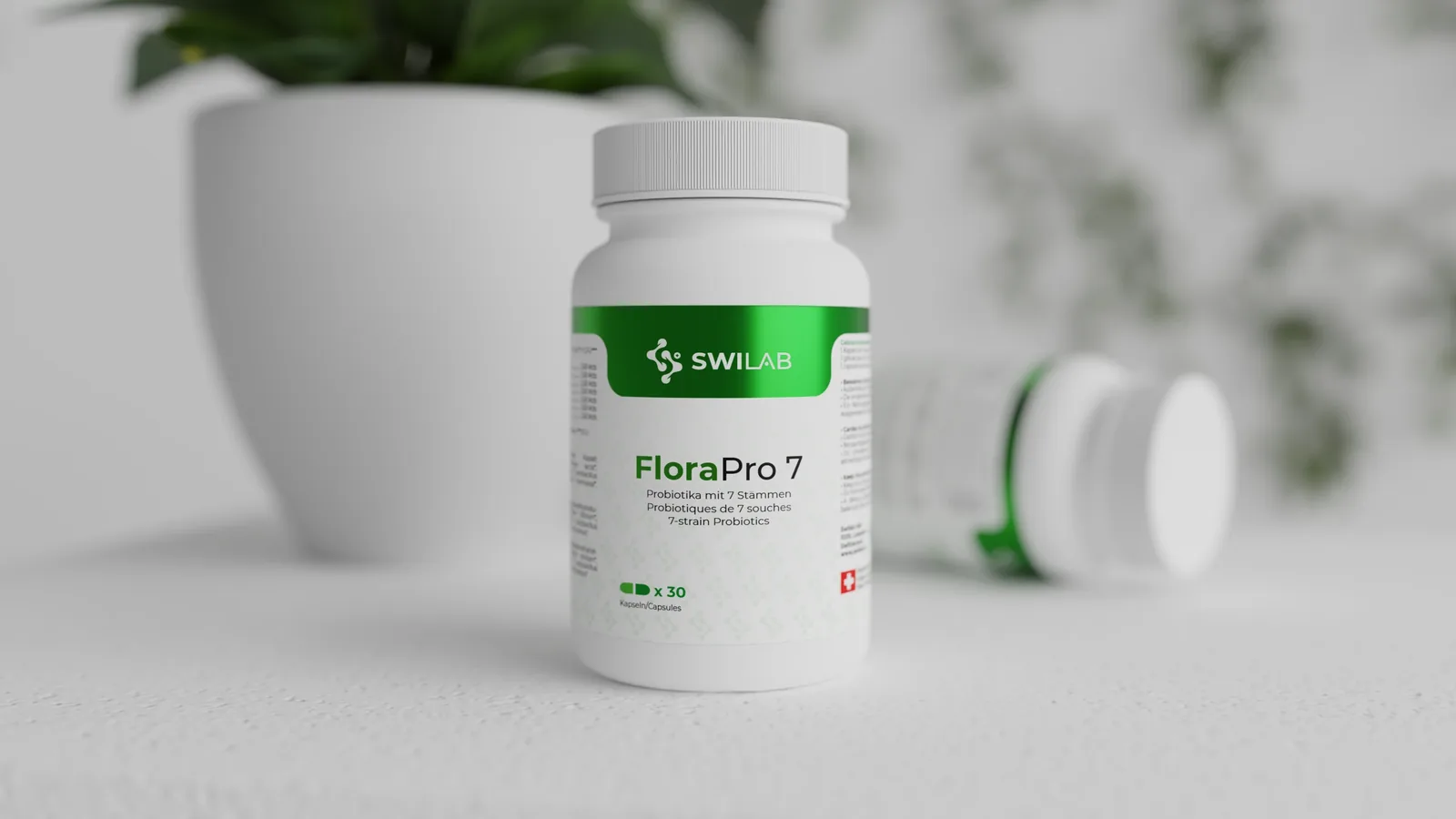
Beneficial bacteria and yeasts that act directly in the gut. The therapeutic effect is generally strain-specific: L. rhamnosus GG does not have the same properties as generic L. rhamnosus: each strain contributes to health in its own way.³
Substrates such as inulin and fructo-oligosaccharides (FOS) that selectively feed beneficial bacteria. They amplify the effect of probiotics.⁴
Short-chain fatty acids (butyrate, propionate), antimicrobial peptides and enzymes produced by probiotic activity. A fast-growing field of research.⁵
A combination of probiotics and prebiotics in a single formula. This synergy could improve colonisation and efficacy, but the clinical evidence remains preliminary.⁶
The probiotic is taken as a capsule, sachet or fermented food. Gastric protection determines how well the bacteria survive the acidity of the stomach.
Without adequate protection, many probiotic strains lose a significant part of their viability during gastric passage (pH < 2): some in vitro studies report up to 90% loss for the most sensitive strains (Corcoran et al., 2005).⁷ The gastro-protected capsule is therefore decisive.
The surviving bacteria become active in the small intestine, adhere to the gut lining and compete with pathogens, such as certain strains of Escherichia coli or Clostridium difficile, for nutrients and space.⁸
Production of lactic acid, strengthening of the gut barrier, modulation of the immune system and production of postbiotics. Metabolic activity starts within a few hours, but clinically measurable effects require several weeks of regular intake.⁹
These four steps describe the overall journey. In detail, each mechanism, adhesion to the mucosa, competition with pathogenic bacteria, production of short-chain fatty acids, dialogue with immune cells, follows a precise biological logic that we break down in how a probiotic actually works.
Our digestive tract is home to around 38,000 billion micro-organisms: bacteria, yeasts and fungi.¹⁰ This complex ecosystem, called the gut microbiota, plays a central role in digestion, immunity, vitamin synthesis and protection of the gut lining. A healthy microbiota is defined by its diversity: the more varied the gut flora, the more resilient the body.¹¹

The gut microbiota is involved in the digestion of dietary fibre, the production of vitamins (vitamin K2 and certain B vitamins), the regulation of the immune system, around 70% of the body’s immune cells are located in the digestive tract (GALT), and communication with the brain via the gut-brain axis.¹² It also influences energy metabolism, body weight and even mood. The balance of the gut flora is therefore a fundamental parameter of overall health, and targeted probiotic intake can help support this balance. Beyond digestion, the gut microbiota is the subject of research in a wide range of areas, from intestinal transit to metabolism, and even colorectal cancer, but many of these avenues remain exploratory.
Dysbiosis refers to an imbalance of the gut microbiota, characterised by a loss of diversity or an overgrowth of pathogenic bacteria. It is associated with many disorders: irritable bowel syndrome, chronic inflammatory diseases, allergies and even certain metabolic conditions.¹³
They wipe out beneficial bacteria along with pathogens: the gut flora can take several months to rebuild.¹⁴ A supportive probiotic course is frequently recommended to prevent complications such as diarrhoea or yeast infections.
Increases the permeability of the gut lining and favours pathogenic bacteria through cortisol metabolism.¹⁵
A diet low in fibre and high in refined sugars reduces bacterial diversity. Ultra-processed foods are particularly harmful to the microbiota.¹⁶
Bacterial diversity naturally declines from the age of 65. Regular probiotic courses can help support the balance of the flora.¹⁷
The efficacy of a probiotic depends above all on the strain used, not simply on the genus or species. Each strain has unique properties, documented by specific clinical trials. The two most important families, lactobacilli and bifidobacteria: include strains such as Lactobacillus rhamnosus, Lactobacillus acidophilus, Bifidobacterium longum and Bifidobacterium bifidum.¹⁸
| Family | Main strains | Characteristics | Documented indications |
|---|---|---|---|
| Lactobacillus | L. acidophilusL. rhamnosus GGL. reuteriL. plantarumL. casei | Natural lactic-acid cultures of the digestive system. They produce lactic acid that inhibits harmful bacteria. | Post-antibiotic diarrhoea⁴⁸ᵇ (L. rhamnosus GG), vaginal and urinary health²⁰ (L. crispatus, L. reuteri), lactose intolerance²¹ (L. acidophilus), gut barrier²² (L. plantarum) |
| Bifidobacterium | B. longumB. bifidumB. breveB. infantisB. lactis | Dominant bacteria in infants. They ferment prebiotic fibre. Bifidobacterium longum, B. bifidum and B. lactis are the best-documented strains in adults. | Irritable bowel syndrome²³ (B. infantis), inflammatory diseases: support²⁴ (B. bifidum), regular transit²⁵ (B. lactis) |
| Streptococcus | S. thermophilus | Used in yoghurt making. It eases lactose digestion and may contribute to the normal function of the gut barrier. | Lactose digestion²⁶, immune stimulation |
| Saccharomyces | S. boulardii | A unique probiotic yeast. It stays active while taking antibiotics: antibiotics target bacteria, not yeasts. | Antibiotic-associated diarrhoea²⁷, traveller’s diarrhoea²⁸, C. difficile infection¹⁹,²⁹ |


Probiotics act through three main mechanisms: regulation of the microbiota, strengthening of the gut lining and modulation of the immune system.³¹ Their beneficial effects on digestive function and gastrointestinal symptoms are strain-dependent, shaped by how gut bacteria interact along the gastrointestinal tract. Here are the main documented benefits: with the level of evidence for each.
Probiotics support gut health and digestive function: nutrient absorption and regulation of intestinal transit. A multi-strain formula can help prevent constipation, diarrhoea and bloating: a beneficial effect supported by several consistent meta-analyses.³²
Certain strains stimulate the production of IgA antibodies and activate NK cells, contributing to immune protection. A 2024 systematic review (10 RCTs, 1,560 participants) shows that lactobacilli can improve the vaccine response in older adults, with low to moderate certainty (several trials at high risk of bias).³³ By supporting natural defences, some strains are also being studied for the prevention of infectious diarrhoea and common respiratory infections such as the common cold, with results that are still inconsistent.
B. infantis and L. rhamnosus show a significant reduction in abdominal pain and bloating after 6 to 8 weeks. Probiotics are also studied as supportive care in inflammatory bowel disease (IBD), ulcerative colitis and Crohn’s disease, though the evidence there is weaker. A 2023 meta-analysis (82 RCTs, 10,332 patients) finds a benefit for certain strains, but with an overall level of evidence rated low to very low (GRADE).³⁴
Via the gut-brain axis, certain strains influence the production of serotonin and GABA. A 2025 meta-analysis (23 RCTs, 1,401 patients) shows a significant reduction in depressive symptoms (SMD: −0.96) and a moderate reduction in anxiety (SMD: −0.59).³⁵
Lactobacilli play a dominant role in healthy vaginal flora. L. crispatus, L. rhamnosus and L. reuteri may help prevent urinary tract infections and recurrent bacterial vaginosis, with low certainty (heterogeneous results depending on the strain and the route of administration).³⁶
Via the gut-skin axis, probiotic strains may ease inflammatory conditions such as atopic eczema (atopic dermatitis) and acne. Encouraging preliminary studies, especially in infants.³⁷
L. gasseri SBT2055 was associated with a modest reduction in visceral fat in a double-blind trial.³⁸ It does not replace a balanced diet and regular physical activity. Be cautious about the claims.

Many RCTs include fewer than 200 participants: generalisation remains limited.
Most clinical trials last 4 to 12 weeks. Long-term effects are poorly documented.
Each person’s microbiota is unique: the response to the same strains varies considerably.³⁹
Positive studies are published more often: negative results remain under-represented.
A significant share of probiotic RCTs is funded by manufacturers. Independent studies tend to show more modest effects. Favour Cochrane meta-analyses, which systematically assess this bias.
From transit to mood, each effect rests on its own level of evidence: sometimes solid, sometimes still fragile. We examine them one by one, study in hand, in our overview of the genuinely proven benefits of probiotics.
The SwiLab probiotic
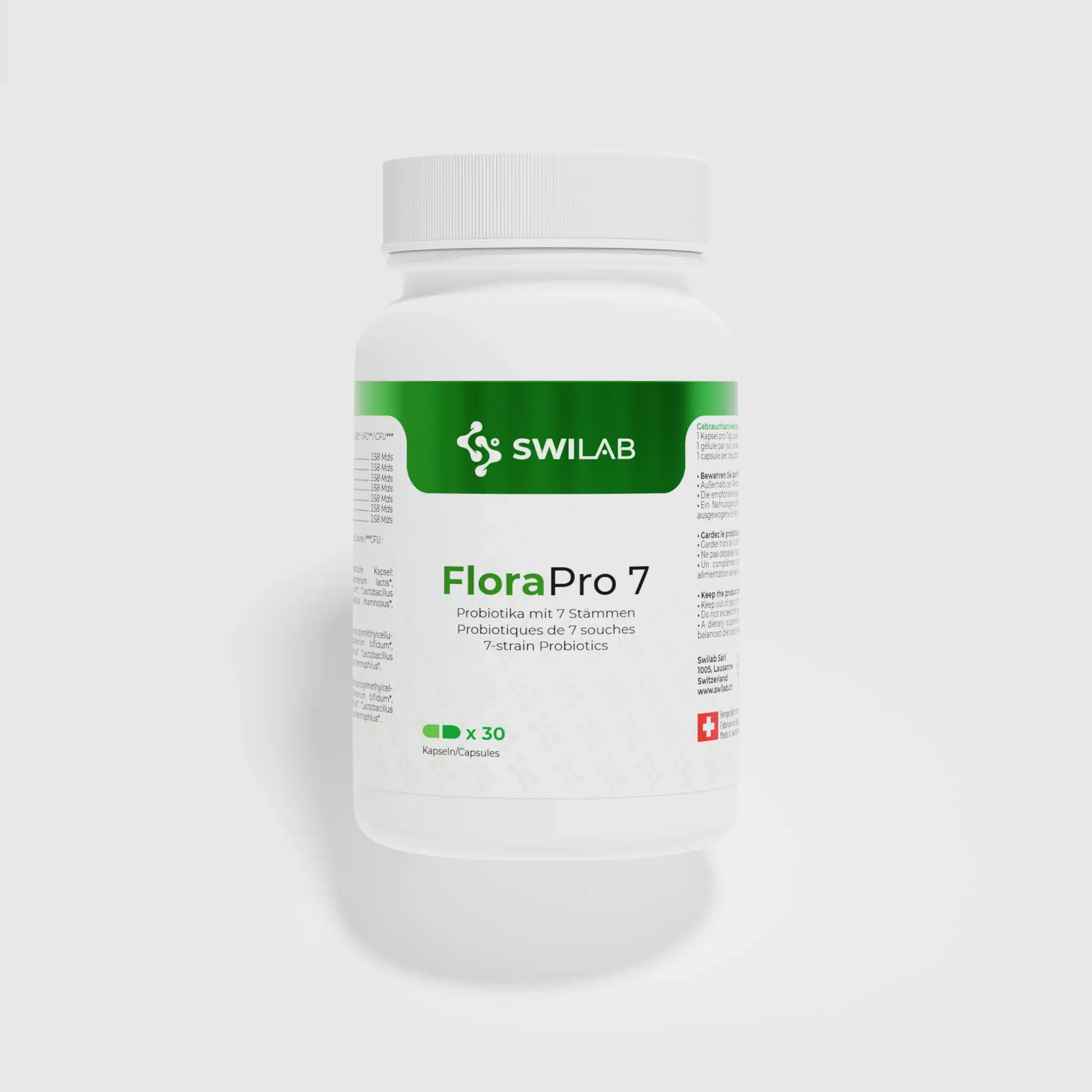
FloraPro 7
7 documented strains, developed and bottled in Switzerland: to support your gut flora every day.
Same strain, same dose, yet a probiotic can ‘work’ for your neighbour and do nothing for you. It is not chance: research shows the response differs from one person to the next.
A study published in the journal Cell in 2018 tracked, through direct sampling inside the gut, what happened to a mix of eleven strains. The finding: in some people the strains settled on the gut lining (‘permissive’), in others they passed through without ever taking hold (‘resistant’). What decides this is mainly each person’s starting microbiome. A crucial detail: finding the strain in the stool does not prove it colonised the gut: the two do not match.³⁹
Even the rule everyone repeats, ‘take probiotics after antibiotics’, deserves a caveat. The same team showed that a generic multi-strain probiotic delayed the return of the native gut flora after a course of antibiotics, whereas spontaneous recovery came back faster.⁵⁴ The right reading matters: this is about rebuilding your flora. To prevent antibiotic-associated diarrhoea, well-studied strains such as Saccharomyces boulardii or Lactobacillus rhamnosus GG do keep a documented benefit. In other words: it all depends on the goal.
The conclusion is not ‘probiotics are useless’, but ‘the one-size-fits-all product has its limits‘. To improve your odds: choose a documented multi-strain product rather than a single strain picked at random, aim at a specific goal (transit, post-antibiotics, immunity), give the course time to work (at least four weeks) and provide something to feed your good bacteria: fibre (prebiotics). If nothing changes after a properly run course, the strain or the goal probably did not match your profile.
There is no universal formula: efficacy depends on the choice of strains, the CFU dose per day and the individual situation.⁴⁰ Here are the 5 essential criteria to check before buying a food supplement.
Clinical studies use doses ranging from 1 to 100 billion CFU depending on the indication. For general prevention, an intake of at least 10 billion CFU per day is generally recommended; the meta-analysis by Hempel et al. (JAMA, 2012) confirms the benefit of probiotics on antibiotic-associated diarrhoea, without being able to determine the optimal dose.⁴¹ For post-antibiotic conditions, 25 billion+ is frequently used.
Several documented strains that do not inhibit one another.⁴² Multi-strain for prevention, single-strain for specific indications.
Gastro-resistant encapsulation is strongly recommended: without protection, many strains lose a significant part of their viability during gastric passage.⁷
Each strain should have been tested in at least one published RCT (randomised controlled trial).⁴³
The CFU count must be guaranteed until the expiry date, not only at manufacture. Check the ingredients: freeze-dried strains, vegetable capsule, bulking agent (corn starch), magnesium salts of fatty acids. Store below 25 °C, away from light.⁴⁴

| Your profile | Recommended strains | CFU / day | Duration | Note |
|---|---|---|---|---|
| 💊 After antibiotics | L. rhamnosus GGS. boulardii | 25 billion+ | 4-8 weeks | Start at the same time⁴⁸ᵇ |
| 🤢 Diarrhoea (infectious / post-antibiotic) | S. boulardii L. rhamnosus GG | 25 billion+ | 3-5 days (acute) / antibiotic course | See the dedicated article → |
| 🛡️ Immune support | L. acidophilusB. bifidumL. reuteri | 10-25 billion | 4-12 weeks | Multi-strain preferred³³ |
| ✈️ Traveller’s diarrhoea | S. boulardii | 25 billion | 5 days before + trip | Start 5 days before²⁸ |
| 👶 Infant / Child | B. infantisB. breveL. reuteri | Age-appropriate | As advised by a doctor | ⚠ Consult a paediatrician⁴⁵ |
| 👴 Older adults (65+) | B. longumL. acidophilusB. bifidum | 10-25 billion | Regular courses | 2-3× per year¹⁷ |
This table gives a starting point; cross-referencing your goal, your age and your history to settle on the right formula does take a little method, however. We lay out this approach step by step to help you find the formula that fits your profile.
3 questions · about 1 minute
Efficacy does not depend only on the choice of strains: the timing of intake, the dosage and the storage directly affect how many live cultures reach the gut. Taking them the wrong way can considerably reduce the effect.⁴⁶
That said, real-world situations, on an empty stomach, in the morning rather than the evening, away from coffee or tea, each call for a nuanced answer. We review the ideal time to take your probiotics.
First detectable changes in the composition of the microbiota. Do not stop before this.
Documented reduction of digestive symptoms in clinical trials: particularly beneficial when combined with a fibre-rich diet.
Recommended duration for irritable bowel syndrome and chronic digestive disorders.
The strains do not settle in permanently: they disappear after you stop.⁴⁸ Regular courses are necessary.
Antibiotics destroy beneficial bacteria along with pathogens. Starting probiotics from the first day of treatment reduces the risk of diarrhoea by 37% (Goodman et al., BMJ Open, 2021).⁴⁸ᵇ The choice of strains, the timing of intake and the length of the course depend on your profile and the type of antibiotic. Beyond this specific case, other circumstances, prolonged stress, returning from a trip, the aftermath of gastroenteritis, can justify start a targeted probiotic course.
Before the era of food supplements, probiotics came exclusively from the diet. Natural probiotic foods, yoghurt and yogurt drinks, kefir, sauerkraut, kimchi, tempeh, miso, some cheeses and fermented pickles, remain an important source of beneficial live micro-organisms and lactic acid bacteria. But their concentration and diversity have limits.⁴⁹
| Food | Strains present | Concentration | Advantage |
|---|---|---|---|
| Yoghurt | S. thermophilusL. bulgaricus | 10⁶-10⁸ CFU/g | Accessible, everyday, well tolerated |
| Kefir | L. kefiriVarious yeasts | 10⁷-10⁹ CFU/ml | Great strain diversity |
| Raw sauerkraut | L. plantarumL. brevis | 10⁶-10⁸ CFU/g | Rich in prebiotic fibre |
| Kimchi | L. plantarumLeuconostoc | 10⁷-10⁹ CFU/g | High diversity, vitamins |
| Kombucha | GluconobacterYeasts | Variable | A drink, easy to add to your routine |
| Miso | AspergillusLactobacilli | Variable | Amino acids, umami |


Probiotics are considered safe for most people in good health. Side effects are rare and generally transient.⁵¹ People with weakened immune systems or serious health conditions should consult with a healthcare professional for expert advice before starting, as probiotics can carry rare health risks for them.
During the first 5 to 7 days, you may feel mild digestive discomfort, bloating or gas. These reactions are a sign that the microbiota is adjusting to the new strains, and they resolve on their own in the vast majority of cases. If the discomfort persists beyond two weeks, consult a healthcare professional.
Immunocompromised patients (chemotherapy, transplantation, advanced HIV) face a rare but documented risk of bacteraemia. Medical consultation is mandatory before taking them.⁵² In Switzerland, the gastroenterology departments of Inselspital Bern and the University Hospital Zurich (USZ) are reference centres for complex patients.
Theoretical risk of bacterial translocation in patients with catheters. Medical advice required.
The data are reassuring for most of the strains studied. Even so, consult your doctor as a precaution, particularly in the first trimester.
Specific strains are documented for infants, but the prescription must be supervised by a paediatrician.⁴⁵
If you have been diagnosed with SIBO, adding more bacteria may worsen the symptoms (bloating, gas, pain). Consult your gastroenterologist before any probiotic supplementation.
Immunosuppression, drug interactions, pregnancy, young children: each of these profiles calls for specific precautions, which we detail case by case on our page about the precautions and profiles to watch.
In Switzerland, the regulatory framework for probiotics differs from that of the European Union, where the European Food Safety Authority (EFSA) sets the rules. Understanding these specifics helps you make an informed choice and tell a serious dietary supplement apart from a marketing product.⁵³
The Federal Food Safety and Veterinary Office (FSVO) regulates dietary supplements in Switzerland. An FSVO-compliant product guarantees that every claim on the label is backed by scientific evidence: unapproved health claims are prohibited. This is a stronger mark of seriousness than on many markets.
A probiotic marketed as a food supplement does not have to prove its therapeutic efficacy before going on the market (unlike a Swissmedic medicine). This is why the clinical documentation of the strains in probiotic supplements is a decisive selection criterion for the consumer.
Probiotics, as food supplements, are not reimbursed by basic insurance (LAMal). The price ranges from 25 to 60 CHF per month. Some supplementary insurance plans (LCA) may reimburse part of it: contact your health insurer.
Favour probiotic products made in Switzerland with documented quality control, FSVO compliance, strains identified on the label with the CFU count per strain, and viability guaranteed until the expiry date.
What science establishes: and what remains open.
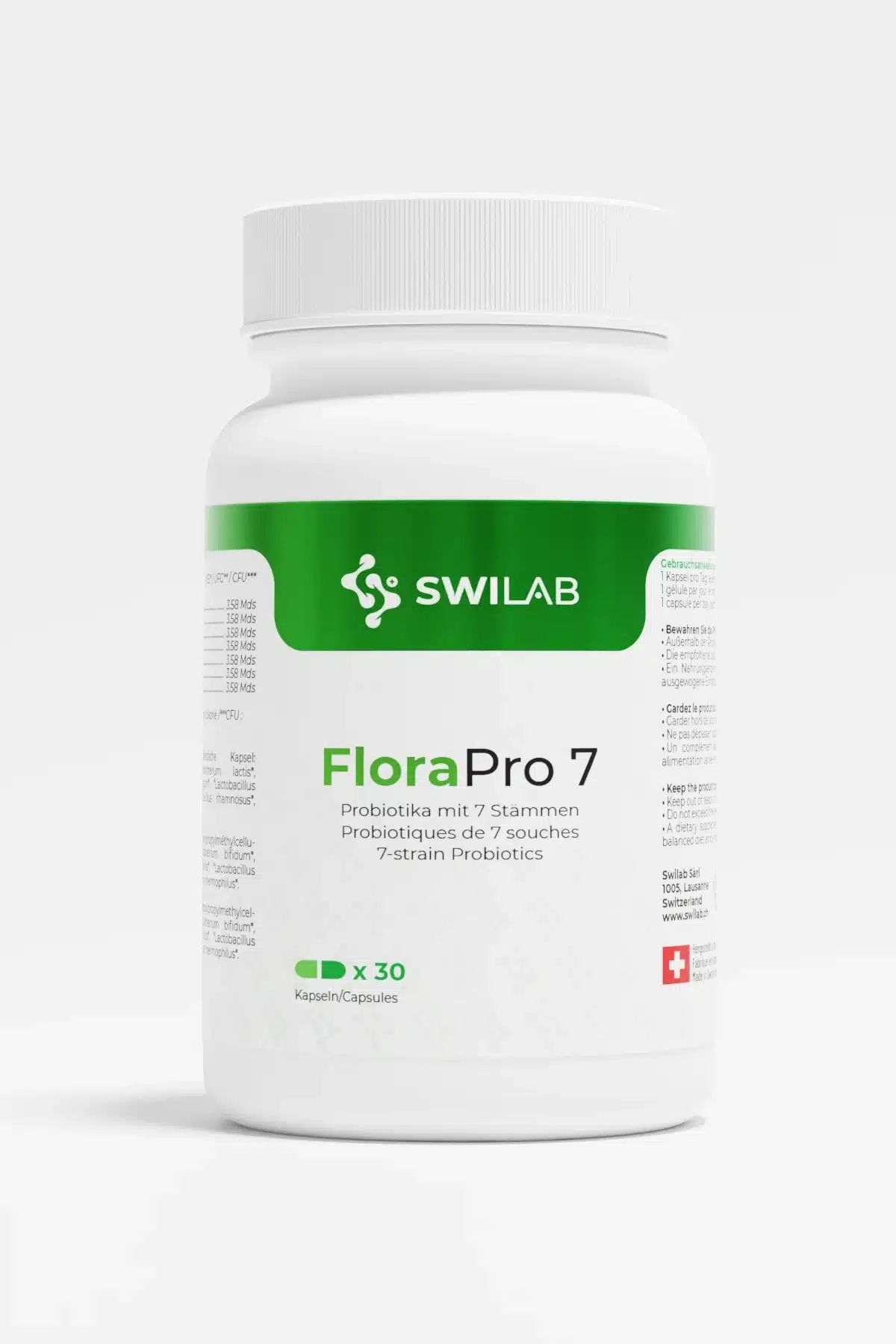
FloraPro 7 contains 7 carefully selected strains from the Lactobacillus, Bifidobacterium and Streptococcus families. With 25 billion CFU per gastro-resistant HPMC capsule and freeze-dried lactic-acid cultures, it meets the 5 quality criteria detailed above.
⚠️ Food supplement. It does not replace a varied, balanced diet or a healthy lifestyle. For specific medical indications, consult a healthcare professional.
Probiotics are live micro-organisms, mainly bacteria and yeasts, that confer a health benefit when consumed in sufficient amounts (FAO/WHO definition, updated by the ISAPP in 2014). They help maintain the balance of the gut flora, support digestion and contribute to the normal function of the immune system. The effect is generally strain-specific.
Most positive clinical trials use at least 10 billion CFU per day for general prevention, and 25 billion or more for post-antibiotic conditions. A higher dose is not automatically better: gastro-resistant encapsulation matters just as much.
They work best during or just before a meal, with a glass of room-temperature water: food buffers the gastric acidity and protects the cultures. Avoid hot drinks above 40 °C. Consistency matters more than the exact time of day.
Yes, it is even recommended: starting both at the same time significantly reduces the risk of antibiotic-associated diarrhoea. The yeast Saccharomyces boulardii stays active during treatment; for bacterial strains, space the dose 2 to 3 hours apart from the antibiotic.
They are generally safe for healthy people; adverse effects are rare and transient (bloating or gas during the first few days). Immunocompromised people or those with a serious illness should consult a healthcare professional before taking them.
Check the full strain name (genus + species + designation), a CFU count guaranteed until the expiry date and not only at manufacture, gastro-resistant encapsulation, clinical documentation of the strain and good traceability. Store the product away from heat and light.
Because the response is individual. A study published in Cell in 2018 showed that in some people the strains settle on the gut lining and in others they pass through without taking hold, depending on the starting microbiome. Before concluding it is a failure: check the dose (at least 10 billion CFU), a gastro-resistant capsule and a specific goal, then allow at least four weeks. If nothing changes after a proper course, the strain or the goal probably did not match your profile.
It depends on the goal. To prevent antibiotic-associated diarrhoea, well-studied strains such as Saccharomyces boulardii or Lactobacillus rhamnosus GG have a documented benefit. To rebuild your flora, however, a 2018 study showed that a generic probiotic can delay the return of your native microbiome. So favour documented strains, target the right goal, and do not expect a generic product to ‘reset’ your flora.
 Recommended in this guide