
Everything you need to know about food supplements: a complete guide for your health
30% of Swiss adults take a food supplement every week. This guide covers the legal definition, how they work, timing, the course of use, criteria for choosing, proven benefits, risks and the FSVO framework applicable in Switzerland.
Quick summarykey takeaways
Concentrated in vitamins, minerals or substances with a nutritional effect, this type of foodstuff fills an insufficient intake without replacing diet. In Switzerland, 30% of adults take one every week; vitamin D, magnesium and omega-3 show the strongest clinical evidence in targeted profiles.
Key facts & entities
Key takeaways
- A food supplement does not replace a varied and balanced diet — it fills a targeted gap in vitamins, minerals or fatty acids.
- Three families dominate the Swiss market: vitamins, minerals and omega-3 fatty acids, present in two thirds of products consumed.
- The dosage form and chemical quality of the nutrient determine actual absorption in the body.
- In Switzerland, the FSVO enforces a positive list of ingredients and prohibits any therapeutic claim on the packaging or in advertising.
- Interactions with certain medicines are documented: professional advice remains necessary during pregnancy, chronic treatment or a long course.
- An effective course generally lasts 1 to 3 months; beyond that, with no improvement, the product should be reviewed with a doctor.
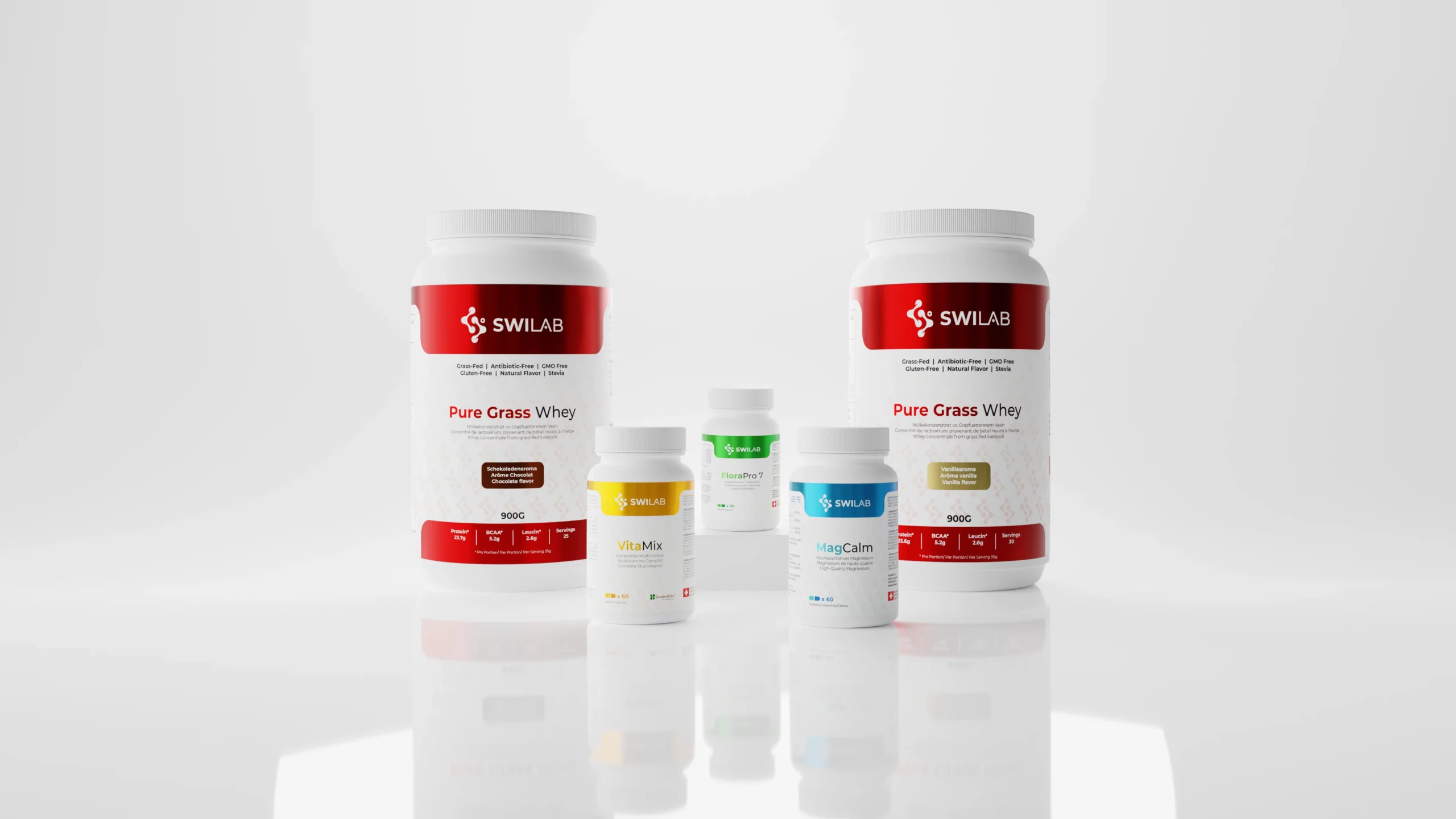
According to the 2023 Swiss Nutrition Bulletin published by the FSVO, 30% of Swiss adults had taken a food supplement in the previous seven days, and nearly two thirds of these products contained vitamins or minerals. The trend reflects growing demand for targeted intakes in a context where modern diets do not always cover requirements. Understanding what a food supplement is, how it acts in the body, and the legal framework under which it is marketed in Switzerland makes it possible to make informed and safe choices before opening the first box.
How a food supplement works
A food supplement is a foodstuff concentrated in nutrients presented in dosed form. Its function is strictly nutritional: to supplement the diet, never to treat a disease. The actual effect on the body depends on the chemical form and bioavailability.
What is the legal definition of a food supplement?
A food supplement is a particular type of food concentrated in vitamins, minerals or other substances with a nutritional or physiological effect, presented in dosed form such as capsules, tablets, powders or liquids. The definition appears in article 1 of the Swiss Food Supplements Ordinance and strictly distinguishes it from medicines.
The Ordinance specifies that these products have a strictly nutritional purpose: to supplement the diet, never to treat or prevent a disease. No pharmacological action is permitted. In detail, they may contain only substances listed in the annexes of the ordinance, in chemical forms validated by the FSVO. This distinction shapes everything: permitted labelling, possible claims and routes to market.
How do nutrients act once ingested?
The ingested nutrient is digested, absorbed by the intestine, then distributed throughout the body to the cells where it takes part in specific enzymatic reactions. The portion actually used by the body is called bioavailability: it varies substantially according to the chemical form and the type of dosage form of the product.
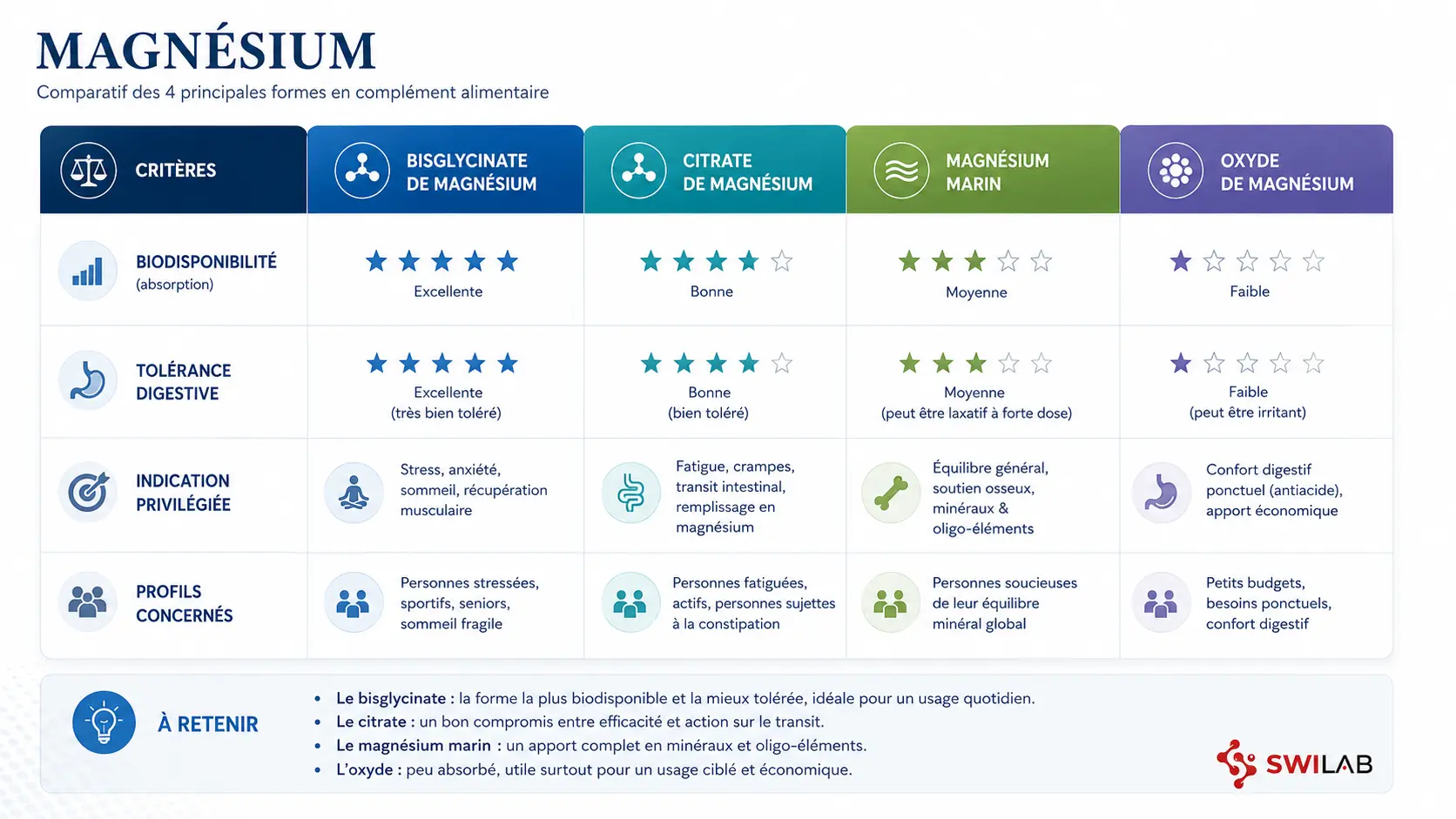
Magnesium bisglycinate, chelated to an amino acid, offers high bioavailability and significantly better digestive tolerance than the oxide form. Vitamin D3 (cholecalciferol) raises blood levels more effectively than D2 (ergocalciferol). This intestinal bioavailability depends on specific cofactors: vitamin D requires a fatty meal to cross the epithelium, iron competes with calcium for the same transporters, zinc and copper inhibit each other when taken together.
The right time to take a food supplement
Timing shapes absorption. Fat-soluble vitamins with meals, magnesium in the evening, iron on an empty stomach: these simple rules, based on absorption kinetics specific to each nutrient, multiply the actual effect without changing the dose.

Should supplements be taken in the morning, at midday or in the evening?
It depends on the nutrient. Stimulating vitamins such as B12 or C, which support energy in the morning, are better taken early; magnesium or melatonin are best placed in the evening for their calming effect. Fat-soluble vitamins (A, D, E, K) require a meal containing lipids to be properly absorbed, hence the importance of timing.
A meal rich in oil, butter or eggs multiplies vitamin D absorption by a factor of two to four. Iron, on the other hand, is better absorbed on an empty stomach, but often causes digestive discomfort: a frequent compromise is to take it 30 minutes before a light meal, with a little vitamin C which increases its absorption. The optimal timing depends on the absorption kinetics specific to each nutrient and on intestinal competitions well documented in the pharmacological literature.
With or away from meals?
Fat-soluble supplements are taken during a meal, water-soluble ones rather on an empty stomach or with a light meal. The practical rule for proper use: follow the indication recommended by the manufacturer, which is mandatory on the packaging (art. 12 Food Supplements Ordinance). This indication takes into account product-specific bioavailability data and is the most reliable benchmark for the consumer.
When to opt for a course of food supplements
A course is targeted supplementation over a defined period. It is justified when a deficiency is documented or highly likely, over a window generally between 1 and 3 months. Beyond that, with no improvement, use should be reassessed with a professional.
What is a course and how long should it last?
A course refers to targeted supplementation over a defined period, generally a course of 1 to 3 months, to fill a temporary deficiency or to support physical effort, stress or a change of season. Beyond 3 months without improvement, the product should be reassessed with a healthcare professional.
For magnesium, clinical trials measuring an improvement in sleep used protocols of 3 to 12 weeks depending on the profiles studied4. Vitamin D requires 6 to 12 weeks to normalise a low blood level, sometimes longer in older or overweight people. A seasonal course calibrated to these windows gradually rebuilds tissue stores rather than imposing year-round continuous supplementation.
In which cases is a course really justified?
A course is justified when a deficiency is documented or highly likely: vitamin D in Swiss winter, iron in the case of diagnosed anaemia, vitamin B12 in vegan diets, omega-3 in non-fish-eaters. Outside these situations, everyday foods cover the needs of most people.
According to the recommendations of the Federal Nutrition Commission, more than 60% of the Swiss population shows a vitamin D deficiency during the winter months, compared with only 20% in summer6. For this group, a course between October and April is the best-supported indication in official sources.
How to choose the right food supplement
Three concrete criteria set a reliable product apart: the precise chemical form of the nutrient, the percentage of nutrient reference values shown on the label, and any presence of allergens or controversial excipients.
Which criteria should you look at on the label?
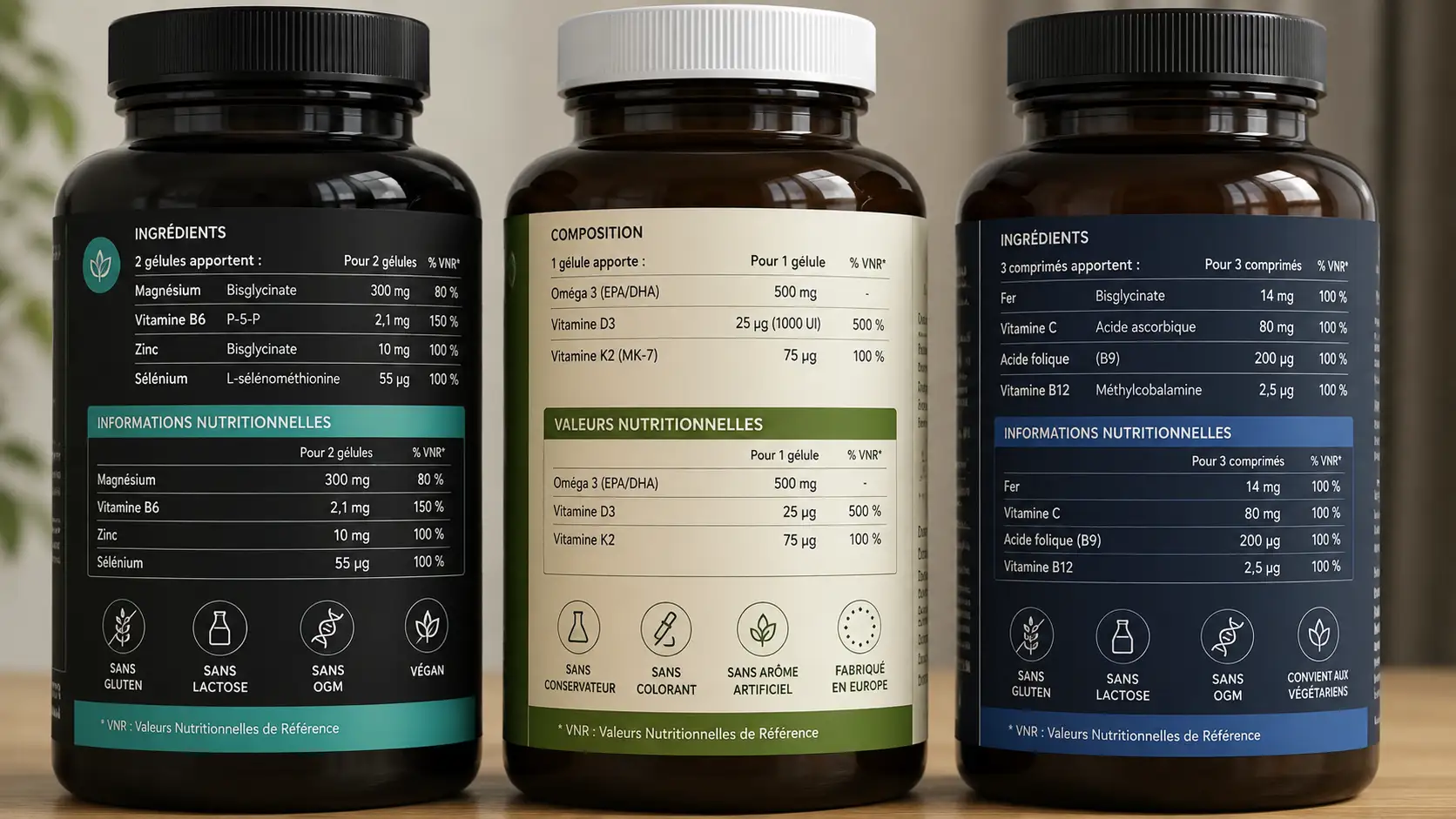
The label must show the wording “food supplement”, the list of ingredients in decreasing order, the dose of each nutrient, the recommended daily portion and a warning against exceeding it (art. 12 Food Supplements Ordinance). Also check the precise chemical form of the nutrient and any presence of allergens.
A product simply stating “magnesium 300 mg” without specifying its form (bisglycinate, citrate, oxide) is not very informative: bioavailability and tolerance vary substantially between forms. Reading the label critically rests on three concrete elements: the precise chemical form of the nutrient, the percentage of nutrient reference values (NRV) that allows two products to be compared quickly, and any presence of allergens or controversial excipients (titanium dioxide, excess magnesium stearate). A multivitamin with proper labelling applies these three criteria across an entire formula: each nutrient shows its chemical form and its NRV percentage.
How can you assess the quality of a dosage form?
The dosage form — capsule, tablet, powder, liquid — influences absorption, nutrient stability and ease of use. Vegetable capsules in boxes give better protection to active principles sensitive to acidity; liquids allow flexible dosing but oxidise more quickly once opened, and the chosen format also shapes shelf life.
For omega-3 fatty acids, oil stability matters as much as the dose: the TOTOX index, a measure of oxidation, should ideally stay below 10. An oxidised product loses its nutritional value and may generate inflammatory compounds. IFOS, Friend of the Sea or ISO 22000 certifications attest to robust quality control along the production chain.
Should you favour natural or synthetic?
Not systematically: quality depends on the molecule, not on organic origin or the source plant. Synthetic vitamin C (ascorbic acid) is biologically identical to that extracted from acerola, often at a higher dose and lower cost. Natural vitamin E (d-alpha-tocopherol), on the other hand, is better absorbed than the synthetic form (dl-alpha-tocopherol). The choice depends on the precise nutrient, not on a general principle.
The proven benefits of food supplements
The hierarchy of clinical evidence is highly uneven: robust for vitamin D and omega-3 in at-risk profiles, mixed for magnesium outside deficiency, and disputed for most general-purpose multivitamins.
Vitamin D: bone health and fall prevention
Vitamin D is the supplement with the strongest evidence in at-risk populations. In people aged 60 and over, a daily intake of 800 IU prevents around 20% of falls and non-vertebral fractures, according to the report of the Federal Nutrition Commission6. The hierarchy of clinical evidence by nutrient nevertheless remains highly uneven: robust for vitamin D and omega-3, mixed for magnesium outside deficiency, and disputed for most general-purpose multivitamins.
Beyond the skeleton, recent meta-analyses pooling more than 160,000 participants show a modest but robust effect on all-cause mortality in adults supplemented over the long term5. By contrast, benefits on cardiovascular risk — myocardial infarction, stroke — are not confirmed in the general healthy population. Supplementation is mainly justified in young children13, older adults, veiled people or those with little sun exposure.
Magnesium: sleep, blood pressure and stress
Magnesium is studied for sleep quality in adults with a deficiency or poor baseline quality, with an effect observed from 2 to 4 weeks of use. A meta-analysis of three randomised trials in 151 older people reported an average shortening of sleep-onset latency of about 17 minutes compared with placebo4, with evidence certainty judged low by the authors themselves.
On blood pressure, supplementation of 300 to 400 mg per day for 3 months leads to a modest but consistent drop in pressure in people with hypertension. The effect is more marked in deficient subjects. Without a baseline deficiency, the benefits seen on sleep or the nervous system are small or nil: magnesium is not a universal remedy but a targeted nutritional correction.
Omega-3: cardiovascular health and triglycerides
EPA and DHA omega-3 fatty acids reduce blood triglycerides and cardiovascular mortality in at-risk patients, with a more marked effect for EPA alone than for EPA+DHA combinations8. The 2025 meta-analysis of 176,000 participants7 confirms this trend.
In healthy people without risk factors, the clinical benefit on performance is more modest. High doses (3 to 4 g per day) slightly increase the risk of atrial fibrillation, which makes it advisable to consult a professional before any self-supplementation at high doses14. Intake through eating oily fish 2 to 3 times a week covers most needs.
Contraindications and side effects
Overdose mainly concerns fat-soluble vitamins (A, D, E, K) and certain minerals (iron, zinc). Drug interactions are frequent in older adults: 23% to 82% combine supplements and treatments according to studies.

What are the most frequent overdose risks?
Overdose mainly concerns fat-soluble vitamins (A, D, E, K), which accumulate in body fat, and certain minerals such as iron or zinc. Beyond mild discomfort or passing fatigue, the 2023 Swiss Nutrition Bulletin1 identified several participants exceeding the tolerable upper intake level, especially for vitamin B6, zinc and magnesium.
The upper safety limit (Upper Level) for vitamin D is set at 4,000 IU per day in adults: above this threshold, the risk of hypercalcaemia rises even if it remains low18. Clinically significant toxicity — overt hypercalcaemia, renal disorders — is only documented at prolonged doses above 10,000 IU per day. Iron at high doses weakens the intestinal wall and increases oxidative stress. Tox Info Suisse received nearly 1,200 enquiries linked to food supplements between 2014 and 201910, two thirds of which involved accidental ingestion by children. These adverse effects and interactions follow a typology specific to each nutrient: slow accumulation for fat-soluble vitamins, acute toxicity for iron, chronic irritation for excess zinc and vitamin B6.
Which drug interactions should you know about?
The best-documented interactions concern anticoagulants (vitamin K, ginkgo, St John’s wort), levothyroxine (calcium, iron), antiepileptics (St John’s wort) and certain antibiotics (calcium, magnesium). A 2025 review9 of 16 international studies reports that 23% to 82% of older adults combine supplements and medicines.
St John’s wort (Hypericum perforatum) accelerates the hepatic metabolism of many medicines, including oral contraceptives, antidepressants and certain cancer treatments. A course of magnesium or calcium should be taken at least 4 hours apart from levothyroxine so as not to reduce its absorption. The pharmacist’s advice obtained at each purchase remains the simplest and most effective safety measure.
Swiss regulation of food supplements
In Switzerland, the FSVO issues the rules through the Foodstuffs and Utility Articles Ordinance and the Food Supplements Ordinance. No prior authorisation is required: the operator placing the product on the market is responsible for compliance within the self-monitoring framework set by the Federal Act on Foodstuffs, with subsequent oversight by cantonal chemists.
What is the role of the FSVO and the cantons?
The Federal Food Safety and Veterinary Office (FSVO) issues the rules applying to food supplements in Switzerland through the Foodstuffs and Utility Articles Ordinance and the Food Supplements Ordinance3. Actual enforcement is delegated to cantonal chemists, who inspect producers and importers by sampling and remain the first point of contact in the event of non-compliance.
Unlike medicines, no prior authorisation is required for a food supplement: the operator placing the product on the market is responsible for compliance under the self-monitoring framework provided by the Federal Act on Foodstuffs11. This responsibility covers consumer protection, substance safety, labelling, claims and traceability across the production chain, under the conditions set by law.
What does the Food Supplements Ordinance say about authorised substances?
The Food Supplements Ordinance sets out two key annexes: annex 1 lists the vitamins and minerals that may be used, annex 2 specifies their permitted chemical forms. Any substance outside the list falls either under the novel food regime or requires an individual authorisation from the FSVO. The last major overhaul of maximum quantities dates back to 1 July 2020; Swiss food law is also subject to regular updates, the most recent of which came into force on 1 January 202615 with transitional periods.
Switzerland often aligns its regulation with the European Union, but retains its own margin of appreciation, particularly on maximum authorised doses and certain botanical substances. A supplement that is legal in Germany or France is therefore not automatically legal in Switzerland. This self-monitoring regime specific to the Confederation requires the operator placing the product on the market to document each substance, each dose and each claim themselves, with subsequent oversight by cantonal chemists.
Which health claims are permitted?
Only the health claims listed in annex 14 of the Food Information Ordinance may be used freely12. Any other claim requires prior authorisation from the FSVO. Therapeutic claims (“cures”, “treats”, “prevents a disease”) are strictly prohibited: they fall under medicines law.
A pack may state “vitamin C contributes to the normal functioning of the immune system” because this wording appears in the positive list. By contrast, “strengthens defences against infections” falls outside the permitted scope. Any advertising overreach in store or online exposes the distributor to administrative sanctions, and even criminal sanctions in cases of repeated deception under article 18 of the Federal Act on Foodstuffs.
Summary
What to remember about food supplements in Switzerland, their documented benefits and their limits.
✅ What is documented
- Vitamin D in older adults: 800 IU/day prevent around 20% of falls and non-vertebral fractures
- Magnesium and sleep: average shortening of sleep-onset latency of about 17 min in older people
- Omega-3 (EPA/DHA): reduction in triglycerides and cardiovascular mortality in at-risk patients
- Documented deficiencies and restrictive diets: real and reproducible clinical benefit
🎯 What is not demonstrated
- Cardiovascular benefit in healthy adults without risk factors
- Generalised effect of magnesium outside documented deficiency
- Added value of general-purpose formulas in well-nourished adults without risk factors
- A supplement supplements the diet, it never replaces it
📌 Safety principles
- Respect the recommended daily portion and the upper safety limit (e.g. vitamin D: 4,000 IU/day)
- Take fat-soluble vitamins (A, D, E, K) during a meal containing lipids
- Do not combine several products containing the same nutrients — silent overdose
- Check the precise chemical form on the label and Food Supplements Ordinance compliance
- Inform your doctor or pharmacist if you are on chronic treatment
Frequently asked questions about food supplements
Can a food supplement replace a balanced diet?
No, food supplements do not replace a balanced diet. They are designed to fill a targeted intake of vitamins, minerals or other substances when food is not enough. The FSVO reminds that no advertising claim may state that a balanced diet does not cover nutritional needs (Food Information Ordinance). In practice, a supplement remains useful for a specific deficit — vitamin D in winter, iron in case of deficiency, omega-3 in non-fish-eaters — but not as a substitute for fruit, vegetables or protein.
How long does it take to feel the effects of a food supplement?
The time frame depends on the nutrient and ranges from 2 to 12 weeks. Magnesium improves sleep quality after 2 to 4 weeks according to several recent randomised trials. Vitamin D takes 6 to 12 weeks to normalise a low blood level. Omega-3 alter the composition of cell membranes within about 3 months. For plant extracts, time frames are more variable and clinical evidence often less robust. Without improvement after 3 months of correct use, the supplement should be reassessed with a professional.
Can you take several food supplements at the same time?
Yes, but with caution — the combination multiplies the risk of interactions and overdose. A review published in 2025 of 16 international studies reports that 23% to 82% of older adults combine supplements and medicines, with an increased risk of interactions (calcium-levothyroxine, magnesium-antibiotics, ginkgo-anticoagulants). High-dose multivitamins may exceed the tolerable upper intake level for some nutrients. In practice: no more than 2 to 3 supplements in parallel, and always inform your doctor or pharmacist of the products taken.
Are food supplements checked before sale in Switzerland?
No, food supplements do not require prior authorisation in Switzerland, except in particular cases. The manufacturer or importer is responsible for product compliance under the self-monitoring framework (Federal Act on Foodstuffs). Cantonal chemists then carry out checks by sampling. FSVO authorisation is still required for novel foods, GMOs and health claims not listed in annex 14 of the Food Information Ordinance. This system places responsibility on the operator placing the product on the market and requires the consumer to verify origin.
Are food supplements reimbursed by Swiss health insurance?
No, basic health insurance (Federal Health Insurance Act, LAMal) does not reimburse food supplements. They fall under food law and not pharmaceutical law, so they do not appear on the list of specialities. Only a vitamin D blood test may be reimbursed in two situations: diagnosis of a deficiency on medical indication, or monitoring of a treatment that alters vitamin D metabolism. Some complementary insurance plans covering alternative medicine sometimes reimburse products prescribed by a recognised therapist.
What is the difference between a food supplement and a medicine?
A food supplement supplements the diet; a medicine treats or prevents a disease. The line is drawn by the function claimed and the pharmacological effects. The Foodstuffs and Utility Articles Ordinance specifies that a supplement must have no pharmacological effect or therapeutic claim (art. 12). A medicine goes through a Swissmedic authorisation after clinical evaluation; a supplement is only subject to a compliance obligation checked by sampling. The same plant or nutrient may move from one category to the other depending on the dose, the form and the presentation.
Should you consult a doctor before starting a food supplement?
Yes, in several specific cases: pregnancy, breastfeeding, ongoing medication, chronic disease, long course or high dose. Interactions are documented and frequent: vitamin K reduces the effect of oral anticoagulants, calcium reduces the absorption of levothyroxine, St John’s wort disrupts many treatments. Consultation is also recommended in children, older adults and before any dose above the nutrient reference values. Professional advice helps avoid both overdose and disappointment with unsuitable products.
How should a food supplement be stored to preserve its effectiveness?
Away from light, heat and humidity, in its original closed packaging. Nutrients sensitive to oxidation (omega-3, vitamin C, vitamin A) degrade quickly under heat and exposure to air; an opened bottle of fish oil is ideally kept refrigerated. Fat-soluble vitamins and minerals in dry form tolerate room temperature better, but must stay dry. The best-before date (BBD) must appear on the packaging under the Food Information Ordinance; beyond it, the actual content of active principle is no longer guaranteed by the manufacturer.