
What are the proven benefits of food supplements?
Quick summary
The benefits truly demonstrated cluster around six areas: bone health, sleep, cardiovascular prevention, cognitive function, skin and weight management: with a level of evidence that varies widely from one nutrient to another.
Key facts
Key points
- Around 30% of Swiss adults consume a food supplement each week, according to the FSVO survey conducted in 2022 on 1,282 people.
- Vitamin D combined with calcium reduces the risk of falls in care facilities, but does not reduce fractures in the healthy older population.
- Prescription omega-3, studied on nearly 100,000 patients, lower the risk of cardiovascular events by around 12%.
- A multivitamin taken for 2 years improves memory with an effect equivalent to 2 years less of cognitive ageing (American COSMOS trial, 5,200 participants).
- 5 g of collagen peptides per day increase dermal density and skin hydration after 12 weeks of continuous use.
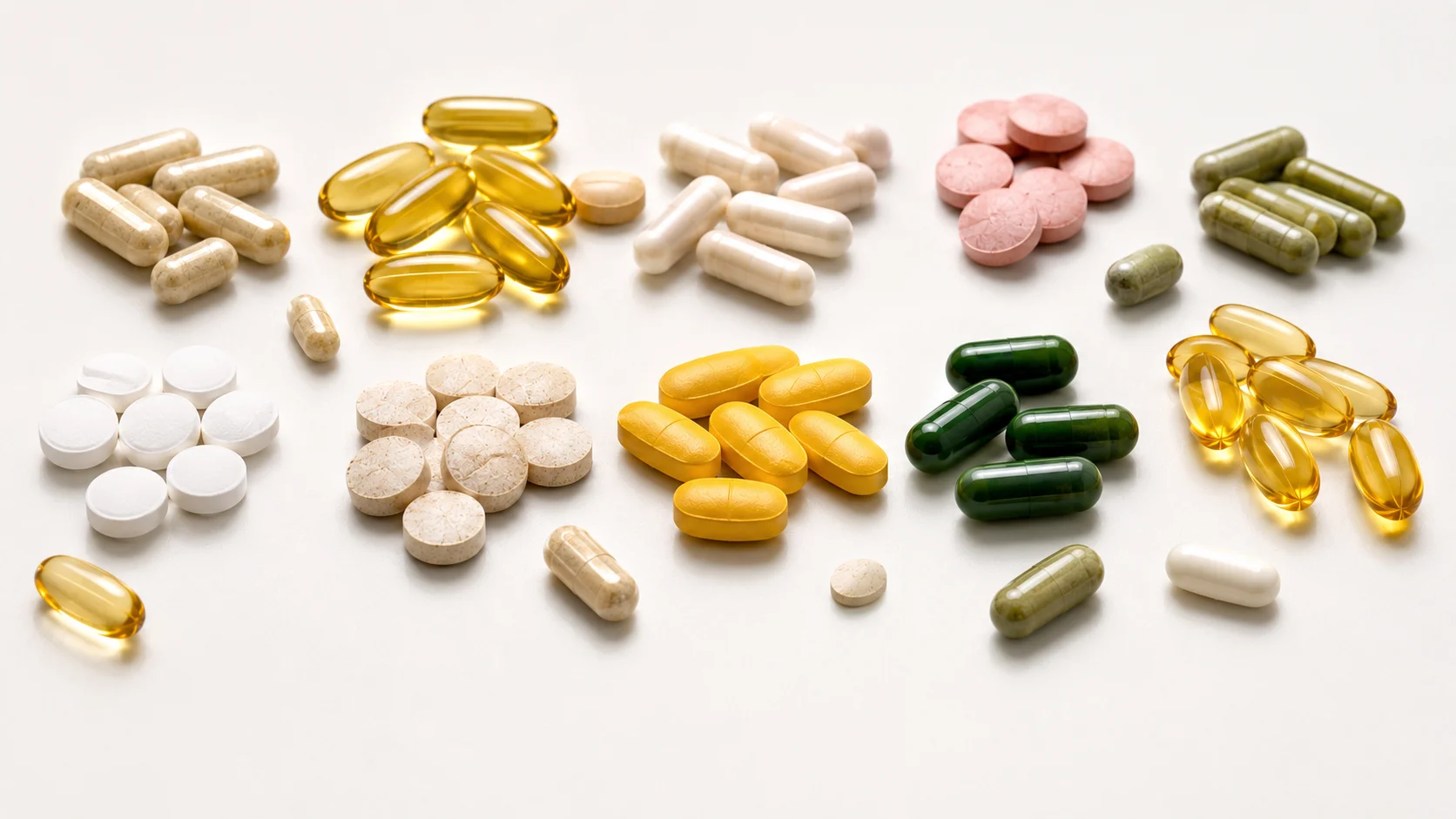
Around 30% of Swiss adults consumed a food supplement in the last seven days, according to the FSVO survey published in the Swiss Nutrition Bulletin 2023 (1,282 participants). Vitamins, omega-3, melatonin, collagen peptides: these products are ubiquitous in pharmacies and online alike, and commercial promises there often sit alongside fragile claims. To navigate them, you have to distinguish between what clinical trials genuinely demonstrate and what manufacturers merely suggest. This article forms part of the complete guide to food supplements and takes stock of the six areas in which science has reached a verdict: or begun to do so.
The skeleton and sleep: two areas with long-standing evidence
Vitamin D combined with calcium supports bone capital
The vitamin D + calcium combination remains the best-documented pillar of bone supplementation, and its usefulness varies according to age and lifestyle. It reduces the number of falls in care facilities and improves mineral density in women during pregnancy or after breastfeeding. On this specific physiological need, these two micronutrients hold a special place in the body: it is also the area that most clearly shows the nuance between “measurable benefit” and “limited effect”.
A meta-analysis published in the Journal of General Internal Medicine in 2024, covering nearly 72,000 healthy older adults, concluded that vitamin D alone does not reduce the overall risk of fracture[1], and even flagged an increase in the risk of hip fracture among women receiving high intermittent doses without associated calcium[1]. By contrast, a Cochrane review released in 2025 showed that vitamin D, taken with or without calcium, markedly reduces the frequency of falls among care-facility residents with low vitamin status[2]. The distinction is essential: vitamin D corrects a vitamin shortfall, it replaces neither physical activity nor dietary calcium intake. Calcium, vitamin K2 and weight-bearing exercise round out the picture of proven effects on bone health, with eligible profiles that differ markedly according to age and hormonal status: the advice of a healthcare professional helps to adjust doses on a case-by-case basis.
Melatonin shortens time to fall asleep
Melatonin is one of the few supplements to show a reproducible clinical effect on an objective sleep parameter: the time taken to fall asleep. At low doses (0.5 to 5 mg), taken 30 to 60 minutes before bed, it acts as a wind-down signal rather than a chemical sedative. It is also studied in the context of jet lag, shift work and chronic stress disrupting the wake-sleep balance.
According to PubMed, a meta-analysis published in Critical Care Medicine in 2025, pooling 32 randomised trials and nearly 3,900 patients in intensive care, observed a reduction in delirium and an improvement in patient-reported sleep quality[3]. Another meta-analysis published in 2026 in children with atopic dermatitis confirmed a clear shortening of time to fall asleep, with no adverse effects reported[4]. Beyond melatonin, magnesium among minerals and certain plant extracts such as valerian are part of the levers studied for sleep improvement through supplementation, with a more modest level of evidence but a tolerability often better than that of hypnotics. In cases of persistent insomnia, consulting a professional remains the sensible reflex before any long-term use.
Heart and brain: what the major trials really showed
Omega-3 reduce cardiac events at pharmaceutical dose
The omega-3 fatty acids EPA and DHA, found in fish oils, are among the most studied supplements in the world. Their effect on cardiovascular prevention depends very strongly on daily intake: over-the-counter capsules (generally 250 to 500 mg per day) do not produce a measurable effect, whereas high-dose pharmaceutical forms (2 to 4 g per day) markedly modify the risk in people at high cardiovascular risk. These omega-3 of animal origin are among the elements that help to support the major physiological functions of the cardiovascular system when the diet provides little of them.
This meta-analysis published in Nutrition Journal in December 2024 also highlighted a moderate fall in myocardial infarctions and revascularisations[5]. Coenzyme Q10, aged garlic, potassium and certain soluble fibres round out the arsenal of nutrients studied for their impact on cardiovascular health, each with its own targeted area of application: mild hypertension, moderate hypercholesterolaemia, secondary prevention after a heart attack or coronary disease. Conversely, standard fish oils taken on self-medication have not demonstrated the same benefit as the pharmaceutical forms, and interactions with anticoagulants make a specialist’s advice essential before any long-term use.
A multivitamin can support memory in older adults
For a long time, multivitamins were considered useless for healthy adults. The picture has been shifting since 2023 with the results of the American COSMOS study, one of the largest clinical trials on the use of food supplements ever conducted, which assessed the impact of a daily multivitamin tablet bringing together a wide range of vitamins, minerals and trace elements on cognitive function.
Published in the American Journal of Clinical Nutrition in 2024, the COSMOS-Clinic sub-study, complemented by a meta-analysis of 5,200 participants aged over 60, observed a modest but robust benefit on global cognition and episodic memory, equivalent to roughly two years less of cognitive ageing[6]. The result does not make the multivitamin a shield against dementia or cancer: B vitamins (B6, B9 folic acid, B12) in deficient subjects, omega-3 DHA and certain polyphenols remain the other documented avenues to support cognitive health through complementary nutrition, with results that vary widely according to age, initial nutritional status, dietary quality and length of intake. A varied and balanced diet remains the foundation to which a supplement is added, not substituted.

Skin and silhouette: between solid data and excessive promises
Collagen peptides genuinely improve skin quality
Hydrolysed collagen in powder or capsule form is one of the most dynamic markets in nutritional cosmetics. Unlike many “anti-ageing” promises, collagen peptides of animal origin, which provide a concentrated source of proteins specific to the dermis, are backed by several randomised controlled clinical trials that measure concrete skin parameters: dermal density, elasticity, hydration and wrinkle depth.
A randomised double-blind trial published in the Journal of Cosmetic Dermatology in 2024, carried out on 85 women aged 43 to 65 with 5 g of collagen peptides per day taken orally, observed after 12 weeks a significant increase in dermal density and hydration, as well as an improvement in elasticity and in the visibility of wrinkles[7]. Another trial in 2023 with low-molecular-weight peptides on 100 adults confirmed these results over 12 weeks, with no adverse effects reported[8]. Combined with vitamin C, zinc and hyaluronic acid, they are among the documented benefits on skin health, while bearing in mind that the effects remain cosmetic and do not correct either established pigmentary lesions or advanced photo-ageing.
Weight loss: an area where evidence remains scarce
This is the field in which the gap between the marketing promise and the scientific reality is widest. Fat burners, drainers and “metabolism accelerators” most often rest on small-scale, short-term studies, sometimes funded by the manufacturers themselves. No over-the-counter supplement has been shown to produce clinically significant weight loss without a parallel change in diet. The choice therefore depends less on the format (capsules, gummies, powders) than on overall lifestyle.
Caution
The FSVO and the Swiss cantonal authorities regularly withdraw from the market slimming supplements fraudulently spiked with undeclared medicinal substances (sibutramine, stimulant derivatives), particularly in products bought online from outside Switzerland.
The only documented levers concern satiety and body composition, not raw weight loss. This is precisely what distinguishes the effects truly proven on weight loss from “fat burner” promises: a Chinese trial published in 2024 in Nature Metabolism on 37 people who were overweight showed that a resistant starch taken for 8 weeks helped them to lose on average 2.8 kg through a modification of the gut microbiota[9]. A Canadian trial on prebiotic fibre (inulin) observed a reduction in abdominal fat and in appetite after 24 weeks[10]. None of these results replaces a healthy diet or regular sport; the advice of a healthcare professional remains the sensible starting point before any supplementation plan.

Reading the evidence: how to judge a claimed benefit
Hierarchy of evidence: why not all studies are equal
A claim of effectiveness rarely rests on a single study. The reliability of a benefit depends on the type of research available. At the top, meta-analyses pooling several randomised controlled trials offer the most solid level of evidence. Then come rigorous individual trials, then observational studies, and finally testimonials and case studies: useful for generating hypotheses, insufficient for drawing conclusions. Reading the nutritional value and the declaration of a product is part of the basic steps before choosing a food supplement.
For vitamin D, omega-3 or melatonin, dozens of trials exist. For many plant extracts and proprietary blends, only small-scale studies are available, which does not allow a real beneficial effect to be confirmed. The 2022 FSVO survey, which catalogues consumption behaviours in Switzerland, shows that a significant share of purchases is made on the basis of recommendations on social networks (Facebook, Instagram) or via advertising, rather than verifiable scientific evidence[11]. The flip side: a large number of consumers choose their product without prior diagnosis or specialist advice.
What Swiss legal claims authorise: and what they exclude
In Switzerland, the mentions and health claims carried by a food supplement are strictly regulated by the DFI Ordinance on Food Information (OFI) and monitored by the FSVO. A manufacturer can state that a nutrient “contributes to” a function when the effect is validated by the European Union positive list incorporated into Swiss law: for example “vitamin C contributes to the normal functioning of the immune system” or “iron helps to reduce fatigue”. By contrast, no supplement can claim to cure, prevent or treat an infectious or chronic disease.
Good reflex
To check the validity of a claim, the manufacturer must be able to cite the positive list of claims authorised in Switzerland and the study or scientific opinion it rests on: not a mere customer testimonial.
This reading grid helps to separate supplements whose benefits are firmly established (vitamin D, prescription omega-3, melatonin, collagen at adequate dose, multivitamin in older adults) from products with broad promises but a fragile scientific base. For personalised advice that takes account of your situation, a healthcare professional remains the right point of contact, general practitioner, pharmacist or nutritionist, in order to assess the balance between usefulness and cost of supplementation before filling your basket.
Frequently asked questions about the benefits of food supplements
Do all food supplements have proven benefits?
No, the level of evidence varies considerably depending on the molecule and the indication. Vitamin D combined with calcium for bone health, prescription omega-3 for cardiovascular prevention, or melatonin to shorten time to fall asleep all benefit from solid meta-analyses. Conversely, many products marketed to burn fat, boost immunity or slow ageing rest on limited studies, sometimes funded by the manufacturers themselves. The FSVO further reminds consumers that a supplement cannot make up for an unbalanced diet.
Do you need to take a food supplement to stay healthy?
Not as a rule. A varied diet covers most vitamin and mineral needs for a healthy adult. Supplementation becomes relevant when faced with a deficiency confirmed by blood test, a specific physiological state (pregnancy, breastfeeding, intensive sport) or an identified risk factor such as low winter sunshine for vitamin D. The menuCH survey showed that about half of Swiss residents nevertheless take supplements, often without prior diagnosis.
How long does it take to see the effects of a food supplement?
The timeline varies according to the goal. Melatonin acts on falling asleep from the very first intake, within a few dozen minutes. The skin benefits of a collagen peptide generally appear from 4 to 12 weeks of continuous use. For bone health, the benefit of vitamin D and calcium is assessed over several months, even years. For cognition, the American COSMOS trial observed a measurable effect on memory after two years of daily multivitamin intake.
Can a food supplement replace a medicine?
No. Under Swiss law, a food supplement is a foodstuff regulated by the FSVO, not a medicine authorised by Swissmedic. It can therefore neither claim nor deliver a therapeutic effect. Even when a nutrient shows documented benefits, such as pharmaceutical-dose omega-3 after a heart attack, going through a prescription remains essential because the dose, the purity and the medical follow-up change everything. In the event of a pathology, the doctor remains the only competent contact.
How do you tell whether a food supplement is genuinely effective?
Three practical criteria help to sort the field. First, the existence of meta-analyses published in recognised scientific journals such as those indexed on PubMed, and not mere testimonials. Next, the consistency between the form and dose sold and those tested in studies: 1,000 to 2,000 IU per day for vitamin D, 0.5 to 5 mg for melatonin, 5 to 10 g for collagen. Finally, the manufacturer’s transparency on the origin, the precise dosage and any quality tests carried out by an independent laboratory.
Are the vitamins and minerals from a supplement better absorbed than those from foods?
Not as a rule. For most nutrients, the food matrix actually improves absorption because fibre, lipids and other cofactors aid intestinal passage. The haem iron of meat, the calcium of dairy products or the vitamin K of green vegetables are better assimilated through diet than through a supplement alone. Conversely, vitamin B12 in methylcobalamin form and oily vitamin D3 show comparable, even higher bioavailability than some food sources. The basic rule remains: complement the diet, do not replace it.
Is there a risk in taking a food supplement without a confirmed deficiency?
Yes, for certain nutrients. The fat-soluble vitamins A, D, E and K accumulate in the body and can reach toxic thresholds in the event of prolonged high-dose intake. Iron in overload encourages oxidative stress. The meta-analysis by Souza et al. (2024) even observed an increase in hip fractures among older women taking high intermittent doses of vitamin D without calcium or documented status. Before any long-term supplementation, a blood test and the advice of a healthcare professional help to target the real need.
Sources and references
11 sources- de Souza M.M. et al. (2024). Vitamin D Supplementation and the Incidence of Fractures in the Elderly Healthy Population: A Meta-analysis of Randomized Controlled Trials.
- Dyer S.M. et al. (2025). Interventions for preventing falls in older people in care facilities.
- Tang B.H.Y. et al. (2025). Melatonin Use in the ICU: A Systematic Review and Meta-Analysis.
- Alghamdi F. et al. (2026). Effectiveness of melatonin supplementation for improving sleep quality and disease severity in children with atopic dermatitis: a systematic review and meta-analysis.
- Dong S. et al. (2024). The effect of omega-3 Polyunsaturated Fatty Acid (PUFA) prescription preparations on the prevention of clinical cardiovascular disease: a meta-analysis of RCTs.
- Vyas C.M. et al. (2024). Effect of multivitamin-mineral supplementation versus placebo on cognitive function: COSMOS trial and meta-analysis.
- Vleminckx S. et al. (2024). Influence of collagen peptide supplementation on visible signs of skin and nail health and -aging in an East Asian population.
- Seong S.H. et al. (2023). Low-molecular-weight collagen peptides supplement promotes a healthy skin: A randomized, double-blinded, placebo-controlled study.
- Li H. et al. (2024). Resistant starch intake facilitates weight loss in humans by reshaping the gut microbiota.
- Mayengbam S. et al. (2025). Effects of combined prebiotic fiber supplementation and weight loss counseling in adults with metabolic dysfunction-associated steatotic liver disease: a randomized controlled trial.
- FSVO (2023). Consumption of food supplements in Switzerland. Swiss Nutrition Bulletin 2023.