
Which supplements for cardiovascular health?
Quick summary
For the general population, food supplements bring no demonstrated cardiovascular protection; the 2025 European cardiology recommendations, led by the HUG, even classify them as to be avoided.
Key facts
Key points
- Nearly one in three Swiss residents takes at least one food supplement, according to the FSVO Swiss Nutrition Bulletin 2023.
- The European cardiology recommendations published in 2025 and led by Prof. François Mach (HUG) classify food supplements as to be avoided for cardiovascular protection.
- Prescription omega-3 reduce by around 16% the risk of heart attack among patients at very high risk, but increase the risk of arrhythmia beyond 1,800 mg per day.
- Red yeast rice lowers LDL cholesterol by 15 to 34% at unregulated dose, but causes the same adverse effects as a pharmaceutical statin.
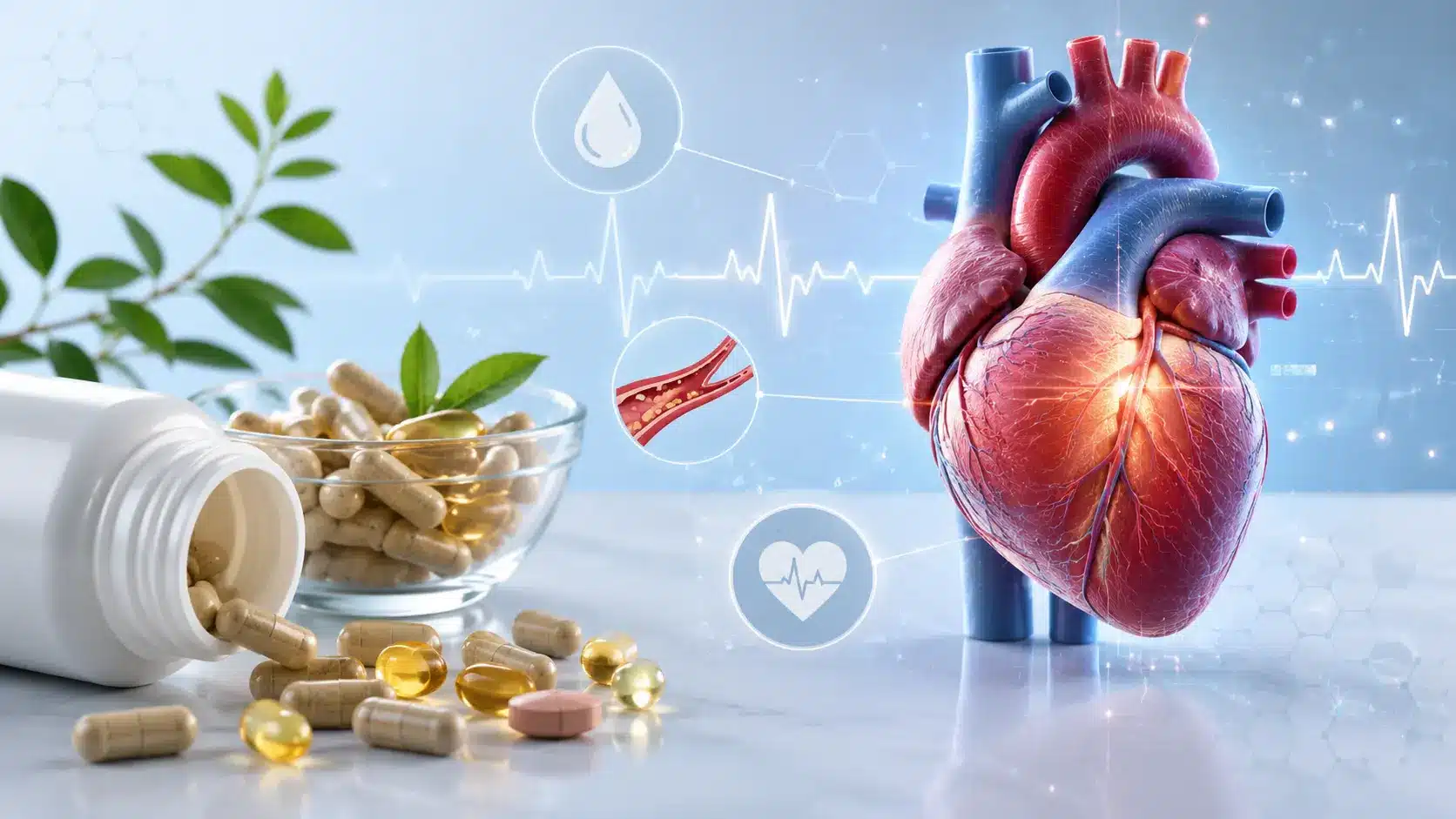
Cardiovascular diseases cause around 20,000 deaths per year in Switzerland, the country’s leading cause of mortality according to the Swiss Heart Foundation. Faced with this fact, many people seek to protect their heart with a food supplement: omega-3, vitamin D, red yeast rice, coenzyme Q10. But what do recent scientific studies really say? This article forms part of the complete guide on the proven benefits of supplements and takes stock, study after study, of what Swiss and international cardiology recommend today.
What do recent studies say on supplements and the heart?
Do supplements really protect the heart in the general population?
No, no cardiovascular benefit is demonstrated for the general healthy population. Recent large meta-analyses show no fall in cardiac mortality or in heart attacks among adults in primary prevention, whether for multivitamin products, antioxidants, capsules or tablets of omega-3 from food. An analysis of 12 randomised clinical trials covering 99,830 participants[3], published by Dong and colleagues in 2024, shows a benefit only at pharmaceutical dose in patients at high risk already identified: those who combine several risk factors such as arterial hypertension, diabetes or a high blood cholesterol level. For the general population, the benefits remain statistically non-significant[3], and a healthy lifestyle combining a balanced diet and regular physical activity remains the main lever for maintaining good cardiac health.
What do the 2025 European recommendations led by the HUG say?
They classify food supplements as to be avoided in order to protect the heart. The document published in the European Heart Journal in November 2025[1], led by Prof. François Mach, chief cardiology physician at the Geneva University Hospitals, attributes a negative recommendation to food supplements containing vitamins, to red yeast rice and to phytosterols for cardiovascular prevention, whether they are presented in a bottle, in capsule form or as a plant extract. Prof. Mach summarises the position in the official HUG communiqué[2]: one should not count on these products to protect the heart or to lower cholesterol in a reliable way. This response is now consensus among European cardiologists, who refer the reader to medical advice before any treatment.
Which supplements show a cardiovascular benefit?
Do omega-3 really reduce the risk of heart attack?
Yes, but only at pharmaceutical dose in patients at high risk. The meta-analysis by Dong and colleagues published in Nutrition Journal in 2024 shows a reduction of around 16% in the risk of myocardial infarction[3] and of 9% in cardiac-origin mortality[3] among patients taking prescription omega-3 fatty acids. A second meta-analysis published the same year by Dinu and colleagues, covering 134,144 participants, finds a similar signal with a fall of around 10% in coronary revascularisation procedures[4]. These results concern high doses of purified EPA and DHA, prescribed in addition to statins, never the supermarket 500 mg fish oil capsules nor plant-based versions made from linseed oil or rapeseed oil. For the general population, intake via two portions of oily fish per week, omega-3-rich foods and a little olive oil remains the option recommended by the Swiss Heart Foundation[10] to maintain normal cardiac function.
Does red yeast rice really lower cholesterol?
Yes, and in a manner comparable to a pharmaceutical statin at low dose. The synthesis published by Cicero and colleagues in Nutrients in 2023 indicates a fall in LDL cholesterol blood levels of 15 to 34% compared with placebo[6], depending on the dose of monacolin K administered. This active molecule, present in the food supplement made from fermented red rice, is chemically identical to lovastatin, a medicine[6]. It is precisely for this reason that since June 2022 the European Union has prohibited products containing 3 mg or more of monacolins per daily dose. The side effects are the same as those of statins: muscle pain, liver disturbances, drug interactions which require a healthcare professional’s advice before any use.
Which supplements pose risks for the heart?
Can high-dose omega-3 trigger arrhythmias?
Yes, and the risk increases proportionally with the dose. The meta-analysis by Gencer and colleagues published in Circulation in 2021, led from the cardiology service of the HUG, synthesised seven clinical trials covering 81,210 patients: at around 1,000 mg per day, the risk of atrial fibrillation increases by around 12%[12]; beyond 1 g per day, it climbs by around 49%[12]. A 2024 review by O’Keefe and colleagues proposes a mechanism: omega fatty acids modulate the vagal tone of the autonomic nervous system[5], which can prolong atrial refractory periods but also favour arrhythmia triggers in certain people, in particular those exposed to oxidative stress or a chronic inflammatory background. The 2025 European recommendation now caps prescribed omega-3 at 4 g per day[1], under cardiological supervision, in order to preserve the protective role of the nutrient without degrading the normal functioning of the heart muscle.
Which vitamins in overdose can damage the heart?
The fat-soluble vitamins A, D and E concentrate the bulk of the risk. At very high dose, vitamin D can favour arterial calcification that stiffens blood vessels; vitamin A can cause liver toxicity with vascular repercussions; vitamin E at more than 400 IU per day is associated with a slight rise in all-cause mortality according to several meta-analyses. Other minerals such as potassium, or micronutrients such as folic acid and vitamin B12, can also unbalance the cardiovascular system in case of overdose, particularly in the presence of pre-existing kidney disease. The FSVO Swiss Nutrition Bulletin 2023 documents several exceedances of the maximum tolerable intakes in Swiss consumers[9], in particular via combinations of several products containing the same vitamins, which justifies consulting a professional before stacking intakes.
How to genuinely protect your heart in Switzerland?
What is the strategy validated by Swiss cardiologists?
The Swiss Heart Foundation[10] summarises the strategy in five levers: balanced diet of Mediterranean inspiration, regular physical activity (150 minutes per week of moderate intensity, endurance sport and muscle strengthening combined), avoiding tobacco, blood-pressure control and cholesterol control. This approach combines limiting red meat, consuming foods good for the heart, olive oil, oily fish, potassium-rich vegetables, black garlic, red vine, and maintaining a healthy weight to improve blood circulation and reduce blood pressure. This strategy would reduce up to 80% of avoidable cardiovascular deaths[10], according to the Foundation’s estimates. No food supplement features in this top-tier list. Within this dietary approach, certain flavanol-rich foods such as unsweetened dark cocoa or green tea have a documented modest effect on blood pressure, with an average fall of 2 to 3 mmHg in office systolic[8], and up to around 6 mmHg in hypertensive people according to the meta-analysis by Lagou and colleagues published in 2025[8]. Prof. Nicolas Rodondi, chief physician at the Inselspital in Berne, recalls in Planète Santé[11] that dietary intakes of omega-3, calcium and vitamin D suffice to cover the needs of the majority of healthy adults.
What place for supplements in this strategy?
A secondary place, and only on medical indication. For patients at very high cardiovascular risk, omega-3 in prescribed form can be added to statin treatment, under cardiological supervision. For patients on statins who present an intolerance to the pharmaceutical molecules, red yeast rice at a very low dose can be discussed with a doctor. For patients diagnosed with heart failure, some studies such as the meta-analysis by Xu and colleagues published in 2024 suggest a potential benefit of coenzyme Q10[7] on cardiac function, but this decision remains reserved for the cardiologist who will adapt the response to the patient’s profile. Outside these precise indications, no food supplement is recommended as first-line for cardiac health. The advice of a doctor remains essential before any self-supplementation, particularly in case of a cardiovascular history, pregnancy, or use of a medicine that could interact with the active substances.
Frequently asked questions about supplements and heart health
Do cardiologists recommend food supplements for the heart?
No, not for the general population. The European cardiology recommendations published in 2025 and led by the HUG attribute a negative recommendation to food supplements for cardiovascular protection[1]. Prof. François Mach, lead author of the document, reminds us that one should not count on these supplements to protect the heart[2]. One exception exists: prescription omega-3 can be prescribed in certain patients at very high cardiovascular risk[3].
Which vitamins can damage the heart in case of overdose?
Vitamins A, D and E, taken in excess, can have cardiovascular consequences. These are fat-soluble vitamins that accumulate in the body: at very high dose, vitamin D can favour arterial calcification, and an excess of potassium or vitamin B6 can disturb the heart rhythm. The FSVO recorded several cases of exceedance of the maximum tolerable intakes in Swiss consumers in its 2023 Swiss Nutrition Bulletin[9]. Water-soluble vitamins such as vitamin C are eliminated in the urine and present less risk of overdose.
Which supplements can cause heart palpitations?
The main suspects are concentrated caffeine, omega-3 at very high dose and energising complexes. Caffeine beyond 400 mg per day can trigger palpitations in sensitive subjects; omega-3 at 1,800-4,000 mg per day are associated with an increased risk of atrial fibrillation according to the meta-analysis by Gencer and colleagues published in 2021 in Circulation[12], led from Geneva. Any persistent or unusual palpitation justifies medical advice without delay, particularly in case of a cardiovascular history or use of a medicine.
Is red yeast rice dangerous for the heart?
Not systematically, but it is now regulated in Europe. It contains monacolins close to a pharmaceutical statin[6]: at high dose, it can cause muscle pain or liver disturbances, like statins. Since June 2022, the European Union has prohibited supplements containing 3 mg or more of monacolins per daily dose. The European cardiology recommendations published in 2025 classify it as to be avoided for cardiovascular protection[1], even at lower dose.
Which plants are used for heart health?
Garlic, hawthorn, olive tree and certain flavonoids (cocoa, green tea) are the most studied. They can slightly lower blood pressure or improve the function of blood vessels. The meta-analysis by Lagou and colleagues published in 2025 on flavanols shows a moderate fall of around 3 mmHg in blood pressure among people with elevated blood pressure[8]. None of these plants replaces a prescribed treatment in case of hypertension or established heart disease: they can support, never cure.
Sources and references
12 sources- Mach F, et al. 2025 Focused Update of the 2019 ESC/EAS Guidelines for the management of dyslipidaemias
- Geneva University Hospitals, High cholesterol: Swiss cardiology leads the new international recommendations
- Dong S, et al. Effects of omega-3 polyunsaturated fatty acid prescription drug on cardiovascular events
- Dinu M, et al. Effects of omega-3 supplementation on cardiovascular events and revascularization
- O’Keefe EL, et al. Omega-3 fatty acids and atrial fibrillation: a complex relationship
- Cicero AFG, et al. Red yeast rice for the improvement of lipid profiles in mild-to-moderate hypercholesterolemia
- Xu J, et al. Effect of coenzyme Q10 supplementation on patients with heart failure: a meta-analysis
- Lagou V, et al. Flavan-3-ols and blood pressure: an updated meta-analysis
- FSVO, Swiss Nutrition Bulletin 2023
- Swiss Heart Foundation, A heart-healthy diet
- Planète Santé, Taking care of your heart with natural products
- Gencer B, et al. Effect of long-term marine omega-3 fatty acids supplementation on the risk of atrial fibrillation