
Vitamin B6: Which Foods Contain It (and How Much Do You Need)?
In short
Vitamin B6 is present almost everywhere in the diet: poultry, fish such as tuna and salmon, chickpeas, potatoes, bananas and wholegrain cereals are among the richest sources. With a varied plate you cover much of your needs, and anyone who wishes can top it up with a sensibly dosed multivitamin. Vitamin B6 is well tolerated; what matters is regularity.
Key facts
Key points
- Vitamin B6 is found in many everyday foods, both animal and plant.
- Among the richest: fish (tuna, salmon), poultry, liver, chickpeas, potatoes and bananas.
- A varied diet covers much of the requirement (about 1.3 to 1.7 mg a day); a well-dosed supplement tops it up when needed.
- Cooking and processing lower the content a little: lightly processed foods keep more of it.
- You can’t overdose on B6 through food; with supplements a moderate dose is enough (EFSA reference: 12 mg a day).
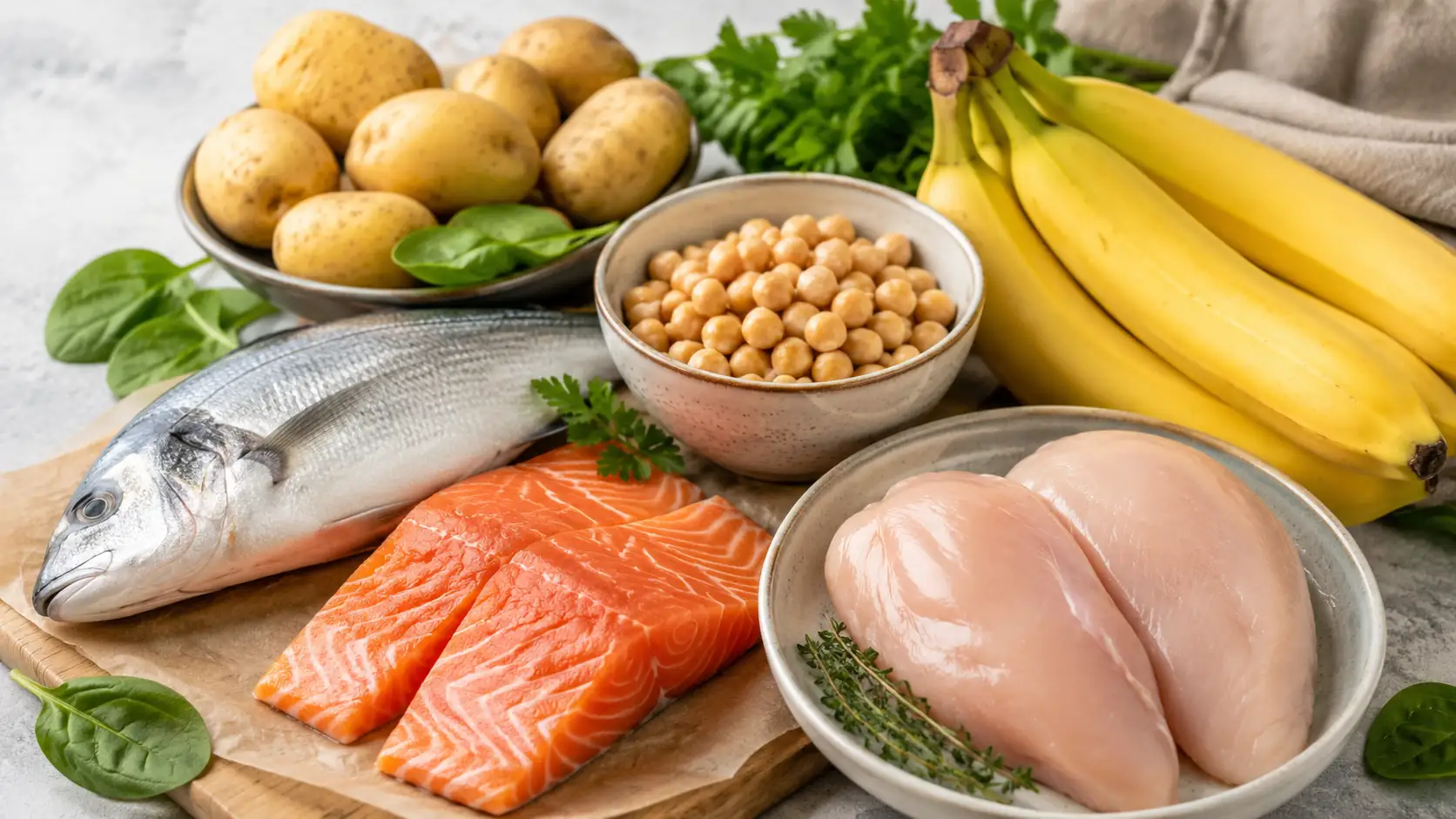
“Vitamin B6, foods”: behind this search lies a simple question: where do you find it on your plate? The answer is reassuring. Vitamin B6, also known as pyridoxine, is one of the water-soluble vitamins (soluble in water, unlike the fat-soluble ones): it is essential for many functions and among the most widespread in the diet. It is found in meat and fish, but also in many plant foods. The body cannot make it or store it for long, and excretes the surplus: so it must be taken in every day through food[4].
The direct consequence: anyone who eats a varied diet covers their B6 needs without any special effort. This article reviews the richest foods, the real benefits of B6 in the body, how much you need, and an often-overlooked point: how to dose a supplement sensibly when it is useful. First things first: vitamin B6 is a food supplement, not a medicine.
Which Foods Contain the Most Vitamin B6?
The ranking of the best sources
There is no single “miracle food”: B6 is spread across many food groups. Some sources do stand out, however, for their content. Here are the most concentrated, animal and plant, as listed by the reference databases on food composition and vitamin B6 content[9][10].
| Food | Origin | Why it’s a good source |
|---|---|---|
| Chickpeas | Plant | One of the richest plant sources; soybeans and black beans also provide plenty. A serving already covers a good part of the daily requirement. |
| Liver (veal, beef, poultry) | Animal | Organ meats concentrate many B vitamins, including B6. |
| Tuna, salmon | Animal | Oily fish are among the most generous animal sources of B6. |
| Poultry (chicken, turkey) | Animal | Chicken and turkey: everyday lean meat, well supplied with B6. Pork, beef and lamb also contain it. |
| Potatoes | Plant | A major contributor in the everyday diet, because we eat them often and in quantity. |
| Banana | Plant | The reference fruit for B6, practical and well tolerated. |
| Seeds (sunflower), walnuts, pistachios | Plant | Sunflower seeds, walnuts and other nuts provide B6 plus good fats. |
| Wholegrain and fortified cereals | Plant | The whole grain, brown rice, oats, wholewheat, keeps the B6; some breakfast cereals are fortified. |
| Avocado | Plant | A fatty fruit that rounds out the plant side of the list. |
So which is “the richest food”?
It’s the most common question: and it has a small flaw: there’s no single winner. On the plant side, chickpeas lead; on the animal side, liver and oily fish such as tuna. But what matters isn’t the top of a ranking: it’s regularity and variety. Eating a little from each family over the week supplies B6 more reliably than fixating on a single food. And because B6 is found in so many everyday products, the goal is easily reachable day to day.
The plate trick
No calculations needed. A meal combining a protein source (poultry, fish, eggs or pulses), a lightly refined side (potatoes, wholegrains) and a fruit like the banana supplies B6 without thinking about it. Variety does the work for you.
Animal or Plant Sources: How to Combine Them Well
Both worlds provide it
Unlike vitamin B12, which is almost absent from plants, vitamin B6 is found on both sides of the plate. That’s good news, especially for vegetarian and vegan diets: pulses, potatoes, bananas, seeds and wholegrain cereals all provide plenty.
Meat, fish, eggs
- Poultry: chicken, turkey
- Meats: pork, beef, veal, lamb
- Oily fish: tuna, salmon; seafood
- Organ meats (liver), eggs, milk, cheese and dairy
Pulses, sides, fruit
- Chickpeas, lentils, soybeans and black beans
- Potatoes, sweet potatoes, Brussels sprouts
- Banana, avocado
- Sunflower seeds, walnuts, wholegrains (brown rice)
A useful nuance: absorption
Not all the B6 in a food is absorbed in the same way. The B6 from plants is sometimes in a slightly less usable form than that from animal products[9]. In practice this isn’t a problem for someone who eats a varied diet: it’s one more reason to combine sources rather than rely on a single one. And for a fully plant-based plate, the real point to watch is vitamin B12, not B6.
Does cooking lose B6?
Partly, yes. Vitamin B6 is sensitive to heat, light and water: some can be lost during cooking, pass into the cooking water, or disappear with canning and the refining of cereals[9]. Nothing alarming, and no reason to eat raw. A few habits in the kitchen preserve more of it in your recipes.
- 1Prefer gentle cooking (steaming, en papillote) rather than long boiling in plenty of water.
- 2Reuse the cooking water from vegetables in soups or stocks, where the vitamin ends up.
- 3Choose lightly processed foods and wholegrains, which keep B6 better than highly refined products.
What Does Vitamin B6 Do, and How Much Do You Need?
Its role in the body
Once absorbed, vitamin B6 is converted into its active form, pyridoxal 5-phosphate (PLP). In this form it acts as a coenzyme, an indispensable part, in over 150 chemical reactions in the body, particularly in the metabolism of amino acids and proteins, carbohydrates and fats[1][2]. It also plays a role in the production of haemoglobin and of certain brain messengers (neurotransmitters), which explains its role for energy in the cellular sense, the nervous system and blood formation[3]. In the conversion of homocysteine, an amino acid, it also works together with folate, or folic acid (B9), and vitamin B12[1]. Vitamin B6 belongs to the B-vitamin family, alongside riboflavin (B2), niacin (B3) and pantothenic acid (B5).
These functions correspond to authorised health claims in Switzerland and the European Union. They are the only wordings a product may use: a good yardstick for telling what is evidence-based from what is promotional[11]. Vitamin B6:
- contributes to normal energy-yielding metabolism and to the reduction of tiredness and fatigue;
- contributes to normal functioning of the nervous system and to normal psychological function;
- contributes to normal red blood cell formation and to the normal function of the immune system;
- contributes to the regulation of hormonal activity, to normal protein and glycogen metabolism and to normal homocysteine metabolism.
Cautious wordings that describe a supporting role: never the cure of a disease or an instant “energising” effect. “Reducing tiredness” means supporting a normal function when intake is adequate, not acting as a stimulant.
How much vitamin B6 a day?
The daily requirement for vitamin B6 is modest. In Europe, the reference values from the food safety authority put the recommended intake at around 1.7 mg a day for a man and 1.6 mg for a woman in adulthood[7]; North American references give a Recommended Dietary Allowance (RDA) of 1.3 mg up to about fifty, a little more afterwards[9]. These values are for adults: needs vary with age and are lower in children. Either way you stay in the range of a few milligrams: a range a balanced, varied diet reaches without difficulty. In pregnant women and during breastfeeding (lactation) the requirement rises slightly; the same B6-rich foods, poultry, fish, chickpeas, potatoes, banana, fit easily into a diet for pregnancy. Questions that sometimes come up around early-pregnancy nausea or premenstrual symptoms are medical ones: raise them with your doctor, midwife or pharmacist rather than self-prescribing.
Vitamin B6 Deficiency: Is It Common, and What Are the Signs?
An isolated deficiency is fairly rare
Because B6 is so widespread, a deficiency from diet alone is rare in someone who eats a varied diet. When a deficiency appears, it often accompanies a lack of other B vitamins, or stems from an absorption problem or a particular medical situation, rather than from a poor plate[2].
Which symptoms can warn you?
The deficiency signs and symptoms are non-specific, which makes them hard to pin on B6 alone. Reported are changes in the skin and mucous membranes, dermatitis, a skin rash, cracks at the corners of the mouth, an inflamed tongue, weaker defences and, in advanced cases, neurological signs such as tingling in the hands and feet, irritability or low mood[2]. Because these signs resemble many other causes, only a doctor can take stock, with a blood test if needed. You can’t diagnose a B6 deficiency on your own.
Who is most at risk?
The causes rarely lie in diet alone. Here are the main profiles where a B6 deficiency is more likely and which warrant medical advice.
| At-risk profile | Why |
|---|---|
| Absorption or kidney disorders | Coeliac disease, inflammatory bowel disease, kidney failure or dialysis disturb B6 status. |
| Alcohol dependence | Alcohol hinders the body’s use and storage of the vitamin. |
| Certain long-term medications | Some medicines (for example certain anti-tuberculosis or anti-epilepsy drugs) can lower available B6. |
| After weight-loss surgery | Bariatric surgery can lead to B-vitamin deficiencies, including B6, and neurological signs. |
If you recognise yourself in one of these profiles, talk to your own doctor rather than supplementing blindly: an assessment shows precisely what is actually missing[5].
Persistent tiredness: clarify the cause
Persistent tiredness has many possible causes (sleep, iron, thyroid, stress…). A short check-up with your doctor shows what’s behind it: and whether a nutrient like B6 plays a part.
Do You Need a Vitamin B6 Supplement? And the Right Dose
The plate first: the supplement as a top-up
Because vitamin B6 is widely present in the diet, for most people a varied plate covers the requirement on its own. A supplement can top up this base in a targeted way, handy when the diet is limited. In particular situations, malabsorption, certain medications, after weight-loss surgery: it is clearly useful; your doctor then sets the dose.
Dose sensibly: more doesn’t help more
With vitamin B6, more doesn’t mean better. Through food, no excess is described; with supplements, a moderate dose is enough, because only very high amounts over a long time can, in the long run, strain the nerves[6]. A simple reference value helps you stay in the right range.
This reference value also applies to pregnant and breastfeeding women and refers to supplements; vitamin B6 taken in through food is not included[8].
Frequently asked questions
Which food is highest in vitamin B6?
There isn’t a single champion, but several very rich foods. Among the most concentrated sources: chickpeas, liver, fish such as tuna and salmon, poultry (chicken, turkey), potatoes and bananas. A serving of chickpeas already covers a good part of the daily requirement. Because vitamin B6 is found in so many everyday foods, a varied diet is almost always enough.
What foods are rich in vitamin B6?
From animal sources: poultry, oily fish such as tuna and salmon, organ meats such as liver, and eggs. From plant sources: chickpeas and other pulses, potatoes, bananas, seeds and nuts, wholegrain cereals and fortified breakfast cereals. Nutritional yeast contains it too. Because B6 is widely spread across the diet, the simplest way to cover your needs is to eat a little from each group over the week.
What are the signs of vitamin B6 deficiency?
An isolated deficiency is rare in someone who eats a varied diet. When it occurs, the signs are non-specific: skin changes, cracks at the corners of the mouth, a sore tongue, but also tiredness, weaker defences and, in advanced cases, tingling or low mood. These symptoms have many possible causes: only a doctor can confirm a deficiency, with a blood test if needed. You can’t diagnose a B6 deficiency on your own.
Which fruits and vegetables are rich in vitamin B6?
Among fruit, the banana is the reference, followed by the avocado. Among vegetables, potatoes are among the best sources, along with sweet potatoes, spinach and other green vegetables. Pulses such as chickpeas and lentils are particularly rich in it. Good to know: B6 from plants is sometimes absorbed slightly less well than from animal products, one more reason to vary your sources rather than rely on a single one.
Does cooking destroy vitamin B6?
Partly. Vitamin B6 is sensitive to heat, light and cooking water, in which it can dissolve. Cooking, canning and refining cereals reduce the content. Nothing dramatic: gentle cooking, reusing the cooking water in soups and choosing lightly processed foods preserve more of it. A varied diet easily makes up for these losses; there’s no need to eat everything raw.
Do vegetarians and vegans lack vitamin B6?
Not necessarily. Unlike vitamin B12, B6 is well represented in the plant world: chickpeas, lentils, potatoes, bananas, seeds and wholegrain cereals all provide it. A varied vegetarian or vegan diet therefore usually covers B6 needs. The real point to watch is B12, which is almost absent from plants. If in doubt, or with a limited diet, a doctor’s advice and, if needed, a blood test remain the right approach.
Should you take a vitamin B6 supplement?
Most of the time, the plate covers your needs on its own, because vitamin B6 is widely present in the diet. A supplement can conveniently top up this base, for example with a limited diet, and is clearly useful in particular situations (malabsorption, certain medications, after weight-loss surgery); your doctor then sets the dose. At a moderate dose, B6 is well tolerated.
Can you take too much vitamin B6?
Not through food: an excess from foods isn’t described, and ordinary supplements are moderately dosed. As guidance, the European Food Safety Authority gives a reference value of 12 mg per day for adults; very high amounts over a long time can, in the long run, strain the nerves. Anyone who sticks to the dose on the label stays comfortably within limits.
Sources and references (verified on PubMed)
11 sources- Stach K., Stach W., Augoff K. (2021). Vitamin B6 in Health and Disease.
- Ueland P.M. et al. (2017). Inflammation, vitamin B6 and related pathways.
- Tardy A.L. et al. (2020). Vitamins and Minerals for Energy, Fatigue and Cognition: A Narrative Review.
- Rosenberg J., Ischebeck T., Commichau F.M. (2017). Vitamin B6 metabolism in microbes and approaches for fermentative production.
- Punchai S. et al. (2017). Neurologic Manifestations of Vitamin B Deficiency after Bariatric Surgery.
- Vrolijk M.F. et al. (2017). The vitamin B6 paradox: high concentrations of pyridoxine decrease vitamin B6 function.
- EFSA NDA Panel (2016). Dietary Reference Values for vitamin B6.
- EFSA NDA Panel (2023). Scientific opinion on the tolerable upper intake level for vitamin B6.
- NIH Office of Dietary Supplements (2023). Vitamin B6 — Health Professional Fact Sheet.
- Swiss Food Composition Database (FSVO / Swiss Society for Nutrition).
- European Commission. Register of nutrition and health claims (Regulation EU 432/2012).