
 AI-generated image
Gut Health · 2 min read
Thirteen times more fibre than an apple: the Swiss winter vegetable the federal database puts at the top
One Swiss winter root packs thirteen times more dietary fibre per 100 g than a fresh apple, according to the federal Swiss Food Composition Database. No fresh vegetable beats it, and it stays in season until February.
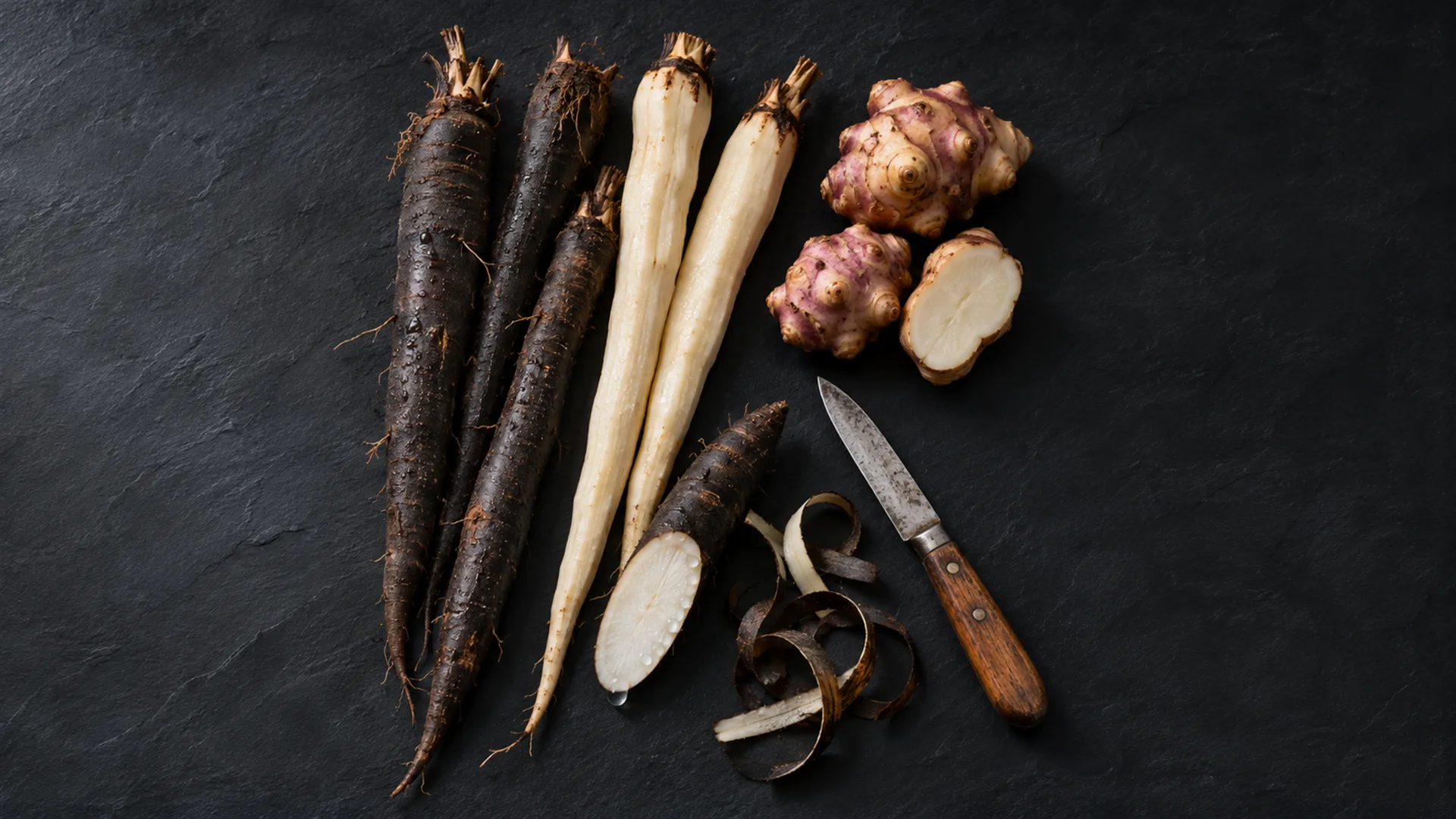
It is black salsify: 18.5 g of fibre per 100 g raw, against 1.4 g for an apple. Meet a long, almost black root with white flesh. It is Schwarzwurzel in Zurich or Basel, salsifis or scorsonère in Geneva or Lausanne. The Swiss vegetable growers' calendar lists it from October to February.
In the database of the Federal Food Safety and Veterinary Office (FSVO, BLV in German, OSAV in French), no fresh vegetable beats it.
Fibre in a nutshell
- What it is: the part of plants our body cannot digest, says the Swiss Society for Nutrition (SSN).
- Where to find it: in vegetables and fruit, and above all in wholegrain products and pulses.
- When food counts as "high in fibre": from 6 g per 100 g, under Swiss food law (OIDAl). Black salsify has three times that.
- What the law says: it recognises effects for certain cereal fibres, for example: "Oat grain fibre contributes to an increase in faecal bulk." This applies to oats, not to vegetables.
The winter podium
A selection of seasonal vegetables and everyday fruit, raw, per 100 g, with the German name used in the growers' calendar:
- Black salsify (Schwarzwurzel): 18.5 g.
- Jerusalem artichoke (Topinambur): 12.1 g.
- Kale (Federkohl): 4.2 g.
- Brussels sprouts (Rosenkohl): 4 g.
- Celeriac (Knollensellerie): 3.8 g.
- Leek (Lauch): 3.2 g.
- Pear: 2.9 g.
- Orange: 2.7 g.
- Carrot (Karotte): 2.7 g.
- Apple: 1.4 g.
Silver medal for the Jerusalem artichoke, with more than eight times the apple. Ask for Topinambur in German or topinambour in French: it is in season from November to March.
Brussels sprouts, fourth here, top a different winter ranking: raw, they hold 145.6 mg of vitamin C per 100 g, nearly three times as much as an orange.
On your plate
One portion is 120 g, "in other words, a handful". The SSN and the FSVO recommend five portions of fruit and vegetables a day, three of them vegetables.
A handful of black salsify brings 22.2 g of fibre. The same handful of apple, 1.7 g.
Steamed, black salsify stays on top with 19.3 g per 100 g. That figure is calculated by the database, not measured.
A varied and balanced diet and a healthy lifestyle remain the foundation.
The small print
These figures are averages from the federal database, version 7.1 of July 2026. They do not measure the root you buy this week.
So the apple has an unexpected rival: a dark root, in season until February.
Sources
4 sources- Federal Food Safety and Veterinary Office (FSVO). Swiss Food Composition Database, generic foods, version 7.1 of 1 July 2026. Official database, English version. lien
- Verband Schweizer Gemüseproduzenten (Swiss vegetable growers' association). Saisonkalender Schweizer Gemüse (seasonal calendar of Swiss vegetables), page read on 15 November 2026. Industry organisation. No English version: German page cited. lien
- Swiss Society for Nutrition (SSN) and FSVO. Swiss dietary recommendations for adults, long version, 2024. Official recommendations, English version. lien
- FDHA Ordinance of 16 December 2016 on Food Information (OIDAl, SR 817.022.16), annexes 13 and 14, status as of 1 July 2025. Legal text. No official English version: German text cited (French copy in the file); claim wording from Regulation (EU) No 432/2012. lien