
What is the impact of probiotics on reducing skin inflammation?
Immediate summary
Through the gut-skin axis, probiotics may help reduce skin inflammation by rebalancing the microbiome, steering the immune response towards an anti-inflammatory profile and strengthening the skin barrier.
Key facts
Essential points
- Probiotics rebalance the skin microbiome and curb harmful bacteria such as Staphylococcus aureus.
- They modulate the local immune response by stimulating anti-inflammatory cytokines such as IL-10.
- They strengthen the skin barrier and limit the penetration of environmental irritants and allergens.
- The gut-skin axis links the balance of the gut microbiome to the inflammatory state of the skin.
- Oral supplements and topical products are the two application routes studied in dermatology.
- Evidence remains emerging: dermatological advice is essential before any supplementation.
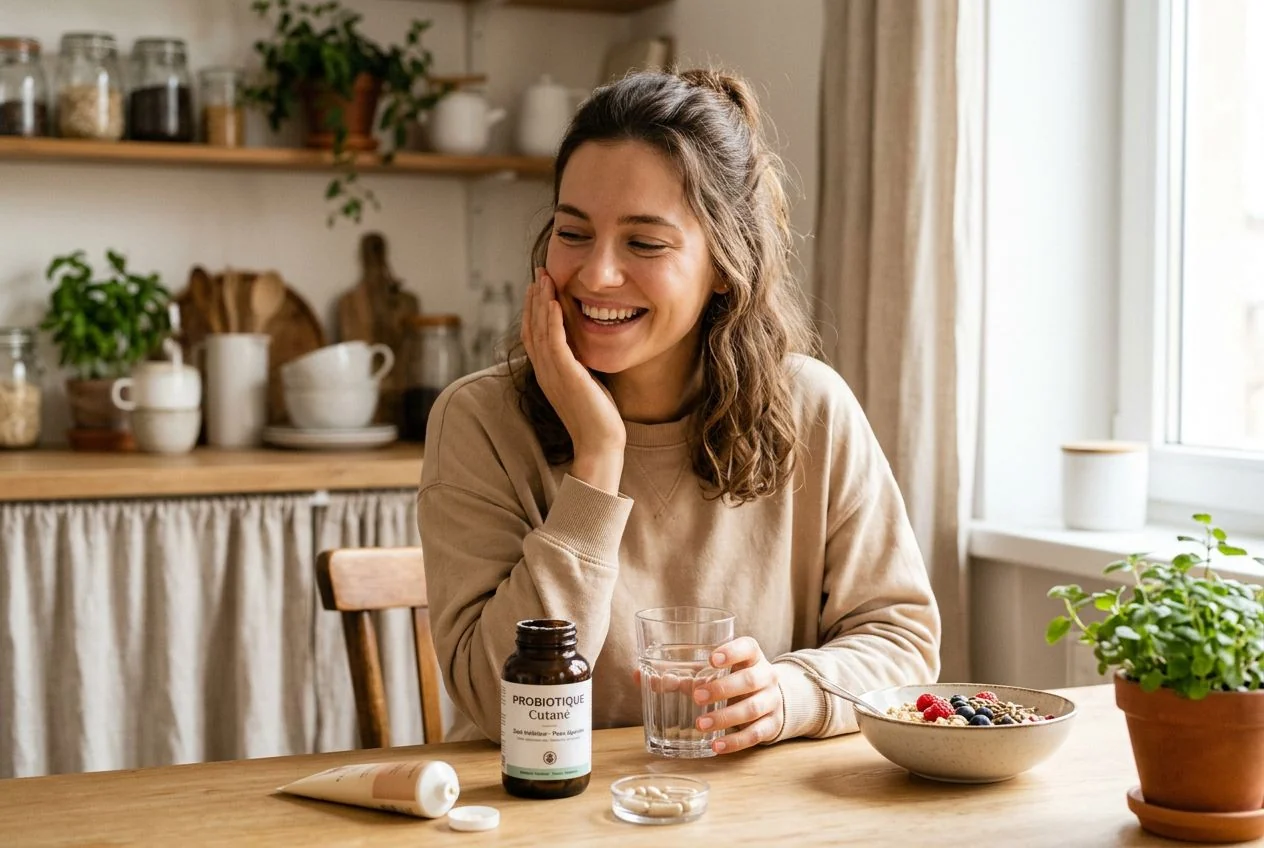
Probiotics are live microorganisms, often bacteria, that provide health benefits when consumed in adequate amounts. These microorganisms are attracting growing interest because of their potential to reduce inflammation. Have you ever considered the impact of a microbial balance on your skin? We examine how probiotics interact with our epidermis to soothe skin inflammation.
We will analyse the mechanism by which these beneficial bacteria exert their soothing effects. We will also explore recent scientific studies that support the benefits of probiotics for the skin. Understanding these interactions can guide your choices towards innovative, natural skin solutions. Come and discover how these invisible allies can transform our approach to skin inflammation.
How probiotics work to reduce skin inflammation
Probiotics, these live microorganisms beneficial to our health, play a crucial role in balancing the skin microbiome. But how do these invisible allies manage to ease skin inflammation? In reality, their action rests on several synergistic mechanisms.
Balancing the skin microbiome
First, probiotics help restore and maintain a harmonious balance within the skin microbiome. This complex microbial community acts as a protective barrier against external pathogens[2]. For example, lactic acid bacteria such as Lactobacillus acidophilus, Lactobacillus plantarum and Bifidobacterium lactis have shown their ability to inhibit the growth of harmful bacteria such as Staphylococcus aureus, often involved in skin infections, helping to correct dysbiosis.
Regulating the immune response
Probiotics also modulate the local immune response by influencing the production of anti-inflammatory cytokines[3]. This process is essential for calming the inflammatory response and the immune over-activity that characterise many inflammatory skin conditions such as acne (acne vulgaris), eczema and atopic dermatitis. For example, studies have shown that certain probiotic strains can stimulate the production of interleukin-10 (IL-10), a cytokine with well-established anti-inflammatory properties.
Strengthening the skin barrier
Finally, by strengthening the integrity of the skin barrier, probiotics limit the penetration of environmental irritants and allergens[1]. This reinforcement is possible thanks to an increase in the production of antimicrobial peptides and other structural elements essential for healthy, resilient skin; probiotics may also help retain moisture, regulate sebum production and counter oxidative stress.
Have you ever considered adding probiotics to your daily dermatological routine? Their potential is not limited to improving digestion; they could genuinely transform your approach to skincare.
Scientific studies on the effect of probiotics on the skin
Probiotics, defined as live microorganisms that confer a health benefit when taken in adequate amounts[4], are attracting growing interest in dermatology. But how can these bacteria influence our epidermis? Recent studies report promising but still preliminary results.
International research
Researchers around the world are interested in the impact of probiotics on inflammatory skin conditions such as acne, eczema and psoriasis[1]. Some studies suggest that the topical application of certain probiotic strains may help reduce the redness and irritation associated with these conditions and support wound healing, although the evidence is still emerging. The proposed mechanisms are that probiotics help strengthen the skin barrier and modulate the local immune response.
Anti-inflammatory effects
Several works highlight the role of probiotics in reducing skin inflammation. Strains such as Lactobacillus rhamnosus and Bifidobacterium longum have shown an ability to reduce the production of pro-inflammatory cytokines responsible for excessive inflammatory reactions. This raises an intriguing question: could we envisage a new era in the treatment of chronic dermatological diseases thanks to probiotics?
Improving the skin flora
The balance of the skin microbiome is crucial for maintaining healthy skin[2]. Recent studies indicate that oral probiotics and dietary sources such as fermented foods (kefir, kimchi, sauerkraut and kombucha) can improve this balance by encouraging a beneficial microbial diversity, reflecting the gut-skin and gut-brain axes. Could this holistic approach become a central pillar of preventive dermatological care? The future looks promising.
In short, although more studies are needed to confirm these findings, it is undeniable that probiotics open up exciting new perspectives for those who suffer from skin inflammation. Have you ever wondered how to bring these microscopic allies into your daily routine to optimise your skin health? The possibilities are endless.
Using probiotics in dermatological treatment
Probiotics are not limited to promoting a healthy gut microbiome; their potential also extends to the dermatological field[3]. But how can these beneficial microorganisms be effectively integrated into your skincare routine? Recent studies have highlighted their ability to ease skin inflammation, particularly that linked to conditions such as eczema or rosacea.
Practical applications of probiotics for the skin
Are you considering adding probiotics to your skincare regimen? Here are a few ways they could transform your approach:
- Oral supplements: oral probiotics, food supplements containing specific strains such as Lactobacillus rhamnosus, Lactobacillus plantarum or Bifidobacterium lactis, could strengthen the skin barrier and reduce redness.
- Topical products: topical probiotics in creams and serums aim to restore the balance of the skin microbiome, creating an environment hostile to pathogenic bacteria: an approach studied for probiotics for acne.
- Post-treatment care: after a dermatological procedure, applying products containing probiotics could speed up the healing process by soothing inflammation and supporting cell regeneration.
The wise use of probiotics in a dermatological treatment requires a thorough understanding of their interactions with our skin. It is crucial to choose formulations suited to your specific needs, while remaining vigilant about any allergic reactions. By consulting a dermatologist or qualified healthcare professional, you could discover how these invisible allies can play a key role in improving your skin and supporting your skin care.
Have you ever considered exploring this promising path to relieve your dermatological problems? The fascinating world of probiotics offers a multitude of opportunities for those seeking to improve their overall health through natural, scientifically validated means.
Frequently asked questions about probiotics and skin inflammation
How can probiotics help reduce skin inflammation?
Probiotics help manage skin inflammation by changing the composition of the gut microbiome. They strengthen the gut barrier and prevent the passage of harmful microbes that can cause inflammatory reactions. SwiLab offers formulations specifically designed to promote an optimal bacterial balance, thereby supporting the health of your skin.
What is the best way to take probiotics for skin benefits?
To maximise the benefits of probiotics on the skin, it is advisable to take them in the form of food supplements. SwiLab offers well-formulated probiotic products that can be easily incorporated into your daily routine, increasing your intake of beneficial bacteria to help reduce skin inflammation.
Do probiotics have side effects?
Probiotics are generally safe for most people; however, minor side effects such as bloating or gas can occur at the start of use. SwiLab advises starting with a small dose so the body adjusts gradually, thereby minimising any potential discomfort linked to a change in the gut microbiome.
Which types of probiotics are most effective for skin inflammation?
Specific probiotic strains, such as Lactobacillus and Bifidobacterium, have been studied for possible effects on skin inflammation, with promising but still emerging evidence. SwiLab stresses the importance of choosing products containing well-studied strains to support skin health by rebalancing the gut flora. A dermatologist can advise on what is suitable for your situation.
Can probiotics be used in conjunction with a dermatological treatment?
Yes, probiotics can complement a dermatological treatment to optimise results. SwiLab products are formulated to suit many therapeutic approaches, strengthening the skin’s natural defences while minimising inflammatory symptoms. Always consult a healthcare professional before adding new supplements to your existing protocol.
Sources and references
4 sources- Mahmud M.R., Akter S., Tamanna S.K. et al., Impact of gut microbiome on skin health: gut-skin axis observed through the lenses of therapeutics and skin diseases
- Sinha S., Lin G., Ferenczi K., The skin microbiome and the gut-skin axis
- Mazziotta C., Tognon M., Martini F. et al., Probiotics mechanism of action on immune cells and beneficial effects on human health
- Hill C., Guarner F., Reid G. et al., Expert consensus document: the ISAPP consensus statement on the scope and appropriate use of the term probiotic