Which supplements for athletes in Switzerland?
Quick summary
No food supplement is officially “specific to Swiss athletes”: the context (60% vitamin D deficiency in winter, iron in female endurance athletes, doping risk) steers the choice towards three or four documented micronutrients.
Key facts
Key takeaways
- No regulatory category “supplement for Swiss athletes” exists: the “Swiss made” label guarantees a production site, not an anti-doping testing protocol.
- More than 60% of the Swiss population has a vitamin D deficiency during the cold season, compared with 80% of sufficient intake in summer (FOPH study, 1,400 people).
- Up to 60% of female athletes have an iron deficiency, which reduces endurance by 3 to 4% according to the 2024 systematic review in the Journal of Sport and Health Science.
- Between 5 and 20% of supplements on the global market are reportedly contaminated by banned substances, according to data reported by Swiss Sport Integrity.
- The Swiss Sports Nutrition Society Guide ranks supplements in four categories; only those in category A can be useful in certain situations.
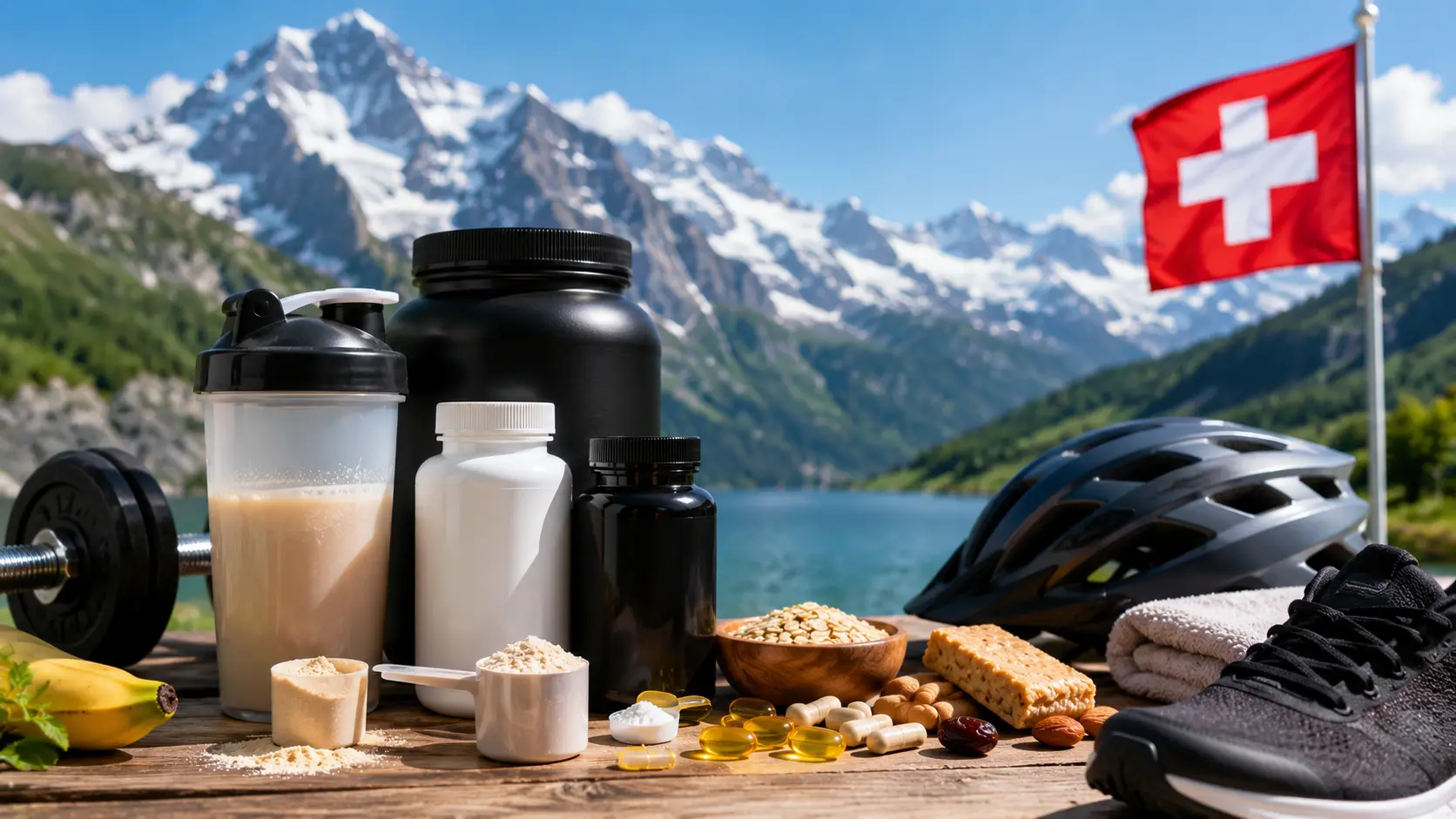
According to the Federal Office of Public Health, nearly 60% of the Swiss population shows a vitamin D deficit during the cold season. This figure throws light on the question of the food supplement for the athlete living in Switzerland: no product is officially “specific to Swiss athletes”, but three local factors steer the choice: latitude, the alpine climate and the federal anti-doping framework. This benchmark on the method for choosing well brings together the physiological, climatic and regulatory parameters useful for the decision.
Is there a “Swiss athlete-specific” supplement?
What does “Swiss food supplement” actually mean?
The term “Swiss supplement” does not designate any specific regulatory category. It signals a manufacturing or packaging site located in Switzerland, subject to the Federal Act on Foodstuffs and Utility Articles and to the oversight of cantonal chemists, but creates no obligation of sporting protocol. According to Swiss Sport Integrity, food supplements are not regulated by Swissmedic, unlike medicines[1], which implies less strict quality requirements than a pharmacy product or a medicine intended for medical care.
In 2024, a national campaign run by the Association of Cantonal Chemists of Switzerland tested 127 samples from 72 companies offering food supplements online in Switzerland and the Principality of Liechtenstein, whether capsules, tablets, powders or bars. Of these 127 products, 113 (89%) had their sale banned because of unsafe or prohibited ingredients[1]. Swiss origin reduces certain import risks, without constituting proof of absolute quality, whatever the brand displayed or the flavours offered.
Which products are really useful according to Swiss institutions?
The Nutritional Supplements Guide of the Swiss Sports Nutrition Society ranks supplements in four categories[7]. Category A gathers products that may make sense in certain situations, category B those whose scientific evidence is emerging and which deserve individualised follow-up, category C those for which no clear benefit is demonstrated, category D substances prohibited by the World Anti-Doping Agency’s Prohibited List. This hierarchy helps in choosing a food supplement according to the goal pursued rather than commercial promises.
For the Swiss athlete, this guide usefully replaces marketing arguments: creatine monohydrate, whey-type protein powders and caffeine appear in it as category A supplements[7], whether consumed as capsules, shakes, drinks or energy bars. A narrative review published in Nutrients in 2024 retains a broader hierarchy — creatine, beta-alanine, nitrates, caffeine and protein — as the five active ingredients with the most robust evidence in sports nutrition science[2], it being understood that the SSNS expresses specific reservations about the ergogenic effect of nitrates.
Which micronutrients really concern the athlete in Switzerland?
Why is iron a particular problem in female athletes?
Up to 60% of female athletes show an iron deficiency[3], which degrades endurance by 3 to 4% on average[3]. A systematic review published in 2024 in the Journal of Sport and Health Science, covering 23 studies and 669 female athletes[3], reports that oral supplementation of about 100 mg per day of elemental iron for up to 56 days — about a two-month course in a deficiency context — improves endurance performance by 2 to 20% in deficient female athletes[3].
Iron losses in endurance athletes combine effort-related digestive micro-bleeding, impact haemolysis (running, cycling, intensive fitness) and, in women, menstrual losses. Blind supplementation remains discouraged, however: iron excess generates oxidative stress that can harm performance and bodily health[4]. The way forward is through a ferritin measurement prescribed by a healthcare professional before any purchase or intake.
Is vitamin D a real issue for athletes in Switzerland?
Yes, because of latitude. More than 60% of the Swiss population has a vitamin D deficiency between December and March[5]. This figure comes from a FOPH study carried out on about 1,400 people aged 15 and over[8], which also measures 80% of sufficient intake in summer (June–September)[8]. The Federal Nutrition Commission recommends an intake of 600 IU per day between the ages of 3 and 60, and 800 IU beyond[5], a recommendation aligned with that of the World Health Organization. A winter course in oil drops or tablets is the most widely available form on the Swiss market.
The outdoor athlete is not protected by practice in the mountains during the cold season: skin production drops sharply between December and March in Switzerland, whether on a bike outing, an indoor fitness training session or a winter mass-participation sport. A study carried out in Poland, in Gdansk (latitude 54°N, further north than Switzerland), on 35 footballers observed a drop in 25(OH)D from 33.9 to 23.7 ng/mL — about 85 to 59 nmol/L — over the autumn season[6], taking the cohort from an optimal level to an insufficient level according to Swiss thresholds. At the latitude of Switzerland (~47°N), an effect of the same order is to be expected in the outdoor athlete, with a possible impact on muscle function, energy and recovery.
Which other nutrients deserve attention according to the sport profile?
Magnesium, proteins and creatine come next, but their indications depend on the profile and the goal. Magnesium, often available as citrate or bisglycinate, is physiologically lost through prolonged sweating: a deficit is not systematic, but repeated intense effort in the amateur who is insufficiently covered can justify a targeted mineral intake. Other active ingredients such as zinc, calcium, potassium or amino acids circulate widely on the shelves, but their real value depends on diet and laboratory testing. Proteins (whey or plant source) and creatine concern strength sports and mixed disciplines: they are not specific to Swiss athletes, but appear in category A of the Swiss Sports Nutrition Society Guide[7].
According to Swiss Sport Integrity, athletes’ performance rests first on a healthy underlying diet[1], rich in natural foods. Food supplements — whether a multivitamin, a mineral complex, an energy drink or an immune support — can complement this base in specific situations, but never replace it. Assessment by an independent healthcare professional remains advisable before any long-term supplementation, in particular for active ingredients with broad promises (collagen, ashwagandha, glucosamine, omega, arginine).
How to choose a supplement while avoiding the risk of doping?
Why is a supplement made in Switzerland not a sufficient guarantee?
Because Swiss manufacture does not imply per-batch anti-doping testing. According to Swiss Sport Integrity, between 5 and 20% of supplements on the global market are contaminated by substances on the World Anti-Doping Agency’s Prohibited List[1]. This estimate, drawn from a scientific publication cited by the foundation, covers unintentional contamination (shared facilities, soiled raw materials, poorly monitored plant extracts) and intentional additions not declared on the product label, whether a tablet, a protein shake, an energy gel or a bar.
The athlete licensed with a federation affiliated to Swiss Olympic is subject to the principle of strict liability: a positive test linked to a contaminated supplement remains their responsibility[1]. The mere “Swiss made” label is therefore not a sufficient barrier, regardless of the price paid or the promise displayed (weight loss, fat burner, muscle mass, immune support). Several suspension cases have been reported in the past for supplements that appeared harmless.
Which anti-doping certifications should you favour in Switzerland?
Three independent certification programmes are recognised by Swiss Sport Integrity[1]. Cologne List, Informed Sport and NSF Certified for Sport test each batch for substances on the Prohibited List. These certifications cover the finished product — whether a powder, a tablet, a drink or a training pack — not only the factory, and impose traceability of the consumed batch. For any further information about a certified product, consulting a healthcare professional or contacting the manufacturer directly remains the most reliable way.
The explicit recommendations of Swiss Sport Integrity rank the options for the tested athlete as follows: an independently certified product as a first choice, failing that a product intended for competitive sport from a reliable Swiss manufacturer, and systematic exclusion of products ordered abroad via misleading .ch sites, products targeting the fitness or bodybuilding market (mass gainer, fat burner, slimming), and products with “miraculous” promises claiming to improve performance without effort[1].
Frequently asked questions
Is a “Swiss made” food supplement automatically safer?
Not automatically. Manufacture in Switzerland does not imply any default anti-doping certification. Food supplements are not monitored by Swissmedic, unlike medicines. According to Swiss Sport Integrity, Swiss origin reduces certain risks linked to questionable imports, but does not eliminate the risk of contamination. For an athlete subject to testing, only products carrying an independent certification label (Cologne List, Informed Sport, NSF Certified for Sport) offer a comparable level of guarantee.
Do you need to take creatine when doing sport in Switzerland?
Not systematically, but it is one of the best-documented supplements. Creatine monohydrate improves strength and power in short, intense efforts, at 3 to 5 g per day according to the recommendations of the International Society of Sports Nutrition. It appears in category A of the Swiss Sports Nutrition Society’s Supplements Guide, which gathers products useful in certain situations. Without regular strength training, its value remains limited.
Why are so many people in Switzerland short of vitamin D?
Because latitude and cloud cover reduce skin production for six months. According to a FOPH study carried out on about 1,400 people aged 15 and over, more than 60% of the Swiss population has a vitamin D deficiency between December and March, compared with 80% of sufficient intake in summer (June–September). The Federal Nutrition Commission recommends 600 IU per day between ages 3 and 60 and 800 IU beyond. For the outdoor athlete, practice in the mountains helps in summer but is not enough during the cold season.
What dose of iron should an endurance athlete take?
None without having measured their ferritin level beforehand. A systematic review published in 2024 in the Journal of Sport and Health Science indicates that up to 60% of female athletes show an iron deficiency, which reduces endurance by 3 to 4%. When the deficiency is confirmed, about 100 mg per day of elemental iron for up to 56 days improves endurance performance by 2 to 20%. Blind supplementation exposes you to iron excess, itself harmful to performance and health.
How to check that a supplement does not contain a banned substance?
By consulting an independent certification list before purchase. Swiss Sport Integrity recognises three main programmes: Cologne List, Informed Sport and NSF Certified for Sport, which test each batch for substances on the World Anti-Doping Agency’s Prohibited List. A study cited by Swiss Sport Integrity estimates that between 5 and 20% of supplements on the global market are contaminated. The licensed athlete remains responsible for the content of the product they consume, even in the event of accidental contamination.
Sources and references
8 sources- Swiss Sport Integrity — Food supplements
- Antonio J. et al. (2024). The Top 5 Can’t-Miss Sport Supplements
- Pengelly M. et al. (2024). Iron deficiency, supplementation, and sports performance in female athletes
- Kardasis W. et al. (2023). The IRONy in Athletic Performance
- Federal Nutrition Commission (FNC). Vitamin D deficiency: scientific evidence, safety and recommendations for the Swiss population
- Jastrzębska J. et al. (2021). Seasonal Changes in 25(OH)D Concentration in Young Soccer Players
- Swiss Sports Nutrition Society (SSNS). Nutritional Supplements Guide
- Federal Office of Public Health (FOPH). Vitamin D intake: new recommendations