
How much whey protein should you take per serving?
Quick summary
For most active adults, a serving of 20 to 30 g effectively stimulates protein synthesis; the exact amount is set according to weight, activity level and goal, with total daily intake mattering more than a single serving.
Key facts
Key points
- A serving of 20 to 30 g is a benchmark suited to most active adults.
- Total daily intake is calculated according to weight (about 1.6 to 2.2 g per kilo for an athlete).
- Timing matters less than overall intake: post-workout or spread across the day.
- Excess brings no benefit and can cause digestive discomfort; there is no need to overdo it.
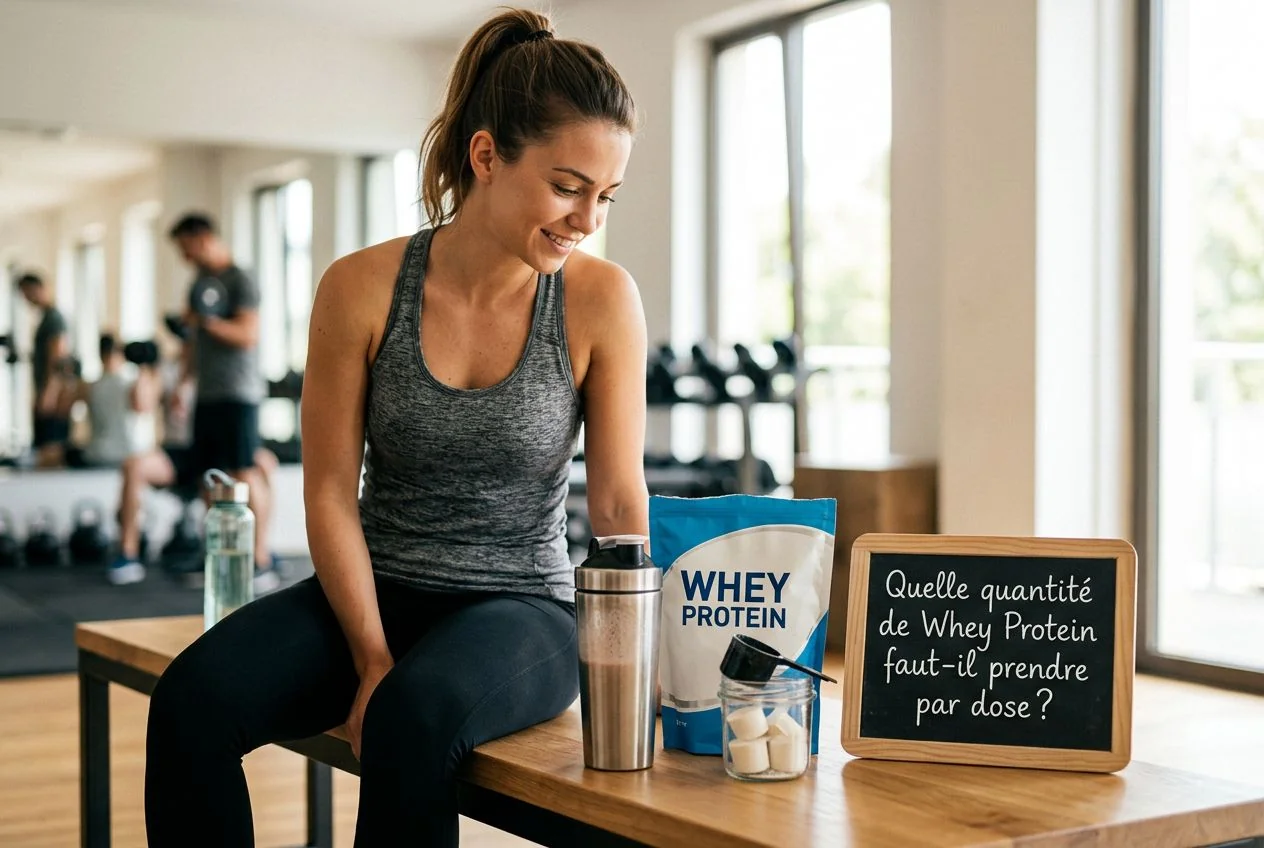
Whey protein is a high-quality protein source used to support muscle growth and recovery. What is the ideal amount per serving to get the most from it without overdoing it? This page expands on one of the key questions in our guide to consuming whey, within the complete whey protein guide: weight, activity, goals and the risks of excess.
What is the ideal amount per serving?
Determining the ideal amount is a balance between nutritional needs and personal goals. For athletes, protein intake supports muscle synthesis and recovery.
Decisive factors
- Body weight: 1.6 to 2.2 g of protein per kilo per day is generally recommended for athletes.
- Activity level: intensive training requires a higher intake.
- Goals: muscle gain or weight maintenance guide the amount.
Practical example
A 75 kg athlete aiming for muscle gain might target 120 to 165 g of protein per day. If diet does not meet this need, a whey serving of 20 to 30 g is a sensible supplement. Listen to your body: better performance and easier recovery indicate you are on the right track.[1]
The factors that affect the amount
Several elements determine the optimal amount, starting with activity level: intensive disciplines (strength training, CrossFit) often require a higher amount.
Individual needs
- Muscle gain: a higher intake stimulates the growth of muscle fibres.
- Fat loss: adjust intake to preserve lean mass without a calorie surplus.
Digestive tolerance
The digestive aspect matters: identify the form of whey, isolate, concentrate or hydrolysate, that best suits your system to avoid discomfort. Isolate, lower in lactose, is often better tolerated.
Product quality
Ingredient quality influences effectiveness and absorption: favour products free from unnecessary additives and rich in essential amino acids. The choice of liquid is covered in the article on whey with milk or water.
The consequences of overconsumption
Consuming more protein does not speed up results beyond your needs. A sustained excess can in fact cause problems, particularly in people who already have kidney impairment.
Digestive problems
Too high an amount can cause bloating, abdominal cramps or diarrhoea, especially in people sensitive to the lactose in non-isolate whey.
Nutritional imbalance
Focusing solely on protein can lead to neglecting other essential nutrients, such as complex carbohydrates and healthy fats, important for energy and recovery.
Intake beyond your needs
The body has a limited capacity to use surplus amino acids for muscle synthesis; beyond your needs, the surplus brings no additional benefit. Keeping your consumption under control therefore remains the best approach.
To put in perspective
In healthy people, no kidney impairment linked to a high protein intake has been demonstrated.[4] Caution mainly concerns people with pre-existing renal insufficiency, who should seek medical advice.
Frequently asked questions about the amount of whey per serving
How do I determine the amount of whey protein I should consume?
To determine the appropriate amount of whey protein, it is essential to consider your individual protein needs, your activity level and your health goals. In general, a serving of 20 to 30 grams is optimal for maximising muscle synthesis. Swilab also advises adjusting your intake according to your body weight and your specific nutritional needs. It is recommended to consult a nutritionist for personalised advice.
Is it possible to consume too much whey protein?
Although whey protein is safe for most people, excessive consumption can cause digestive problems, notably bloating and cramps. Swilab’s experts advise following the dosage recommendations stated on the packaging and maintaining a balanced diet. Beyond your needs, the surplus protein brings no additional benefit; in healthy people, a high protein intake does not impair kidney function, with caution only being necessary in case of pre-existing renal insufficiency.
At what time of day is it most effective to consume whey protein?
Consuming whey protein is often most beneficial immediately after training, when the body is most receptive to absorbing the nutrients needed for muscle recovery. However, Swilab also stresses that whey can be an excellent option for a quick protein snack at any time of day, when nutritional needs justify it.
Is whey protein suitable for people following a vegetarian diet?
Yes, whey protein is generally compatible with a vegetarian diet, being derived from milk. Swilab offers a range of whey protein suitable for vegetarians. However, for those following a strict vegan diet, Swilab recommends turning to other plant-based protein alternatives, which contain no animal products.
What is the difference between whey protein and casein?
Whey protein and casein both come from milk, but they differ considerably in their absorption and usefulness. Whey is digested quickly, ideal after a workout for a fast protein top-up. Casein, by contrast, is digested slowly, releasing amino acids steadily, which makes it a good supplement before bed. Swilab offers and explains the use of both types to optimise results according to athletic goals.
Sources & references
4 sources- Jäger R, et al., International Society of Sports Nutrition Position Stand: protein and exercise
- Devries MC, Phillips SM, Supplemental protein in support of muscle mass and health: advantage whey
- Regulation (EU) No 432/2012, list of permitted health claims made on foods
- Devries MC, et al.: Changes in Kidney Function Do Not Differ between Healthy Adults Consuming Higher- Compared with Lower- or Normal-Protein Diets: A Systematic Review and Meta-Analysis