
Can you make pancakes with whey protein?
Quick summary
Making pancakes with whey clearly increases their protein content while keeping a soft texture; cooking denatures the proteins without removing their amino acids, provided you reduce the flour a little and add a binder such as egg or banana.
Key facts
Key points
- Whey increases the protein content of pancakes and improves their texture.
- Cooking denatures the proteins, but the amino acids remain available to the body.
- Slightly reducing the flour and adding a binder (egg, banana) avoids an overly dense batter.
- Vanilla, chocolate or plain: the whey flavour is chosen according to your taste.
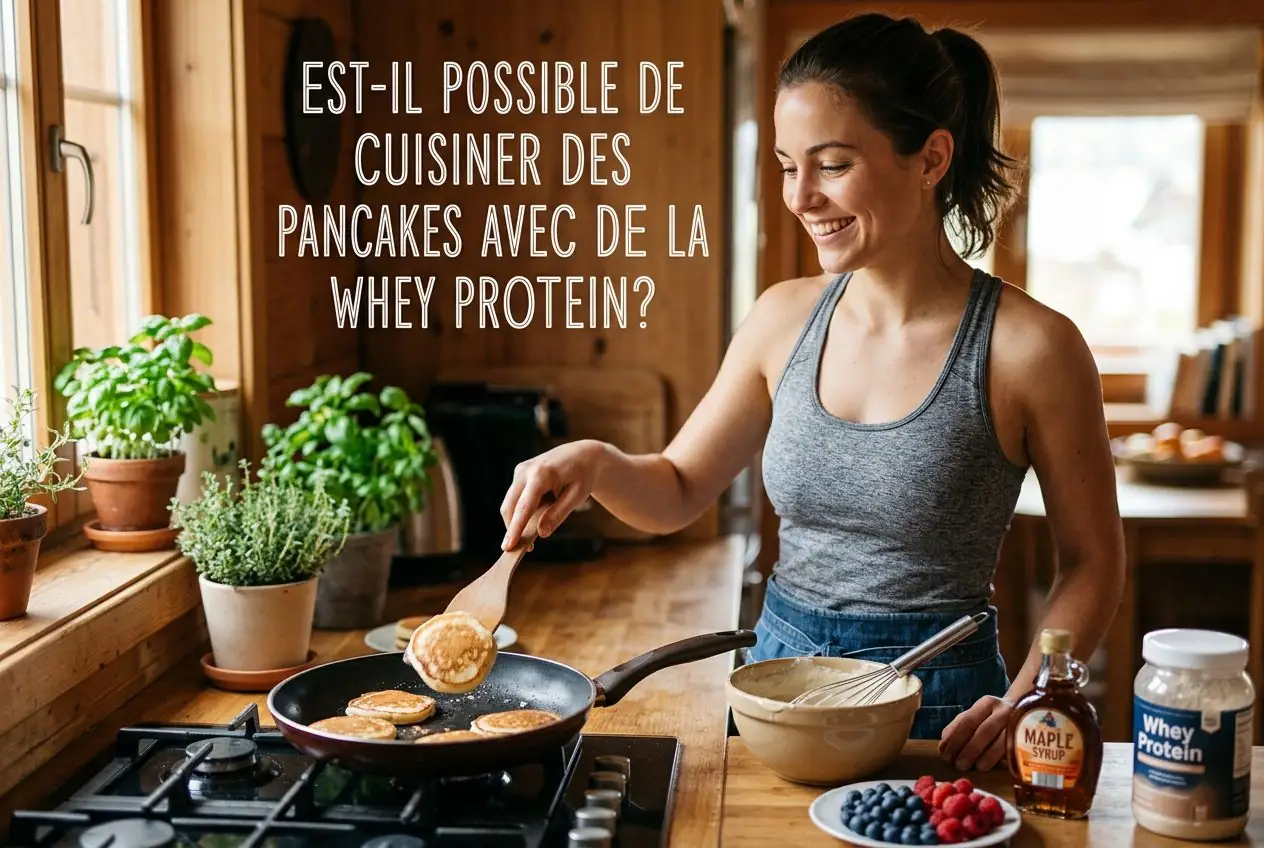
Making pancakes with whey protein: why not? This protein powder is finding more and more of a place in the kitchen. This page extends our practical guide to consuming whey, itself part of the complete dossier on whey protein: how to incorporate it, nutritional benefits and tips for pancakes that are both soft and rich in protein.
Using whey in pancake batter
Adding whey to your pancakes can turn this classic breakfast into a nutritional asset. Whey, derived from whey, is rich in essential amino acids, notably leucine, which supports muscle protein synthesis.
By adding whey to your batter, you increase the protein content and improve the texture. You can vary the flavours:
- Vanilla: for a sweet touch that pairs with fresh fruit.
- Chocolate: for an indulgent breakfast without excess.
- Plain: to customise with spices such as cinnamon or ginger.
Whey requires a few adjustments: slightly reduce the flour to avoid an overly dense texture, and add a binder (egg or mashed banana) to keep the moisture and softness. Also adjust the liquid (milk or water) to get the right consistency. Cooking denatures the proteins, meaning it changes their structure without destroying the amino acids or the nutritional value of the product.[2]
The nutritional benefits of whey pancakes
Beyond enjoyment, pancakes enriched with whey fit into a nutritional optimisation approach, useful to support physical effort and recovery.
An optimal protein intake
Whey is known for its content of essential amino acids, notably the BCAAs that play a key role in muscle protein synthesis. Added to pancakes, it turns this meal into an ally of your training routine.
Blood-sugar control and satiety
Protein slows the absorption of carbohydrates, which helps stabilise blood sugar after the meal. Its filling effect also helps avoid mid-morning cravings.
Culinary versatility
You can adapt the recipe to your goals (muscle gain or fat loss) and vary it with chia seeds or berries. Oven or pan cooking is also covered in the article on whey in baking.
Tips for getting your recipe right
For soft pancakes while enjoying the protein benefits, follow these few pointers.
Choosing the right whey
Opt for a quality whey, free from unnecessary additives and easy to mix. A powder that is too grainy spoils the texture; an ultra-filtered variant blends in better.
Balancing the ingredients
To avoid a dry or dense batter, add moistening elements:
- Ripe bananas: natural sweetness and moisture.
- Milk (dairy or plant-based): for a light texture; see the article on choosing the liquid for whey.
- Eggs: for an airy consistency.
Mastering the cooking
Preheat the pan over medium heat, use a little fat to stop them sticking, and flip the pancakes once bubbles appear on the surface. To customise: dark chocolate chips, cinnamon, vanilla or crushed nuts enhance your creations.
Frequently asked questions about whey pancakes
What is whey protein?
Whey protein is a protein source derived from milk. It is widely used for its fast absorption and its composition rich in essential amino acids. Swilab offers several whey protein variants, suited to different nutritional needs, from athletes to people looking to increase their protein intake.
How can whey pancakes be beneficial?
Pancakes made with whey protein are beneficial because they offer a protein-rich alternative right from breakfast. This lets you start the day with balanced nutrition. Swilab recommends combining them with fresh ingredients for an optimal nutritional intake and a delicious taste.
Is Swilab whey protein suitable for specific diets?
Yes, Swilab offers different whey protein formulations that can suit various diets, including gluten-free and low-lactose diets. It makes a point of providing detailed information on ingredients so that every consumer can make an informed choice, according to their dietary needs and restrictions.
What is the best way to make whey protein pancakes?
To make whey protein pancakes, simply mix whey powder with eggs, milk or a dairy alternative, and a little flour. You can round off the mix with fruit or nuts for more flavour and texture. Swilab offers recipes on its website to guide you.
Does protein affect the cooking of pancakes?
Yes, adding protein, such as whey, can affect the texture of pancakes, often making them softer and more substantial. It is important to measure the ingredients carefully to stop the batter becoming too dense. Swilab advises experimenting with the proportions to reach the desired consistency.
Sources & references
3 sources