
Should you take supplements with meals in case of nausea?
Quick summary
Yes, in most cases. Taking your supplement with a meal reduces nausea and improves the absorption of fat-soluble vitamins, with two notable exceptions: vitamin C and some probiotics.
Key facts
Key points
- Iron taken on an empty stomach causes nausea in about 24% of women treated with ferrous sulphate at 80 mg, against 8% with iron bisglycinate at 30 mg combined with folate (Kondratiuk 2026).
- Vitamin D is absorbed better when the meal contains fats, according to the systematic review by Silva & Furlanetto (2018) covering 46 studies.
- Vitamin C, B vitamins and some probiotics tolerate or prefer intake on an empty stomach in the morning, outside a meal rich in fibre or coffee.
- In Switzerland, nearly one adult in three takes at least one supplement, which makes intake advice particularly useful to limit digestive discomfort and loss of effectiveness (FSVO, Swiss Nutrition Bulletin 2023).
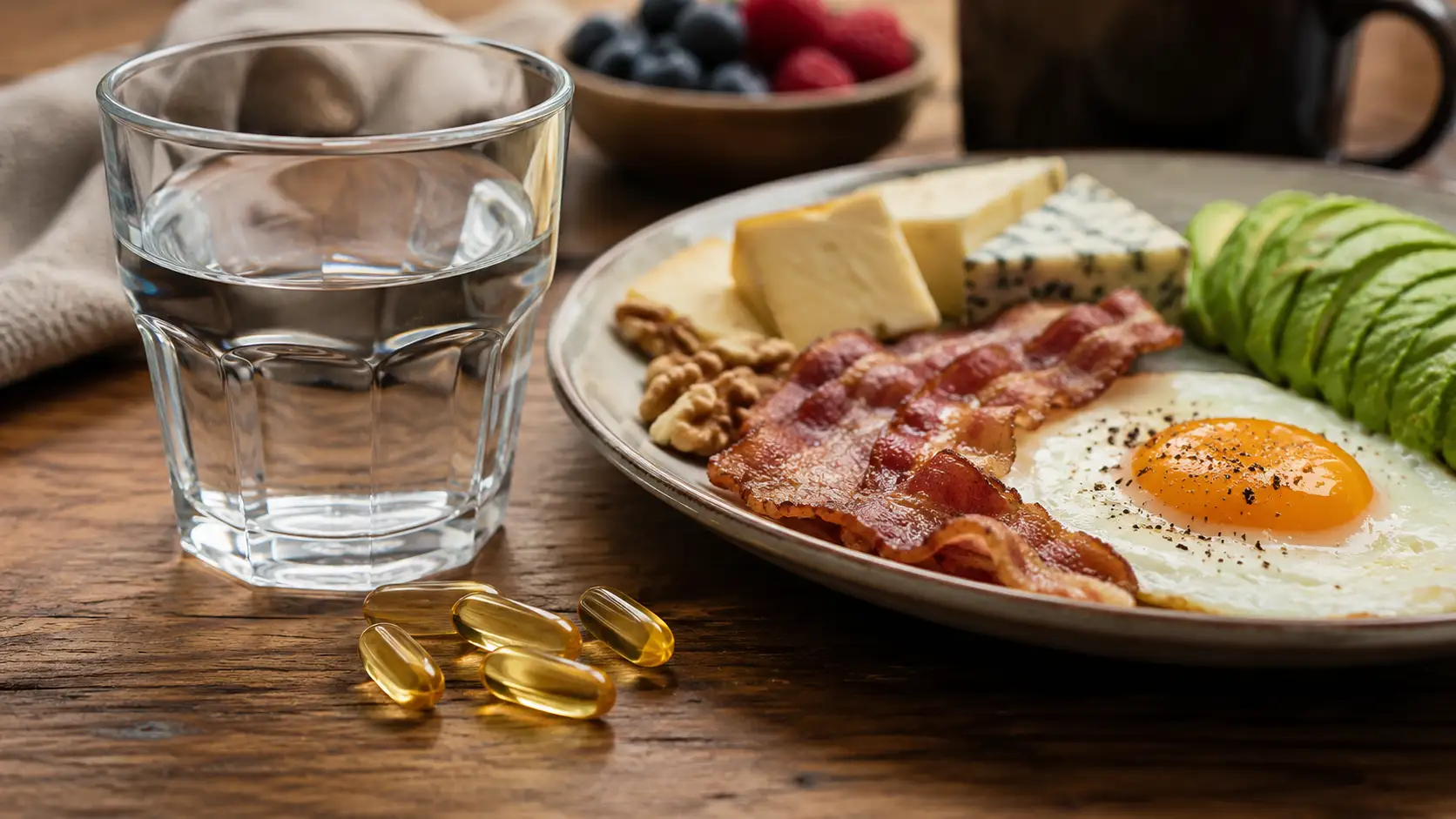
Nearly one Swiss adult in three consumes at least one food supplement according to the FSVO survey published in 2023, and many do so at a time that amplifies nausea rather than avoiding it. In the world of food supplements, the time of intake is a concrete parameter: it influences both digestive tolerance and the amount of nutrient actually absorbed. This article is part of the when to take a food supplement dossier and focuses on a precise question: should you take your supplement with a meal to limit nausea and stomach upset?
Why can a supplement cause nausea?
How does a supplement irritate the stomach on an empty stomach?
On an empty stomach, some food supplements come into direct contact with a gastric lining that has no food buffer and cause nausea within minutes. Ferrous iron, zinc and magnesium are, for example, the minerals most often involved: these substances locally irritate the gastric wall and stimulate the receptors of the digestive tract, which triggers the nausea reflex. This direct interaction with the lining increases the risk of digestive discomfort affecting short-term health. A clinical study published in 2026 on 120 women aged 18 to 35 with iron deficiency reported 24.1% of nausea with ferrous sulphate at 80 mg, against 8.3% with bisglycinate at 30 mg combined with folic acid[1], both groups taking the supplement 30 minutes before meals. The higher the dose and the more aggressive the form of the product on the stomach, the more problematic intake on an empty stomach becomes, particularly in people with a sensitive digestive system or in a state of prolonged fatigue. As a practical tip, it is better to avoid these supplements on an empty stomach in case of digestive stress.
Which nutrients are the most uncomfortable on an empty stomach?
Ferrous iron comes out clearly on top, followed by zinc, magnesium oxide, some heavily dosed vitamin-and-mineral combinations and prenatal food supplements intended for pregnancy. A vitamin or iron deficiency often justifies these concentrated forms, which heightens the risk of discomfort on an empty stomach. A preclinical study in rats published in Scientific Reports in 2025 shows that, at an equivalent dose, ferrous sulphate raises the expression of a marker of intestinal inflammation (interleukin-6) more strongly than microencapsulated forms of iron[2]. The mechanism is consistent with users’ experience: on an empty stomach, these mineral salts are not diluted by food, their local concentration is higher, and contact with the lining causes pain, burning or retching. The meal then plays a simple and effective role: it spreads the dose throughout the day and dilutes contact with the wall of the digestive system, which helps the intake be better digested without giving up effectiveness.
Which supplements should be taken with a meal?
Why are iron, zinc and magnesium better taken with a meal?
For iron, zinc and magnesium, taking the dose in the middle of a meal is the recommended time to reduce nausea without cancelling the effectiveness of this family of trace elements. The ingested food plays two roles: it dilutes the local mineral concentration in the stomach and slows the passage into the intestine, which reduces the peaks of irritation and improves digestive comfort. A controlled study published in 2024 on 68 adult women with iron-deficiency anaemia showed that iron taken every other day caused 9% of unwanted digestive effects, against 45% with daily intake[3] — an argument in favour of spacing, complementary to intake with a meal. For food supplements containing several minerals at once, the meal remains the default rule, unless the supplier specifies otherwise in the recommended dosage. It is a simple choice to limit digestive fatigue when supplements must be taken over the length of a course.
Why do vitamins A, D, E and K need fat?
These four vitamins are fat-soluble: they do not dissolve in water, and their passage into the bloodstream depends on the presence of fats in the meal. A systematic review published in Nutrition Reviews in 2018 by Silva and Furlanetto reviewed 46 studies on vitamin D absorption and confirms that it is better when intake is accompanied by a food containing some fat[4]. The same biological principle applies to vitamins A, E and K, which take the same absorption pathway via dietary lipids. In practice, a spoonful of olive oil, half an avocado, a few nuts or a full-fat yogurt are enough to optimise absorption: the meal does not have to be heavy. These examples show that a basic balanced diet is enough, without resorting to foods of particular or exceptional quality. This rule also applies to omega-3 fatty acids and coenzyme Q10, which belong to the same category of substances transported via fats in the body.
Which supplements should be avoided with a meal?
Why are vitamin C and B vitamins rather taken on an empty stomach?
Vitamin C and the B group vitamins, including vitamin B12 which contributes to a normal function of the central nervous system and to the reduction of fatigue, are water-soluble: they pass into the bloodstream without the help of fats and are eliminated in urine within a few hours. Taking them with a meal rich in whole grains, legumes or green tea can slow their uptake, with no particular benefit for metabolism. A review published in Nutrients in 2024 confirms that the phytates contained in whole-grain foods reduce the bioavailability of iron and zinc[5]; for vitamin C, coexistence with these foods adds nothing extra for the body. In the morning, a large glass of water before breakfast remains one of the best times — simple and well tolerated by most adults in activity, whether to provide an energy boost at the start of the day or to complement a varied diet. If intake on an empty stomach causes heartburn, switching to a buffered tablet or to intake during a meal remains a reasonable alternative.
How to place probiotics relative to meals?
Probiotics are not a clear-cut case: for many strains, intake just before a light meal or during one protects the bacteria from gastric acidity better than intake on an empty stomach in the mid-afternoon. The ingested food neutralises part of the gastric acid, which increases the proportion of bacteria that reach the intestine alive, where they support the intestinal flora and the gut microbiota. This balance plays a role in digestion, in transit comfort and contributes to the immune system. Resistance to acidity varies from one strain to another: Lactobacillus rhamnosus GG is documented for its ability to survive gastric pH and bile salts[6], but this is not the case for every strain available on the market. The practical rule is to follow the product leaflet: if it does not specify anything, a breakfast or a light dinner makes a reasonable point of intake, to integrate sustainably into one’s lifestyle. If several supplements are taken at the same time, it is better to space probiotics from heavily dosed minerals. In case of doubt or need for help in adjusting intake, it is advised to contact a healthcare professional.
Frequently asked questions
What is the best time to take a food supplement?
It depends on the molecule. Minerals (iron, zinc, magnesium) and fat-soluble vitamins (A, D, E, K) are taken in the middle of a meal to limit nausea and improve absorption. Vitamin C, B vitamins and some probiotics are rather taken in the morning, on an empty stomach or shortly before a light breakfast. The FSVO recalls that a food supplement does not replace a balanced and varied diet, and that regularity of intake counts more than precision of timing (FSVO, Swiss Nutrition Bulletin 2023).
Does iron cause nausea?
Yes, it is the most frequent side effect. Ferrous iron irritates the stomach lining when taken on an empty stomach, especially at high doses. A clinical study published in 2026 on 120 women aged 18 to 35 with iron deficiency reported 24.1% of nausea with ferrous sulphate at 80 mg, against 8.3% with bisglycinate at 30 mg combined with folate, both groups taking the supplement 30 minutes before meals (Kondratiuk 2026). If nausea persists, splitting the dose or switching to a better tolerated form of iron should be discussed with a pharmacist.
Should multivitamins be taken during or after the meal?
During the meal, or immediately after. Multivitamins often combine iron, zinc, magnesium and fat-soluble vitamins, all of which require intake with a meal. Taking them in the middle of the meal dilutes the minerals in the food bolus and provides the fat needed by vitamins A, D, E and K. The review by Silva & Furlanetto (2018) confirms the effect of dietary fat on vitamin D absorption. Intake immediately after is equivalent, provided the meal contains a minimum of fats.
What to do if nausea persists despite intake with a meal?
Three levers exist. First, space the intakes: a controlled trial on iron-deficiency anaemia showed that every-other-day intake led to 9% of digestive effects against 45% with daily intake (Dhanush 2024). Second, change form: iron bisglycinate is better tolerated than ferrous sulphate with comparable efficacy (Kondratiuk 2026; Milman 2024). Third, ask a pharmacist or a doctor for advice before continuing, especially in case of abdominal pain, very dark stools or nausea lasting more than a few days.
Can supplements be taken with coffee or tea?
Not for minerals. Coffee, tea and some whole-grain cereal foods contain compounds that bind to iron and zinc in the intestine and reduce their absorption; a review published in Nutrients in 2024 documents this effect for cereal phytates (Chondrou 2024). A delay of about 1 to 2 hours between the hot drink and intake of a mineral supplement is advised by most manufacturers. For fat-soluble or water-soluble vitamins, the effect is more modest and does not impose any strict precaution. In case of doubt, a large glass of still water remains the most neutral drink.
Sources and references
8 sources- Kondratiuk V.K. et al. (2026). Experience of using modern oral iron formulations for the correction of iron deficiency conditions in women of reproductive age.
- Mariné-Casadó R. et al. (2025). Comparative study of the effects of different iron sources on bioavailability and gastrointestinal tolerability in iron-deficient rats.
- Dhanush M. et al. (2024). Daily Versus Alternate Day Oral Iron Replacement for Women with Iron Deficiency Anaemia: A Randomized Controlled Trial.
- Silva M.C. & Furlanetto T.W. (2018). Intestinal absorption of vitamin D: a systematic review.
- Chondrou T. et al. (2024). Dietary Phytic Acid, Dephytinization, and Phytase Supplementation Alter Trace Element Bioavailability — A Narrative Review of Human Interventions.
- Capurso L. (2019). Thirty Years of Lactobacillus rhamnosus GG: A Review.
- FSVO — Solliard C., Benzi Schmid C., König S.L.B. (2023). The consumption of food supplements in Switzerland.
- Milman N.T. & Bergholt T. (2024). Low-Dose Prophylactic Oral Iron Supplementation (Ferrous Fumarate, Ferrous Bisglycinate, and Ferrous Sulphate) in Pregnancy.