
Which foods are richest in magnesium?
Quick summary
To meet your needs through your plate, focus first on pumpkin seeds, nuts and 70% dark chocolate, rounded out with legumes, whole grains and leafy greens such as spinach: the density in milligrams matters, but it is the portion you actually eat that determines your intake.
Key facts
Key points
- The foods densest in magnesium are seeds, nuts, dark chocolate, legumes and whole grains.
- The figure shown per 100 g should always be scaled to the portion actually eaten: a whole bar of chocolate is not a portion.
- Varying plant sources normally covers the recommended 300 to 400 mg per day in adults.
- Dietary magnesium carries no risk of overdose, unlike high-dose supplements which can cause digestive upset.
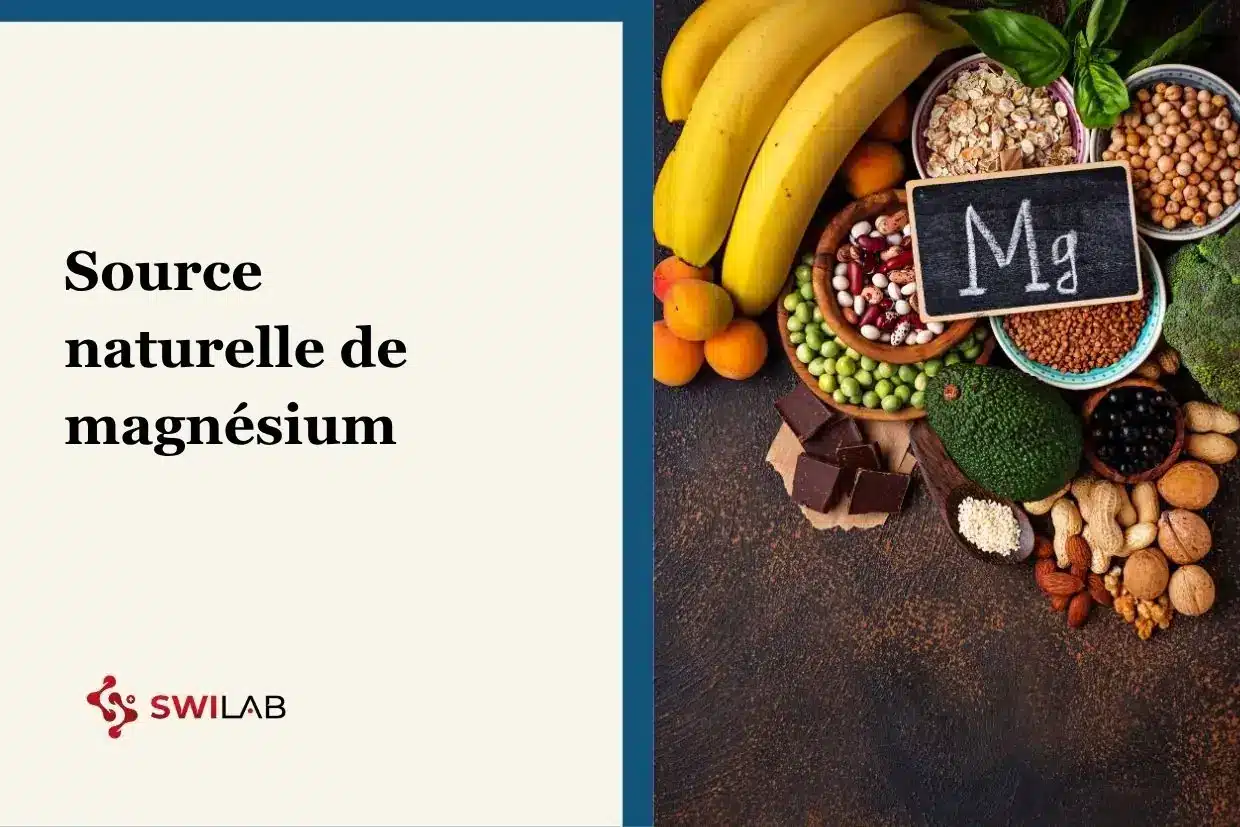
Magnesium is an essential mineral that acts as a cofactor in more than 300 enzymatic reactions: energy production, muscle function, nerve transmission and bone mineralisation. Yet, between a demanding pace of life and a poorly varied diet, the recommended daily intake is not always reached. This article is part of the complete magnesium guide and reviews the foods richest in magnesium, from dark chocolate to pumpkin seeds, distinguishing the density shown per 100 g from what a portion at the table actually represents. When diet falls short, magnesium (bis)glycinate supplies this mineral in a chelated form.
Why is dark chocolate a good source of magnesium?
Dark chocolate is among the foods densest in magnesium: per 100 g of chocolate at 70% cocoa, there are around 230 mg of magnesium. The cocoa is responsible for this, and the higher the cocoa content, the more worthwhile the intake. The magnesium it supplies contributes to normal energy-yielding metabolism and to the reduction of tiredness and fatigue, two functions recognised by the European Food Safety Authority (EFSA)[3].
Choosing a chocolate that is genuinely rich in cocoa
To maximise the intake, favour a bar of dark chocolate at no less than 70% cocoa, preferably organically grown and free of needless additives. Beyond magnesium, cocoa supplies flavonoids, antioxidant compounds studied for their cardiovascular interest.
Caution
The figure per 100 g is misleading: a sensible portion of dark chocolate is around 20 to 30 g. Eaten as a whole bar, it becomes mainly a source of calories and sugar. Chocolate is a pleasant extra, not the basis of your magnesium intake.
Which nuts and seeds pack the most magnesium?
Nuts, almonds, hazelnuts, walnuts, cashews, Brazil nuts, are among the most reliable plant sources of magnesium, with the advantage of being easy to fit into everyday eating. A handful as a snack contributes both to magnesium intake and to that of good fats. To compare nuts and seeds by their mineral density, however, it is better to think in terms of a realistic portion.
Almonds, hazelnuts, walnuts: safe bets
Almonds are often cited as the athlete’s ally: a handful at the end of the day supplies magnesium that contributes to normal muscle function and to the reduction of tiredness and fatigue. Hazelnuts and walnuts offer a comparable profile, while varying the flavours and fatty acids. Brazil nuts, for their part, stand out chiefly for their richness in selenium: to be eaten sparingly, one or two a day being more than enough.
Key takeaway
A portion of nuts is about 30 g, or a small handful. Unsalted and not roasted in oil, they retain the best nutritional value.
How do legumes and whole grains contribute?
Legumes and whole grains form the foundation of a magnesium-rich diet, because they are eaten in substantial portions and recur often across meals. Their value is not limited to magnesium: they provide fibre, plant protein and other minerals.
Lentils, chickpeas, beans
Lentils, chickpeas and beans supply magnesium while being rich in fibre and plant protein, useful for cutting back on meat without losing protein. Soups, stews, chickpea salads or chickpea flour: there are many ways to include them, and their satiating effect makes them an ally of balanced meals.
Oats, buckwheat, quinoa
When it comes to whole grains such as oats, buckwheat or quinoa, refining is the enemy of magnesium: the mineral is concentrated in the bran and germ of the grain, which are removed during processing. Choosing wholegrain versions means keeping the magnesium, the fibre and the other micronutrients of the grain.
Spinach and pumpkin seeds: what real intake?
Leafy greens and small seeds usefully round out the picture, but with two opposing logics: spinach relies on the volume eaten, the pumpkin seed on density.
Spinach, a staple leafy green
With around 79 mg of magnesium per 100 g, spinach and other leafy greens are not the densest, but they are eaten in good portions and also provide fibre, folate and antioxidants. Plant magnesium is in fact at the heart of chlorophyll, which explains the relative richness of green leaves. Raw in salads or quickly steamed, they fit easily into many dishes.
Pumpkin seeds, density champions
Pumpkin seeds are among the most concentrated sources, with a content in the region of 260 mg per 100 g, alongside zinc, antioxidants and essential fatty acids. As they are eaten in small amounts, a tablespoon sprinkled over a salad, a yoghurt or muesli, they make an excellent extra rather than a dish in their own right.
Frequently asked questions
Which foods are richest in magnesium?
The foods densest in magnesium are seeds (notably pumpkin seeds, around 260 mg per 100 g), nuts (almonds, hazelnuts, walnuts), dark chocolate at 70% cocoa (about 230 mg per 100 g), legumes (lentils, chickpeas, beans) and whole grains (oats, buckwheat, quinoa). Leafy greens such as spinach round out the intake. The key is to vary these sources, because the figure shown per 100 g should always be scaled to the portion actually eaten.
Is dark chocolate a real source of magnesium?
Yes, but with nuance. Dark chocolate at 70% cocoa contains around 230 mg of magnesium per 100 g, making it one of the densest foods. However, a sensible portion is around 20 to 30 g: scaled to that amount, the intake remains moderate, and chocolate is also rich in calories and sugar. It is a pleasant extra, best chosen in the richest possible cocoa version, but not the basis of a daily magnesium intake.
Can you meet your magnesium needs through diet alone?
In most cases, yes. A varied diet combining leafy greens, legumes, nuts, seeds and whole grains normally covers the recommended 300 to 400 mg per day in adults. Magnesium from food carries no risk of overdose. Supplementation can be justified in certain particular situations, but it is ideally discussed with a healthcare professional, especially in the event of persistent symptoms or ongoing treatment.
Do cooking and refining reduce the magnesium in foods?
Refining is the main factor in loss: for grains, magnesium is concentrated in the bran and germ of the grain, which are removed when they are processed into refined products. That is why wholegrain versions (wholemeal bread, brown rice, oat flakes) retain far more. Boiling in water can also leach part of the mineral into the cooking water; gentle cooking, steaming, or keeping the broth limits this loss.
How much magnesium do you need each day?
Roughly 300 to 400 mg per day in adults, depending on age and sex, with needs sometimes increased during pregnancy or breastfeeding. A plate regularly made up of leafy greens, legumes, nuts and whole grains generally allows this threshold to be reached without a supplement. If you are unsure about your status or have symptoms suggestive of a shortfall, medical advice helps assess whether supplementation is appropriate.
Sources & references
4 sources- de Baaij JHF, Hoenderop JGJ, Bindels RJM, Magnesium in man: implications for health and disease
- Gröber U, Schmidt J, Kisters K, Magnesium in Prevention and Therapy
- EFSA NDA Panel, Scientific Opinion on Dietary Reference Values for magnesium
- ANSES, Magnesium: nutritional reference values and dietary sources