
SIBO: symptoms, diagnosis and treatment
In brief
SIBO refers to an abnormal overgrowth of bacteria in the small intestine, normally only sparsely populated. It causes non-specific digestive symptoms, bloating, gas, pain, altered bowel habits, similar to those of irritable bowel syndrome. Diagnosis relies on a breath test, and management is medical (an antibiotic, rifaximin, and treatment of the cause). No food supplement treats or cures SIBO.
Key facts
Key points
- SIBO is an overgrowth of bacteria in the small intestine; its symptoms (bloating, gas, pain, altered bowel habits) are non-specific.
- It is often confused with irritable bowel syndrome, and the two overlap; only a doctor can tell them apart.
- Diagnosis relies on a breath test (hydrogen/methane) prescribed by a doctor, not on self-diagnosis.
- The standard treatment is an antibiotic (rifaximin), alongside treating the cause; recurrences are common.
- A low-FODMAP diet eases symptoms; no supplement or probiotic “cures” SIBO.
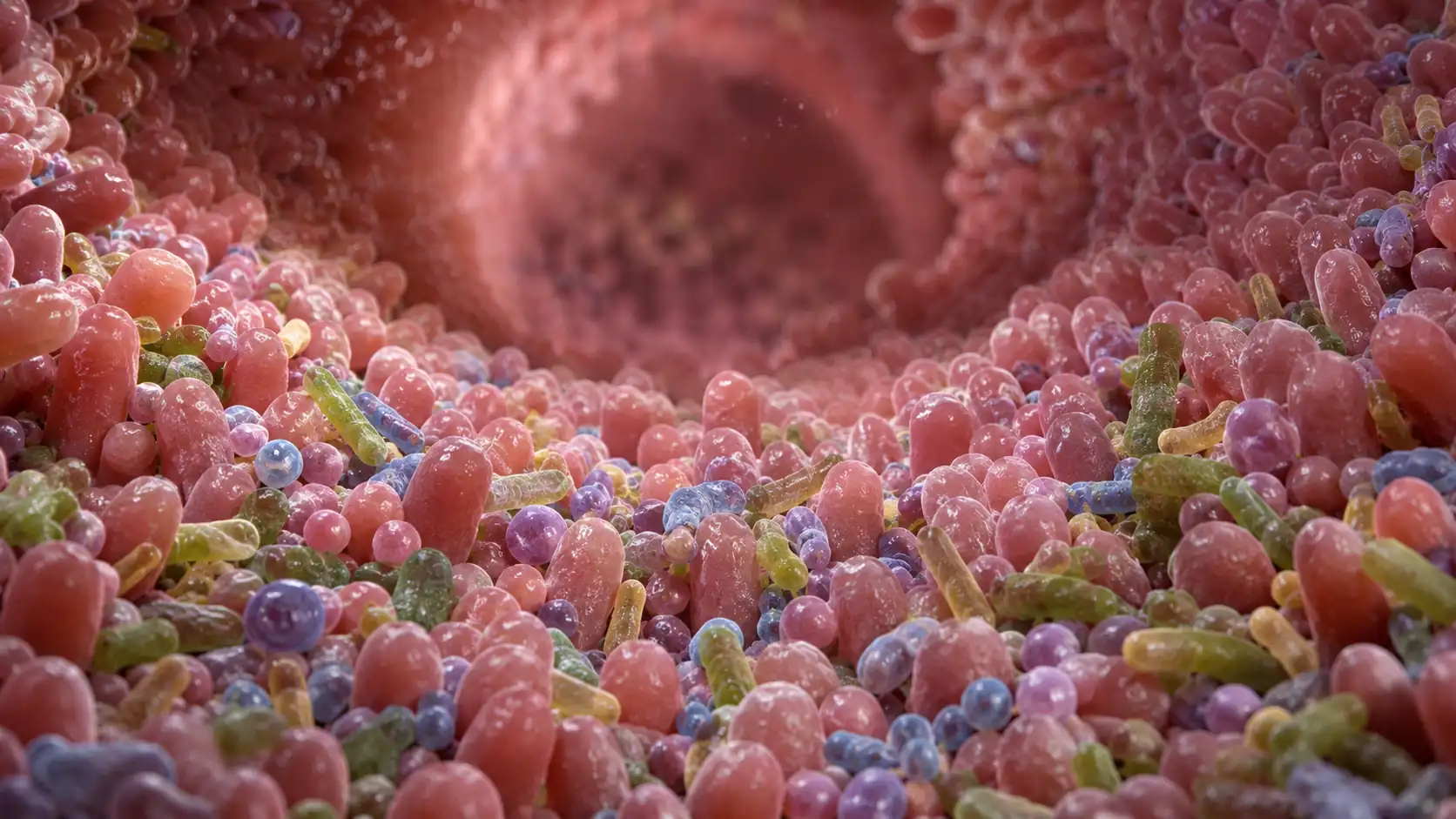
SIBO, small intestinal bacterial overgrowth, is a condition characterised by an excessive growth of bacteria in the small intestine, normally only sparsely populated, causing digestive symptoms[1]. Bloating, gas, pain, altered bowel habits: these signs are real but non-specific, and resemble those of many other disorders, starting with irritable bowel syndrome (IBS)[5].
Two ideas guide this article. First, SIBO is diagnosed and treated with a doctor: a breath test, then an antibiotic and treatment of the cause[1]. Second, no food, supplement or probiotic “cures” SIBO: some may help with comfort, never replace medical advice. This article informs; it does not replace a consultation.
What is SIBO, and what symptoms?
An overgrowth of bacteria where few are needed
The small intestine, where most digestion and absorption take place, normally harbours far fewer bacteria than the large intestine. In SIBO, bacteria, often from the colon, multiply there in excess and ferment the sugars from food, with excessive gas production. Hence bloating, a distended belly, wind, abdominal cramps or discomfort, and altered bowel habits (diarrhoea, constipation, or alternation between the two)[1]. At the extreme, this overgrowth can cause malabsorption, the gut absorbs nutrients poorly, with its complications: weight loss, deficiencies (for example in vitamin B12 or fat-soluble vitamins), sometimes fatigue[1].
Hydrogen, methane: the “types” of SIBO
People sometimes speak of several “types” of SIBO depending on the predominant gas produced. The hydrogen form tends to go with diarrhoea; the methane form, linked to micro-organisms called archaea, and sometimes referred to as IMO, tends to go with constipation[1][2]. A third form, with hydrogen sulphide, is the subject of more recent research. These distinctions mainly guide the doctor: they cannot be guessed without a test.
Where does SIBO come from? Causes and risk factors
When the small intestine’s natural defences weaken
Several mechanisms normally limit bacteria in the small intestine: stomach acidity, bile, regular gastric emptying and above all the “housekeeping” carried out between meals by waves of contractions, the migrating motor complex, that move the contents along. When one of these systems weakens, bacteria stagnate and proliferate[1]. The situations that favour SIBO are therefore varied.
| Contributing factor | Why it favours SIBO |
|---|---|
| Slowed transit (motility) | The “housekeeping” between meals works poorly and bacteria stagnate. More common with age, in diabetes or in certain neurological diseases. |
| After abdominal surgery | Anatomical changes (blind loops, adhesions) create areas where the contents stagnate. |
| Reduced stomach acid | Possible with certain long-term antacid medicines. To be discussed with your doctor: never stop a treatment on your own. |
| Digestive diseases | Coeliac disease, Crohn’s disease, chronic pancreatitis, scleroderma and other conditions increase the risk. |
| Irritable bowel syndrome | Frequent overlap: some of the people concerned also have SIBO. |
SIBO and IBS: a close link
Many people labelled “irritable bowel” actually have, or also have, SIBO: the two share bloating, pain and bowel disturbances, and often overlap[5]. The exact proportion varies enormously from one study to another, in the absence of a perfectly standardised test. The key thing to remember: a persistent digestive symptom deserves medical advice, if only so as not to miss another disease[5].
The right move
Passing bloating or digestive discomfort is commonplace. But if it is persistent, worsens, or comes with warning signs, weight loss, blood in the stool, anaemia, fever, waking at night, consult a healthcare professional: these symptoms are not specific to SIBO and may point to something else. If you suspect you have SIBO, a medical assessment is the right first step, not an online self-diagnosis.
How is SIBO diagnosed?
The breath test, first-line examination
SIBO is not confirmed on symptoms alone. The most common, simple and non-invasive examination is the breath test: after drinking a sugar solution (glucose or lactulose), you breathe regularly into a device that measures hydrogen and methane. A marked rise in these gases, produced by bacterial fermentation, suggests SIBO[2]. According to the reference North American consensus, a rise in hydrogen of at least 20 ppm within 90 minutes is considered positive; a methane of at least 10 ppm signals the “methane” form[2].
This test has its limits, false positives and false negatives occur, and the so-called reference method, a sample of fluid taken directly from the small intestine followed by a culture, is heavier and rarely performed[1]. That is why interpretation falls to the doctor, who places the result in context and rules out other causes.
- 1Faced with persistent digestive symptoms, talk to your doctor rather than self-diagnosing online.
- 2The breath test is prescribed and interpreted medically; it requires preparation (fasting, avoiding certain foods the evening before).
- 3A “positive” test is not a sentence: it points towards management, which includes the search for the cause.
Management: what works (and what doesn’t)
Antibiotic, diet and treating the cause
Managing SIBO calls for proper diagnosis and treatment, and is medical: it rests on several fronts[1]. The doctor weighs the treatment options according to the form of SIBO and its cause. The reference antibiotic treatment is rifaximin, poorly absorbed, prescribed by a doctor: a large analysis pooling 32 studies and more than 1’300 patients finds eradication of the overgrowth in about 7 cases out of 10, with few side effects[3]. When SIBO is cleared, symptoms improve in about two thirds of cases[3]. Other antibiotics such as neomycin are sometimes combined depending on the profile, particularly for the methane form, always on prescription[1]. But recurrences are common: that is why the doctor also seeks to correct the underlying cause, such as a motility disorder[1].
Diet: easing the symptoms
On the food side, the best-documented approach is a temporarily low-FODMAP diet: fermentable sugars (in certain fruits, vegetables, legumes, dairy products and wheat) that feed the bacteria and worsen bloating and gas[5]. Done well, preferably with a dietitian, it can reduce discomfort. But beware: it eases the symptoms without treating the cause, it is restrictive, and not designed to last. In more difficult cases, a doctor may also consider an elemental diet, a liquid formula of pre-digested nutrients, but it is demanding and used only under medical supervision[1].
And probiotics? Caution
Probiotics are often mentioned, but the data remain limited. An analysis of studies observed that they may help reduce bacterial overgrowth and abdominal pain: without, however, preventing SIBO or markedly improving stool frequency[4]. Some specialists even remain cautious: adding bacteria to a gut that already has too many is not trivial. A probiotic remains a food supplement that contributes to the balance of the gut flora; it is not a treatment for SIBO.
- “Detox cure” or a supplement that “eliminates SIBO”: no evidence, and SIBO is not treated on your own.
- “Natural antibiotics” presented as equivalent to a prescribed treatment: not demonstrated, not to be substituted for medical advice.
- Self-diagnosis and self-medication: risk of missing another disease and delaying the right management.
More important than supplements: the doctor
SIBO is a medical condition. Its diagnosis (breath test) and its treatment (antibiotic, treatment of the cause) belong with a doctor, ideally a gastroenterologist. No food or food supplement prevents, treats or cures SIBO. Dietary or comfort approaches complement medical follow-up, never replace it.
Frequently asked questions
What are the symptoms of SIBO?
SIBO mainly causes non-specific digestive symptoms: bloating, a distended belly, gas, abdominal pain or discomfort and altered bowel habits (diarrhoea, constipation, or both). These signs resemble those of irritable bowel syndrome and many other disorders: they are not enough to make the diagnosis. Only a doctor can take stock, if needed with a breath test. If symptoms persist, it is better to consult.
How do you know if you have SIBO?
You don’t diagnose SIBO yourself. The doctor may suggest a breath test: after drinking a glucose or lactulose solution, hydrogen and methane are measured in the exhaled air, a marked rise of which suggests bacterial overgrowth. The reference method is more invasive (a sample from the small intestine). Because the symptoms overlap with those of other diseases, the work-up also serves to rule out more serious causes.
How is SIBO treated?
Management is medical. The most studied treatment is a poorly absorbed antibiotic, rifaximin, prescribed by a doctor: in an analysis pooling dozens of studies, it cleared the bacterial overgrowth in about 7 cases out of 10. Recurrences are common, however, hence the importance of treating the underlying cause. A low-FODMAP diet can ease symptoms. No food supplement cures SIBO.
Which foods should you avoid with SIBO?
There is no single food to ban. The best-documented approach to easing symptoms is a temporarily low-FODMAP diet: these fermentable sugars found, for example, in certain fruits, vegetables, legumes, dairy products and wheat. This diet is ideally followed with a professional (dietitian, doctor), because it is restrictive and does not treat the cause: it aims at comfort, not at eliminating the bacteria.
SIBO or irritable bowel syndrome: what’s the difference?
The two share many symptoms (bloating, pain, altered bowel habits) and often overlap: some people with irritable bowel syndrome also have SIBO. But they are distinct entities: SIBO refers to an overgrowth of bacteria in the small intestine, which can be objectified with a test, whereas irritable bowel syndrome is a disorder of gut-brain interaction diagnosed on clinical criteria. Only a doctor can tell them apart.
Are probiotics useful against SIBO?
The data are limited and nuanced. An analysis of studies observed that probiotics may help reduce bacterial overgrowth and abdominal pain, but that they do not prevent SIBO. They replace neither the work-up nor the treatment prescribed by a doctor, and some specialists remain cautious. A probiotic is a food supplement that contributes to the balance of the gut flora, not a treatment for SIBO.
Sources and references (verified on PubMed)
5 sources- Pimentel M. et al. (2020). ACG Clinical Guideline: Small Intestinal Bacterial Overgrowth.
- Rezaie A. et al. (2017). Hydrogen and Methane-Based Breath Testing in Gastrointestinal Disorders: The North American Consensus.
- Gatta L. & Scarpignato C. (2017). Systematic review with meta-analysis: rifaximin is effective and safe for the treatment of small intestine bacterial overgrowth.
- Zhong C. et al. (2017). Probiotics for Preventing and Treating Small Intestinal Bacterial Overgrowth: A Meta-Analysis and Systematic Review.
- Duncanson K. et al. (2023). Irritable bowel syndrome: controversies in diagnosis and management.