
What are the risks of overdosing on food supplements?
Quick summary
Overdosing on food supplements exposes you to liver, kidney and bone toxicity, mainly with the fat-soluble vitamins A, D, E, K and certain minerals such as iron or selenium that accumulate in the body.
Key facts
Key points
- EFSA sets the upper limit for retinol at 3,000 µg per day for adults, including pregnant women (Turck et al., 2024).
- Nearly 30% of Swiss adults consume at least one food supplement; the 2023 FSVO survey documented exceedances of the UL for vitamin A, vitamin B6 and zinc.
- Vitamin D has documented severe hypercalcaemia cases, up to 594 ng/mL in an adolescent who accumulated one year of voluntary overdose (Gordon et al., 2025).
- Tox Info Suisse received around 1,200 enquiries linked to supplements and sports products between 2014 and 2019, most of which concerned accidental ingestions in young children.
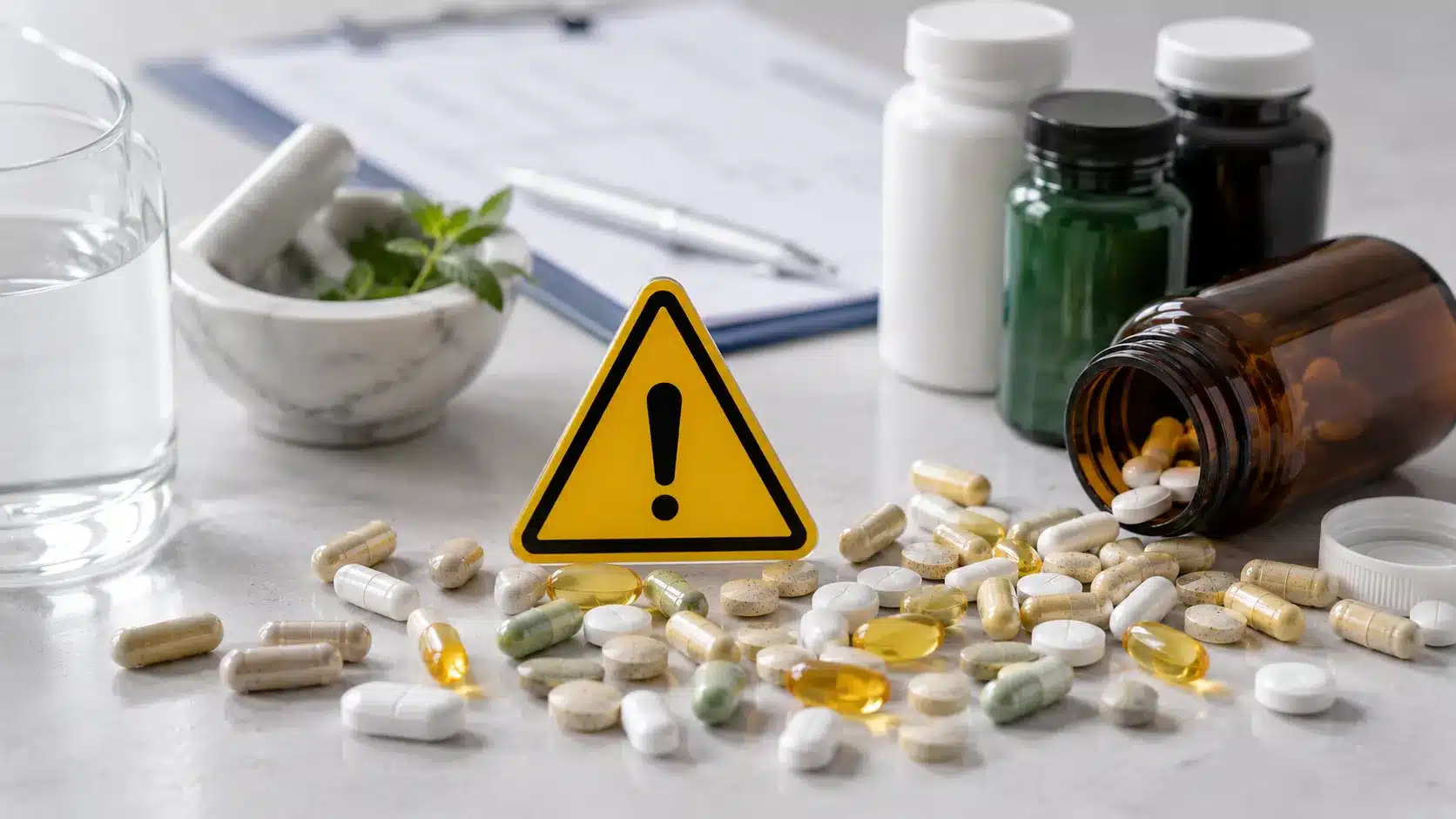
In Switzerland, nearly a third of the adult population regularly consumes a food supplement, according to the survey of the Federal Food Safety and Veterinary Office (FSVO) published in the 2023 Swiss Nutrition Bulletin. This widespread use multiplies situations of involuntary cumulation between multivitamin products, targeted formulas and fortified foods. Among the side effects of food supplements documented by European poison centres, chronic overdose remains the most frequent cause of reported liver, kidney or bone injury.
Which mechanisms make a food-supplement overdose dangerous?
Why do fat-soluble vitamins accumulate in the body?
Vitamins A, D, E and K are stored in the liver and adipose tissue because they are not water-soluble, unlike the B-group vitamins and vitamin C. Their urinary elimination is negligible, which creates a risk of toxic accumulation during prolonged intakes over a long period, beyond the tolerable upper intake level (UL). The liver centralises the storage of retinol in the form of retinyl esters in the hepatic stellate cells. Beyond this capacity, the accumulation triggers oxidative stress and activation of the stellate cells which leads, in the long term, to steatosis and then to liver fibrosis[4]. As an example, vitamin B6, although water-soluble, is an exception with documented peripheral neurotoxicity of the nervous system at high prolonged doses, illustrating the impact on health of poorly supervised vitamin supplementation.
How does self-supplementation lead to cumulative dosing?
Overdose rarely comes from a single product: it results from the cumulation between several supplements, fortified foods and a normal diet. Most consumers do not know that the same nutrient can be present in three products they take simultaneously, for lack of being correctly informed about the ingredients of each item. The 2023 FSVO survey, carried out on 1,282 Swiss adults, recorded 699 food supplements consumed over seven days; three participants exceeded the UL for folic acid, another for vitamin A through voluntary exceedance of the recommended dose, and three for zinc through cumulation of several sources[1]. Tox Info Suisse received around 1,200 enquiries linked to food supplements, slimming products and foods for athletes between 2014 and 2019, with a clear year-on-year increase in frequency over the period[2]. This excessive consumption, which has become widespread use, reflects a market issue that is little visible to the general public.
Which vitamins and minerals present the best-documented overdose risks?
What toxic effects does excess vitamin A cause?
Chronic excess of preformed vitamin A (retinol) causes hepatotoxicity, bone pain and a teratogenic risk in pregnant women, a direct consequence of poorly dosed vitamin supplementation. The review by Pestalardo and colleagues published in 2025 describes the histological progression of vitamin A hypervitaminosis: hepatocyte ballooning, activation of stellate cells, perisinusoidal fibrosis and then cirrhosis[4]. Early clinical signs include nausea, anorexia, bone pain and hepatomegaly. EFSA re-evaluated the UL in 2024 and kept it at 3,000 µg retinol equivalent per day for adults, including pregnant women[3]. Women of childbearing age are advised to avoid the regular consumption of cod-liver oil and animal liver, a concentrated source particularly rich in retinol, to limit the risk of toxicity.
Why is vitamin D one of the major causes of intoxication?
Vitamin D is among the leading causes of food-supplement intoxication reported in Europe, through misuse in infants and self-supplementation at high doses in adolescents and adults, a topical issue regularly covered by news media. A 2025 American case report describes a 17-year-old adolescent presenting severe hypercalcaemia (corrected calcium at 13.2 mg/dL) after a high daily intake of 14,045 IU of vitamin D3 for one year; the 25-hydroxyvitamin D level reached 594 ng/mL, compared with a norm of 30-100 ng/mL[5]. In France, the Anses nutrivigilance system has documented several paediatric cases of severe hypercalcaemia, nephrocalcinosis and kidney damage in infants supplemented with potentially dangerous, highly dosed products bought online (5,000 to 10,000 IU per drop)[8]. The 2024 recommendations of the Endocrine Society now limit supplementation to documented at-risk populations[6], to avoid overdose and its harmful health consequences.
| Nutrient | Adult UL (per day) | Main risk of chronic exceedance |
|---|---|---|
| Preformed vitamin A | 3,000 µg RE | Hepatotoxicity, teratogenicity, bone fragility |
| Vitamin D | 100 µg (4,000 IU) | Hypercalcaemia, nephrocalcinosis, arterial calcifications |
| Vitamin B6 | 12 mg[12] | Sensory peripheral neuropathy |
Which populations are the most exposed to overdose in Switzerland?
Why are children particularly at risk?
The youngest are particularly vulnerable to excess: their reduced body weight lowers the toxic threshold of each nutrient, and the playful or sweetened pill-like appearance of many products (gummies, flavoured syrups) favours an accidental or repeated ingestion, wrongly mistaken for a treat. A study by the Bern University of Applied Sciences and the Swiss Federation of Consumers published in 2025 showed that most food supplements for children sold in supermarkets and pharmacies contained doses higher than the recommended nutritional intake for their age range[10], with a large number of items concerned. Tox Info Suisse reports that nearly two thirds of its 1,200 enquiries linked to supplements between 2014 and 2019 concerned accidental ingestions in young children[2]. The FSVO recommends that paediatric supplementation should systematically be subject to a professional consultation and prior medical advice, in a perspective of cautious management.
Practical tip
For infants, Anses recommends favouring vitamin D in pharmaceutical and medicinal form rather than as a food supplement: this treatment, prescribed by a doctor, guarantees a controlled recommended dosage and a detailed leaflet, which supplements bought online and on a poorly regulated market do not always provide.
Substances to avoid absolutely
2,4-dinitrophenol (DNP), dimethylamylamine (DMAA) and red yeast rice are among the substances to avoid and are banned in food supplements in Switzerland because of their risks of serious, sometimes fatal poisoning. Sales persist on some websites outside approved channels, an enforcement issue that remains topical.
Which adult groups deserve increased monitoring?
Pregnant women, older people on multiple medicines as part of chronic treatment and athletes consuming protein or stimulant supplements form the three adult groups most exposed to an increased risk of toxicity. A Chinese single-centre retrospective study on 17,946 cases of drug-induced hepatotoxicity showed that plant-based supplements represented 26.29% of the causes in adults over 65, the leading aetiological class in this age range[7], with a direct impact on the digestive system and the liver. During pregnancy, Anses explicitly recommends avoiding the cumulation of vitamin D and iodine intakes without biological follow-up[11]. On the athletes’ side, Tox Info Suisse recorded 22 moderate-to-serious cases linked to caffeine, 17 of which involved sport or fitness items containing doses higher than the 200 mg per intake recommended by EFSA[2], possibly leading to palpitations, sleep disorders and high blood pressure.
- Infants and young children: narrow toxic window, visual attractiveness of sweet gummies.
- Pregnant women: teratogenic risk (vitamin A) and neonatal hypercalcaemia (vitamin D).
- Older people on multiple medicines: multiple interactions and hepatotoxicity increased by plants.
- Athletes: caffeine, creatine and stimulants at cumulative doses beyond the EFSA thresholds.
- Adolescents: self-supplementation at “performance” doses without biological follow-up.
- Online buyers: non-compliant dosages or banned substances in products outside the Swiss channel.
How to prevent an overdose and what to do in case of symptoms?
Which usage rules limit the risk of overdose?
Limiting the duration of courses, not cumulating items containing the same nutrients and checking the label and ingredients of each item consumed remain the three most effective prevention levers against the risk of overdose. Systematic supplementation of a healthy person is not useful and not justified according to the FSVO: food supplements, considered as a foodstuff, do not replace a healthy and balanced diet, and their intake must be based on a documented need (confirmed vitamin deficiency, specific physiological state, restricted diet). A chemical analysis of marketed products carried out by the American DILIN network showed that out of 54 re-evaluated hepatotoxicity cases, 37% saw their causality score increase after verification of the real composition, 70% of which moving from “probable” to “highly probable”[9]. This gap between label and actual content is frequent for plant-based supplements, which makes the advice of a specialist useful before any purchase.
- Mentally add up the nutrients present in all the items consumed (multivitamin + targeted + fortified foods).
- Limit each course to the duration indicated by the manufacturer or by a healthcare professional.
- Prefer a medicine to a food supplement for vitamin D in infants.
- Keep supplements out of reach of young children, like any health product.
- Report any adverse effect to a doctor or a pharmacist.
Which signs should raise the alert and lead to consultation?
Unexplained fatigue, persistent nausea, joint or muscle pain, weight or hair loss, yellow discolouration of the skin, or unusual thirst call for close attention, the immediate stopping of any supplement intake and lead to consulting a professional without delay. The early signs of intoxication with fat-soluble compounds are not very specific: nausea, loss of appetite, headaches, mood swings, bone or joint pain[4]. The hypercalcaemia linked to a vitamin D excess shows up as polyuria, polydipsia, digestive disorders and, at an advanced stage, cardiac disorders[5]. In Switzerland, Tox Info Suisse, the national food and health information service, can be reached on the number 145 twenty-four hours a day live, at any time, for any suspicion of acute intoxication linked to a food supplement.
Frequently asked questions
Is it dangerous to take too many food supplements?
Yes, chronic overdose leads to documented adverse effects. Fat-soluble vitamins A, D, E and K and certain minerals such as iron, selenium and zinc accumulate in the body and can reach toxic thresholds. The FSVO reports liver, kidney, bone and cardiovascular risks in case of prolonged excessive intake. Particular caution is required in children, pregnant women and people on multiple medicines.
How many food supplements can you take per day?
No number of products is safe in itself: only the total intake of each nutrient matters, compared to the tolerable upper intake level (UL) set by EFSA. For vitamin A, the adult UL is 3,000 µg per day; for vitamin D, 100 µg (4,000 IU). The 2023 FSVO survey shows that overruns occur mainly through cumulation between several products, and not through a single isolated product. In case of doubt, ask a pharmacist for advice.
Which vitamins are the most risky in case of overdose?
The role of vitamins goes from energy metabolism to support of the immune system, but the fat-soluble A, D, E and K present the highest risk in case of excess because they accumulate in the liver and adipose tissue. Vitamin A can cause hepatotoxicity and foetal malformations; vitamin D, hypercalcaemia and nephrocalcinosis. Vitamin B6, although water-soluble, is neurotoxic at high prolonged doses beyond 12 mg per day according to EFSA 2023. Vitamin C and most B vitamins are eliminated through urine, with a low toxic risk.
Can excess vitamin B12 be dangerous?
No, vitamin B12 has no defined tolerable upper intake level (UL) because no adverse effect has been demonstrated at high doses in healthy people. The FSVO nevertheless maintains a legal maximum content of 7.5 µg per daily dose in food supplements in Switzerland. The excess is eliminated by the kidneys. A high dosage can be medically justified in case of absorption disorders or a vegan diet.
What to do in case of overdose symptoms?
Immediately stop all ongoing food-supplement courses and consult a doctor or a pharmacist without delay. Keep the packaging of the products consumed to facilitate the identification of the nutrients involved. In case of acute symptoms (repeated vomiting, heart problems, confusion), contact Tox Info Suisse on 145 or the emergency services. Then report the adverse effect to the healthcare professional for traceability.
Do multivitamin supplements present a risk of cumulation?
Yes, multivitamins are the main cause of involuntary overconsumption because they contain several at-risk nutrients simultaneously (vitamins A, D, B6, iron, zinc). The 2023 FSVO survey found that nearly two thirds (66.7%) of the food supplements consumed in Switzerland contain vitamins, minerals or a combination of the two. Combining a multivitamin with a targeted product (vitamin D alone, iron alone) or with fortified foods multiplies the risk of exceeding the tolerable upper intake level.
Sources and references
12 sources- Solliard C., Benzi Schmid C., König S.L.B. (2023) — Food supplement consumption in Switzerland
- FSVO — Enquiries addressed to Tox Info Suisse on food supplements (2014-2019)
- Turck D. et al. (2024) — Tolerable upper intake level for preformed vitamin A and β-carotene
- Pestalardo M.L., Bevilacqua C.S., Amante M.F. (2025) — Vitamin A toxicity and hepatic pathology
- Gordon L., Zipursky R., Cheung C.C., Sasidharan Pillai S. (2025) — Vitamin D Intoxication in an Adolescent due to Over-Supplementation
- Vasil N., Razzaque M.S. (2026) — Decoding Vitamin D Intake: How Much Is Too Much?
- Yu S. et al. (2024) — Age-related differences in drug-induced liver injury (DILI)
- Anses (2022) — Opinion on new cases of vitamin D intoxications in infants
- Halegoua-DeMarzio D. et al. (2024) — Chemical Analysis in Causality Assessment of Herbal and Dietary Supplement-Induced Liver Injury
- RTS / Chatelan A. (2025) — Vitamin overdose in children: risks and precautions
- Anses (2024) — Food supplements and pregnancy: avoid multiplying sources of vitamins and minerals
- Turck D. et al. (2023) — Scientific opinion on the tolerable upper intake level for vitamin B6