
Which supplements with renal insufficiency?
Quick summary
A weakened kidney no longer correctly eliminates excess minerals, vitamins and nitrogenous metabolites: below 60 ml/min/1.73 m² of glomerular filtration rate, oral supplementation becomes a documented cause of acute and chronic nephrotoxicity.
Key facts
Key takeaways
- Around 350,000 people live with chronic renal insufficiency in Switzerland, including 30,000 at a severe stage according to the CHUV; 70 to 80% ignore their disease at the early stages according to the German Lange cohort (2021).
- Below 60 ml/min/1.73 m² of GFR, the elimination of potassium, magnesium and phosphorus becomes deficient and their supplementation exposes to acute cardiac disorders.
- Ascorbic acid beyond 500 mg per day generates 35 to 55% of urinary oxalates in adults (Karr et al., Integrative Medicine, 2024) and has triggered documented acute nephropathies.
- Aristolochia, red yeast rice and high-dose liquorice are advised against or banned by the FSVO; their tubular toxicity is documented by biopsy.
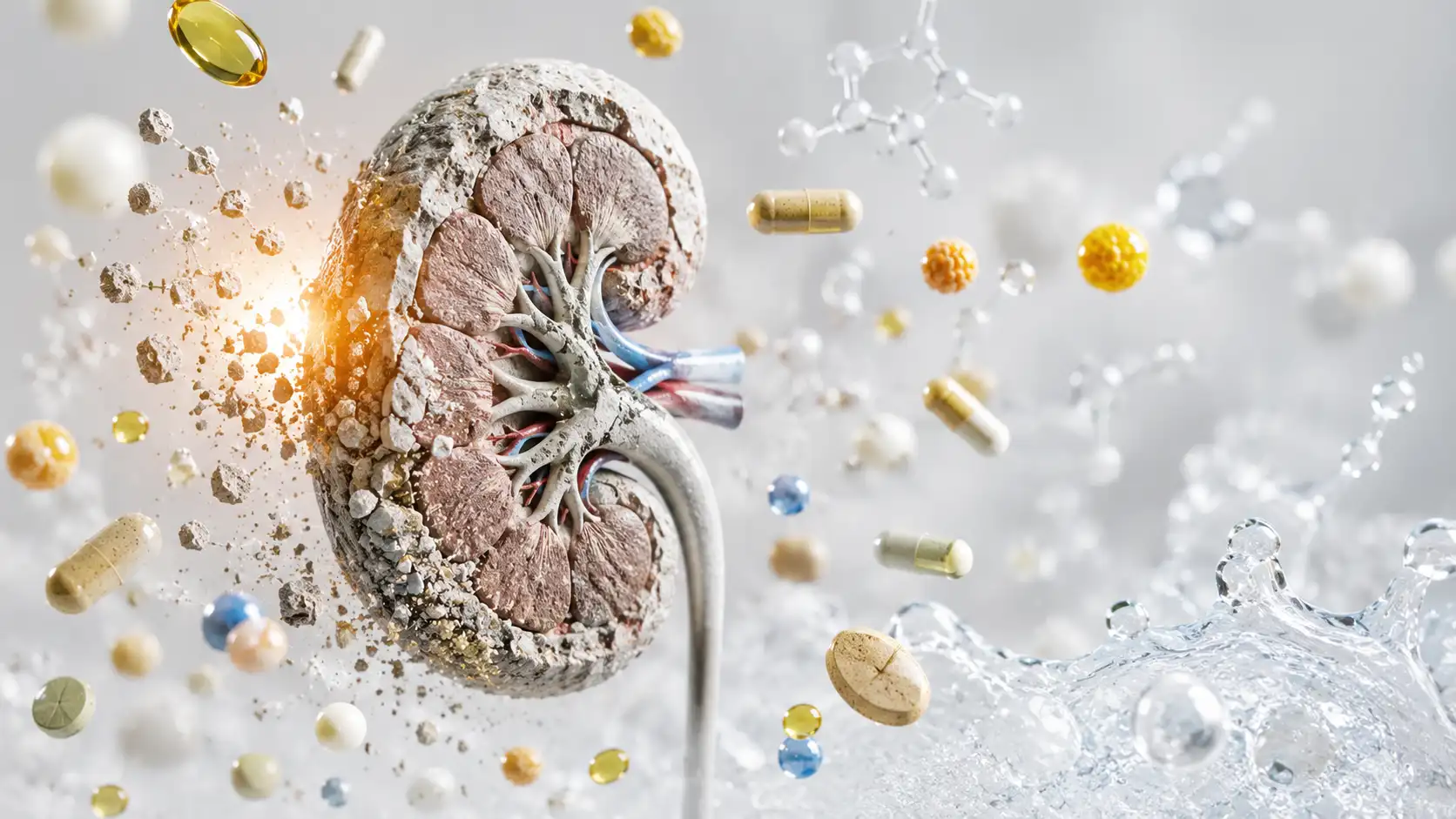
An FSVO survey published in 2022 indicates that one third of the Swiss population consumes at least one supplementation product, mainly vitamins and minerals. Yet, in the world of the food supplement, the examination of side effects and contraindications remains a frequent blind spot. In 2024, 89% of suspect products checked in e-commerce were banned by the cantonal chemists. For the 350,000 Swiss living with a chronic kidney impairment according to the CHUV, the vast majority of whom are unaware of it, these trivialised products can become a direct cause of nephrological worsening.
Why does renal insufficiency worsen the risk of toxicity of food supplements?
What happens in a kidney that no longer filters correctly?
A failing kidney no longer eliminates excess substances quickly enough, which accumulate in the blood and alter the internal balance of the human body. The physiological role of the kidney, a central organ of the filtration system, is to filter around 180 litres of plasma per day to eliminate urea, potassium, phosphates, oxalates and drug residues via the glomerular vessels. When the glomerular filtration rate (GFR) drops, these waste products accumulate. Every additional intake (vitamin, mineral, amino acid, plant) then increases the load on already saturated nephrons. The review by Dori et al. (Revue Médicale Suisse, 2014)[2], carried out at the CHUV Nephrology Service in Lausanne (internal medicine), has documented this mechanism. Supplementation products can cause acute and chronic failures, sometimes irreversible, especially in patients with undiagnosed latent CKD[1].
From which stage do supplements become risky?
The critical threshold is a GFR below 60 ml/min/1.73 m², i.e. stage 3 of the KDIGO 2024 classification[3]. Above this threshold, the kidney retains a functional reserve sufficient to handle the majority of usual dietary intakes. Below it, the elimination of each compound becomes slowed: the organ can no longer buffer overloads, even moderate ones, and the progression of chronic kidney disease speeds up. The problem is worsened by under-diagnosis. Recent international studies show that around 80% of patients at stages 1-2 and 71% at stage 3a are unaware of their CKD (Lange 2021, German cohort)[2]. A person at stage 3a (GFR between 45 and 59 ml/min/1.73 m²) can feel in perfect health and consume supplementation products for months before developing an acute decompensation that justifies emergency care.
Which mineral and vitamin supplements are contraindicated in case of renal insufficiency?
Why do potassium, magnesium and phosphorus expose to cardiac emergencies?
The diseased kidney no longer correctly eliminates electrolytes: their accumulation exposes to potentially fatal rhythm disorders, which justifies particular attention to the diet of patients with CKD. Hyperkalaemia (blood potassium above 5.5 mmol/L)[3] is the most feared emergency. It can be triggered by multivitamin formulas concentrated in potassium, salt substitutes based on potassium chloride or effervescent magnesium-potassium combinations: to which is added the consumption of naturally rich foods such as certain fruits (banana), vegetables (spinach, potatoes) and dried beans. Magnesium and phosphorus follow the same logic. A magnesium supplementation of 300 to 400 mg per day, banal in a healthy subject, becomes toxic at stage 4 (GFR below 30 ml/min/1.73 m²). It can then cause hyporeflexia and bradycardia. Phosphorus, present in large quantities in high-protein products and foods containing phosphate additives, contributes to the mineral and bone disorders of CKD, the progression of which low-protein diets help to limit (Pereira et al., Nutrients, 2024)[4].
Why are high-dose vitamin C and unsupervised vitamin D risky?
Ascorbic acid in excess turns into oxalate, which precipitates as crystals in the tubules. From 500 mg per day taken regularly, this compound is partly metabolised into oxalic acid. A review by Karr et al. (Integrative Medicine, 2024)[6] estimates that this metabolism generates 35 to 55% of circulating oxalates in adults. A clinical case published by Raja et al. (Cureus, 2023)[5] describes an acute oxalate nephropathy in a diabetic patient managed in a hospital setting. The patient had followed a liquid diet based on juice and water for a week for upper gastrointestinal haemorrhage. The biopsy confirmed the diagnosis and several dialysis sessions were initiated. Vitamin D poses the opposite problem: its metabolism depends on the kidney, which converts 25-hydroxyvitamin D into its active form. In advanced CKD, this conversion collapses, and an excessive dose exposes to hypercalcaemia and to calcium deposits in tissues[3].
Which protein supplements and plants are not advised in case of renal insufficiency?
Why do whey, creatine and amino acids overload the diseased kidney?
High-protein products increase the production of urea and creatinine, overloading a kidney whose purifying capacity is already reduced: an effect that adds to the intakes coming from protein-rich foods (red meat, poultry, fish, fromage blanc, eggs). A meta-analysis by Chen et al. (Journal of Nephrology, 2024)[7], on 16 randomised trials and 1,344 patients at stages 3 to 5, confirms that a low-protein diet supplemented with ketoanalogues slows the decline of the GFR. It also improves calcium-phosphate homeostasis. Conversely, the unsupervised free intake of whey or amino acids speeds up the progression in the at-risk patient, with no demonstrated benefit on muscle mass in this population. Creatine poses a specific dilemma. The Swiss review by Dori et al. (2014)[2] cites it among the products documented as nephrotoxic in case of pre-existing CKD. The failing organ metabolises it poorly and converts it into accumulated creatinine.
Particular vigilance
A rapid worsening of creatinine or the appearance of oedema after the introduction of a new supplementation product requires immediate discontinuation and medical advice within 48 hours. Several acute tubular nephropathies described in the literature progress unfavourably when the diagnosis is delayed.
Which medicinal plants can cause acute renal insufficiency?
Several plants common in herbal medicine are documented as nephrotoxic and constitute a genuine iatrogenic pathology when consumed without professional advice. Aristolochia (Aristolochia fangchi) is the archetype of this: it contains aristolochic acid, which causes progressive interstitial fibrosis and a risk of urothelial carcinoma[2]. Its sale is banned in Switzerland as in the European Union. Red yeast rice (Beni-koji) is banned by the FSVO[8] both as a foodstuff and as a medicine. In Japan, several case series published in 2024 describe Fanconi syndromes with proximal tubular damage (Habuka et al., BMC Nephrology, 2024)[9]. Liquorice, through its glycyrrhizin, induces a pseudo-hyperaldosteronism: sodium retention, potassium loss, raised blood pressure (Penninkilampi et al., J Hum Hypertens, 2017)[10].
- Aristolochia (Aristolochia fangchi): banned in Switzerland, irreversible interstitial fibrosis.
- Red yeast rice (Beni-koji): banned by the FSVO, Fanconi syndrome documented by biopsy.
- Liquorice (Glycyrrhiza glabra): pseudo-hyperaldosteronism beyond 100 mg/day of glycyrrhizin (LOAEL, Penninkilampi 2017).
What to do if you already take food supplements with degraded renal function?
How to screen for renal insufficiency before supplementation?
Screening relies on a blood measurement of creatinine (with calculation of the estimated GFR) and a urinary examination (albumin/creatinine ratio) prescribed by the general practitioner. These two tests, inexpensive and reimbursed in Switzerland, allow the function of the kidney to be classified according to the KDIGO 2024 stages (1 to 5)[3]. The Swiss CHUV recommendations[1] advise systematic screening in those over 60, in type 2 diabetics and in patients with arterial hypertension, and before any prolonged intake of supplementation products. A frequent warning sign is foamy urine, a sign of proteinuria; ankle oedema, persistent fatigue and unexplained rise in blood pressure also warrant a check-up, which may be accompanied by therapeutic education and tailored dietary advice.
Which reflexes to adopt in case of confirmed CKD?
The first reflex is the immediate discontinuation of any non-prescribed product and the introduction of a balanced diet with a low content of potassium and phosphorus, adapted by a healthcare professional. Several of the clinical cases cited (ascorbic acid, red yeast rice, liquorice) show an improvement in kidney function, sometimes complete, after simple discontinuation, but some progress to end-stage renal failure (end stage requiring dialysis or transplantation) when stopping is delayed[9]. The second is the nephrology consultation to assess whether certain supplementations remain justified (ketoanalogues, activated vitamin D, iron in case of anaemia) and to preserve the patient’s quality of life. Sports products (whey, creatine, BCAA) are advised against without medical opinion. The FSVO 2024 national campaign led to the banning of 113 products out of 127 checked (89%)[8]. Patients on treatment (ACE inhibitors, sartans, diuretics) must consult a professional before the introduction of any new formula.
Frequently asked questions
From which stage of renal insufficiency should food supplements be avoided?
From stage 3 (GFR below 60 ml/min/1.73 m²), any supplement must be the subject of prior medical advice. At this level, renal elimination capacity is already reduced by more than a third: potassium, magnesium, vitamin C and plants can accumulate or cause cardiac disorders. According to the CHUV, around 350,000 people live with chronic renal insufficiency in Switzerland, including 30,000 at a severe stage. Patients often ignore their condition at the early stages: a creatinine and albuminuria measurement is essential before any prolonged supplementation.
Why is an excess of potassium dangerous for diseased kidneys?
The failing kidney no longer eliminates potassium correctly. An accumulation above 5.5 mmol/L causes hyperkalaemia, which can trigger ventricular arrhythmias and cardiac arrest. Multivitamin supplements, certain salt substitutes and concentrated vegetable juices deliver doses that a healthy kidney eliminates with ease. A kidney whose GFR is below 60 ml/min/1.73 m² can no longer buffer them. The KDIGO 2024 recommendations require close monitoring of kalaemia in these patients.
Is vitamin C really dangerous for the kidneys?
At high doses and repeatedly, yes: from around 500 mg/day, vitamin C is metabolised into oxalate, which can precipitate as crystals in the renal tubules. A review published in 2024 in Integrative Medicine documents that the metabolism of ascorbic acid generates 35 to 55% of circulating oxalates in adults. A case reported by Raja et al. (Cureus, 2023) describes an oxalate nephropathy in a diabetic patient. Confirmed by biopsy, it required dialysis after a juice-based liquid diet. Usual dietary intakes (80-110 mg/day) remain safe.
Is red yeast rice authorised in Switzerland to reduce cholesterol?
No, red yeast rice is banned from sale in Switzerland, both as a foodstuff and as a medicine. The FSVO (Federal Food Safety and Veterinary Office) strongly advises against it because of its serious side effects. In Japan, two cases of Fanconi syndrome confirmed by biopsy were reported in 2024 after ingestion of contaminated Beni-koji products (Habuka et al., BMC Nephrology, 2024). Renal function recovered completely in one case and progressed to CKD in the other.
Which rare supplements are not dangerous in case of renal insufficiency?
Very few, and always on prescription. Ketoanalogues of amino acids combined with a low-protein diet are the only ones well documented in nephrology practice. A meta-analysis of 16 randomised trials (Chen et al., Journal of Nephrology, 2024) shows that they slow the decline of the GFR in patients at stages 3 to 5. Sodium bicarbonate and certain forms of activated vitamin D (calcitriol) are also sometimes prescribed. No over-the-counter product replaces this prescription: the therapeutic margin is too narrow.
Sources and references
10 sources- CHUV, Nephrology Service, Chronic renal insufficiency: prevalence in Switzerland
- Dori O., Humbert A., Burnier M., Teta D. (2014). Renal risks of food supplements: an ignored cause. Revue Médicale Suisse, 10(419), 498-503
- KDIGO 2024 Clinical Practice Guideline for the Evaluation and Management of Chronic Kidney Disease. Kidney International, 105(4S), S117-S314
- Pereira C.D., Guimarães C., Ribeiro V.S. et al. (2024). Low-Protein Diets, Malnutrition, and Bone Metabolism in Chronic Kidney Disease. Nutrients, 16(18), 3098
- Raja N., Radhakrishnan H., Masilamani S. (2023). Oxalate Nephropathy: A Case Report of Acute Kidney Injury Due to Juice Diet. Cureus, 15(12), e51226
- Karr T., Guptha L.S., Bell K., Thenell J. (2024). Oxalates: Dietary Oxalates and Kidney Inflammation: A Literature Review. Integrative Medicine, 23(2), 36-44
- Chen C.H., Tsai P.H., Tsai W.C. et al. (2024). Efficacy and safety of ketoanalogue supplementation combined with protein-restricted diets in advanced CKD: a systematic review and meta-analysis. Journal of Nephrology, 37(8), 2113-2125
- FSVO, Federal Food Safety and Veterinary Office. Banned substances and 2024 national campaign
- Habuka M., Hosojima M., Yata Y. et al. (2024). Fanconi syndrome with acute proximal tubular injury induced by a dietary supplement containing beni-koji. BMC Nephrology, 25(1), 446
- Penninkilampi R., Eslick E.M., Eslick G.D. (2017). The association between consistent licorice ingestion, hypertension and hypokalaemia: a systematic review and meta-analysis. J Hum Hypertens, 31(11), 699-707