
Which allergic reactions to food supplements?
Quick summary
Yes, a food supplement can trigger an allergic reaction: active ingredient, plant, excipient or contaminant: the Ordinance on Food Information requires the declaration of the 14 major allergens on the packaging.
Key facts
Key takeaways
- According to the FSVO, a control campaign by the cantonal chemists withdrew 5 prepackaged products containing undeclared milk from the market, illustrating that any ingredient, active substance, excipient or contaminant, can be at fault.
- The European EuroPrevall study measured a probable food allergy prevalence of 5.6% in adults in Zurich, among the highest in Europe.
- The aha! Swiss Allergy Centre reports a prevalence of 2 to 6% of confirmed food allergies in the Swiss population.
- People allergic to pollens present an increased risk of allergy to bee products: propolis, royal jelly, bee pollen, according to an opinion from the French Anses.
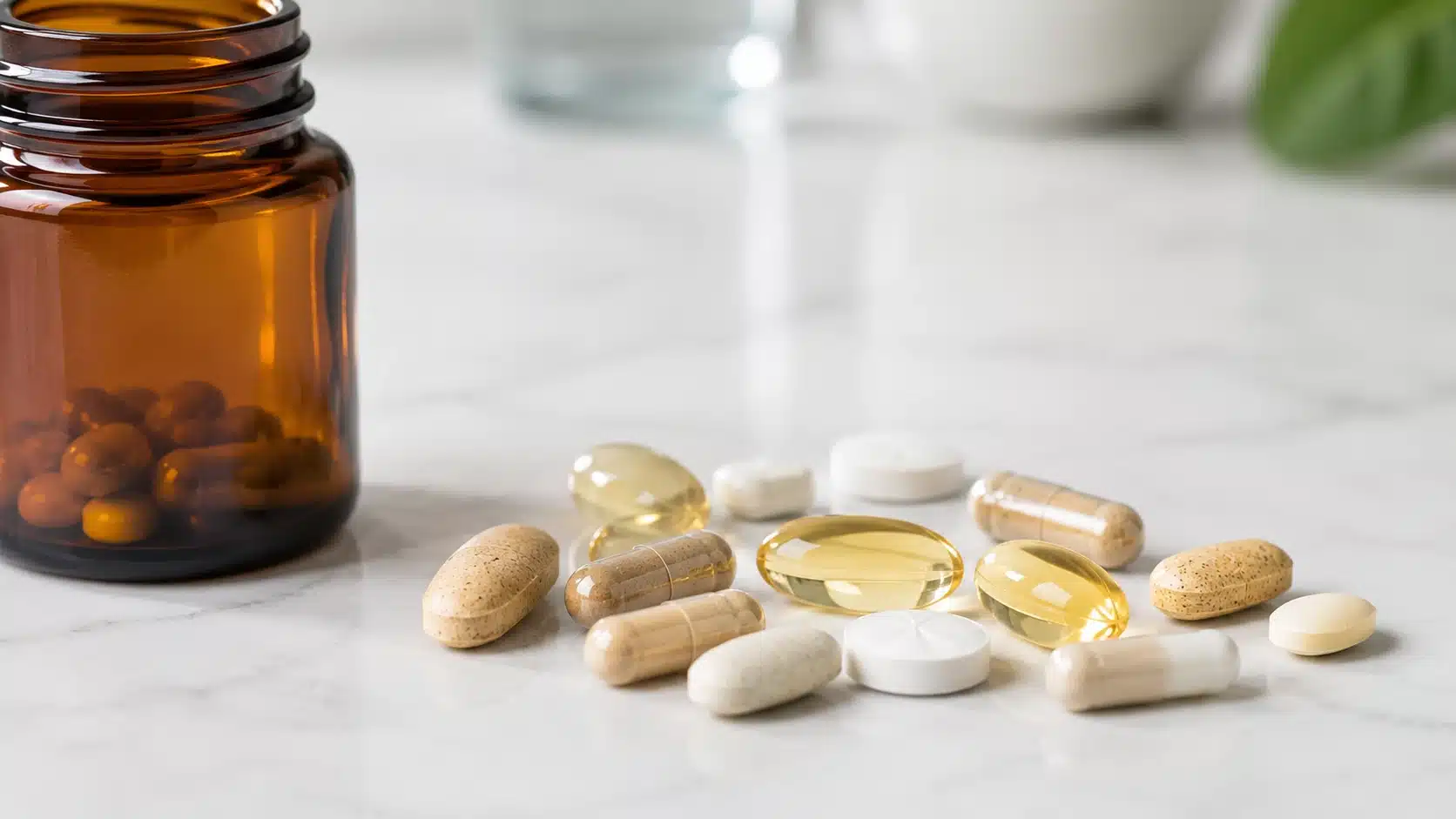
In Switzerland, confirmed food allergy affects 2 to 6% of the population according to aha! Swiss Allergy Centre, and the EuroPrevall study measured a 5.6% prevalence in adults in Zurich: among the highest in Europe. The French Anses has documented three cases of severe anaphylaxis linked to supplements containing bee products. In the world of the food supplement, the allergic risk rarely comes from the active ingredient itself: it is the botanical origin, the excipients and the contaminants that dominate. This article is part of the dossier on side effects of food supplements and specifies which ones are most often involved, how to recognise an allergic episode and how to read the Swiss labelling under the Ordinance on Food Information.
Which food supplements are most often involved in an allergic reaction?
Which categories concentrate the most documented cases?
Bee products, plant extracts and protein supplements concentrate the majority of cases reported in pharmacovigilance. An opinion from the French Anses documented three cases of severe allergies (severity score 3 on a scale of 4) attributable to supplements containing royal jelly, propolis or bee pollen[1]. The mechanism is a cross-sensitisation: people sensitised to birch pollen, grasses or composites (Asteraceae) can react to homologous proteins present in bee products, where the pollen is not always flagged on the label. A 2025 systematic review adds to the frequent suspects extracts of echinacea, tea tree and propolis, identified as emerging allergens in allergic contact dermatitis[2]. On the food ingredients side, protein formulas (whey, casein, powdered egg white, soya isolate) remain a classic cause in people already allergic to the source. Formulations based on fish, crustaceans (chitosan), celery, sesame seeds or lupin are also at risk for people already sensitised to these foods listed in Annex 6 of the Ordinance on Food Information[3].
Can you be allergic to vitamins themselves?
Yes, but it is rare: the documented reactions concern mainly the synthetic forms of vitamin B1 (thiamine), B12 (cobalamin) and certain topical vitamin derivatives. A 2021 review listed immediate IgE-mediated reactions to injectable thiamine, more rarely through the oral route[4]. Vitamin C (ascorbic acid) exceptionally causes true allergies: most reported cases are pseudo-allergic manifestations linked to the associated excipients or colourings. The 2025 review emphasises that vitamin derivatives used as excipients or preservatives (retinyl palmitate, tocopherols, niacinamide) become sensitising mainly in case of oxidation or chemical transformation of the product[2]. When an episode occurs after taking a vitamin complex, the allergy investigation first looks for a major food allergen in the excipients (lactose, wheat, soya, gelatine) before incriminating the vitamin itself.
Which hidden excipients can cause an allergic reaction?
What are the at-risk excipients in a capsule or a tablet?
The frequently involved excipients are lactose, wheat proteins, soya, animal gelatine and certain azo dyes. A 2025 Portuguese study analysed 308 medicines marketed in Portugal and identified gluten in 44.4% of analgesics containing paracetamol, and soya-derived excipients in 14% of NSAIDs: figures transposable to supplements that share the same excipient supply chains[5]. Gelatine of bovine or porcine origin, used for the capsule, can trigger reactions in people allergic to these animal proteins; fish gelatine should be avoided in case of allergy to fish. Azo dyes (E102 tartrazine, E110 sunset yellow FCF, E122 azorubine) are associated with pseudo-allergic reactions of the urticaria type, particularly in asthmatic patients or those suffering from chronic urticaria. The Ordinance on Food Information requires the mention in distinct characters (bold, italic or capital letters) of any ingredient appearing on the list of the 14 major allergens when added intentionally, including in excipients[3].
| Excipient | Function | At-risk population |
|---|---|---|
| Lactose | Filler / diluent | Cow’s milk protein allergy, lactose intolerance |
| Wheat starch | Binder | Coeliac disease, wheat allergy |
| Soya lecithin | Emulsifier | Soya allergy |
| Animal gelatine | Soft or hard capsule | Allergy to bovine, porcine or fish proteins |
| Azo dyes (E102, E110, E122) | Colouring | Asthma, chronic urticaria, salicylate intolerance |
Which unintentional contaminants can trigger an allergy?
Cross-contaminations in the factory, pollens in bee products and undeclared traces are documented causes of unexpected allergies. A cantonal chemists’ control campaign in 2020 covered nearly 500 prepackaged foodstuffs: five products containing undeclared milk were withdrawn from sale[6]. For those from the hive, the French Anses specifies that pollen is not systematically flagged on the labels, exposing atopic subjects to unpredictable reactions[1]. The Ordinance on Food Information provides for a declaration of unintentional mixing (“may contain traces of…”) above defined thresholds: 100 mg/kg for gluten proteins (gliadin), 1 g/kg for lactose and most other allergens, 10 g/kg for fully refined peanut oil[3]. This declaration is not mandatory below these thresholds, which justifies an increased caution for highly sensitive people. References manufactured outside the EU/Switzerland (online purchases) present a higher risk of contamination, the FSVO recommending the greatest caution for foreign products without labelling in a national official language.
Which symptoms signal an allergic reaction and what to do in case of reaction?
How to distinguish an allergy from a digestive intolerance?
Allergy involves the immune system (most often IgE) and appears within a few minutes to 2 hours after intake; intolerance does not mobilise immunity and arises later. Typical signs of an IgE-mediated allergy include urticaria, itching, swelling of the lips and tongue, rhinorrhoea, shortness of breath, vomiting and, in severe forms, anaphylactic shock with hypotension, loss of consciousness and bronchospasm[7]. Digestive intolerance, frequent with formulas based on magnesium oxide, iron or inulin, manifests through bloating, diarrhoea or nausea several hours after intake. Histamine intolerance, addressed by a 2025 review, is a third entity: an imbalance between dietary histamine and the capacity for breakdown by diamine oxidase, which mimics allergic symptoms without detectable IgE[8]. In practice, suspect an allergy if the reaction is fast, reproducible at each intake and affects the skin, mucous membranes or airways.
Life-threatening emergency
In case of breathing difficulty, swelling of the face or throat, or feeling unwell after taking a supplement, call 144 immediately. Anaphylaxis is a life-threatening emergency that may require an injection of adrenaline (EpiPen® type auto-injector if prescribed).
What to do and to whom to report an allergic reaction?
Immediate discontinuation of intake, keeping the packaging and reporting to the cantonal chemist are the three priority steps. The suspected supplement must be stopped without waiting, and the packaging with the complete composition kept to allow the allergist to identify the substance involved. A medical consultation is needed for assessment: skin test (prick test), specific IgE measurement, even oral provocation test in hospital if necessary[7]. On federal territory, the adverse effect must be reported to the competent cantonal chemist (executing authority of the food legislation); for borderline products falling under the Therapeutic Products Act, the report goes through Swissmedic via the Vigilance portal[9]. Tox Info Suisse (number 145, 24/7) intervenes for guidance in case of poisoning or severe reaction; a Tox Info report covering 2014-2019 listed the enquiries linked to these products. A definitive avoidance of the allergen and of any product containing traces of it is then prescribed, possibly accompanied by an emergency kit (antihistamine, corticosteroid, adrenaline auto-injector).
- Immediately stop taking the suspected supplement and keep the packaging with the complete composition of ingredients for medical identification.
- Consult a doctor or an allergist for assessment: skin prick test, specific IgE measurement, oral provocation test if necessary.
- Report the adverse effect to the competent cantonal chemist (foodstuff) or to Swissmedic via the Vigilance portal (therapeutic product).
- Put in place a strict avoidance of the identified allergen and, if prescribed, carry an adrenaline auto-injector.
How does Swiss labelling allow you to identify the allergens of a supplement?
What are the 14 sensitising ingredients mandatorily declared in Switzerland?
Annex 6 of the Ordinance on Food Information lists 14 categories of sensitising ingredients whose mention on the packaging is mandatory and visually highlighted. This list, aligned with the European regulation 1169/2011, includes: cereals containing gluten, crustaceans, eggs, fish, peanuts, soya, milk (including lactose), tree nuts, celery, mustard, sesame seeds, sulphites above 10 mg/kg, lupin and molluscs[3]. Any ingredient from these categories used intentionally in a supplement, including as an excipient, must appear clearly in the composition in contrasting characters (bold, italic or capital letters). aha! Swiss Allergy Centre confirms this obligation and recalls that the prevalence of confirmed food allergies in Switzerland is estimated at 2-6% of the population[10]. The EuroPrevall cohort measured a probable food allergy prevalence of 5.6% in adults in Zurich, the highest of the six European centres studied (ahead of Madrid at 3.3% and Lodz at 2.8%)[11]. For supplements bought abroad or online, the FSVO recommends particular vigilance because the labelling may not comply with Swiss requirements.
What does the mention “may contain traces of…” mean?
This mention covers unintentional contamination in the factory (accidental mixing) above thresholds defined by the Ordinance on Food Information. For gluten proteins (gliadin), the threshold is 100 mg/kg of the foodstuff ready to consume; for lactose, 1 g/kg; for fully refined peanut oil, 10 g/kg; for the other allergens, 1 g/kg[3]. Below these thresholds, the declaration of traces is not mandatory, which creates a residual risk zone for highly sensitive people. The Stretto 4 regulation introduced a derogation: declaration by group (“tree nuts” without specifying the species, “cereals containing gluten” without specifying wheat) remains possible only for the voluntary declaration of unintentional contamination below the threshold, peanut must always be declared separately[12]. The “Allergie Suisse” label, operated since 2006 by Service Allergie Suisse SA, a subsidiary of the aha! foundation: goes beyond the regulatory baseline: after independent control, it certifies the absence of the allergen concerned in the certified product[10]. People with severe allergies can refer to this label or contact the manufacturer directly to obtain a detailed technical sheet of possible contaminations.
Frequently asked questions about allergies to food supplements
Why can someone become allergic to a supplement taken for a long time?
Sensitisation is progressive: allergy requires prior exposure during which the immune system produces specific IgE. The first intakes remain silent, then a later exposure triggers the reaction. A 2021 review recalls that this sensitisation period can exceed several years for certain minor allergens. A change of manufacturer, excipient or formulation can also introduce an allergen absent from the original product.
How long after intake does an allergic reaction appear?
Between a few minutes and 2 hours for a typical IgE-mediated allergy. Urticaria, swelling of the lips or tongue and shortness of breath generally arise in the first 30 minutes. Delayed reactions (allergic contact dermatitis, eczema) can appear 24 to 72 hours after intake: this is the delay documented by a 2025 systematic review for skin reactions to supplements. A reaction that occurs several days later is probably not allergic in the strict sense.
Is an allergy to a food supplement permanent?
Yes, in the vast majority of cases. Avoidance of the identified allergen remains the rule after a confirmed diagnosis. Oral desensitisation (immunotherapy) exists for a few major food allergens such as peanut, but not for supplements in routine practice. According to aha! Swiss Allergy Centre, certain paediatric allergies to cow’s milk and eggs disappear in a few years, but adult allergies are generally persistent. A reintroduction must never take place without medical agreement.
Should you consult before starting a course of supplements?
Yes, in case of known allergic history, asthma, atopy or chronic treatment. The doctor or pharmacist can identify the at-risk ingredients on the label and suggest an alternative without the allergen concerned. The FSVO emphasises that food supplements do not require any prior marketing authorisation in Switzerland: the responsibility for safety lies with the manufacturer, and self-checking does not replace professional advice. For pregnant women, children and patients on multiple medicines, prior medical advice is particularly recommended.
Can children have an allergic reaction to a supplement?
Yes, and the risk is even higher in children. The prevalence of food allergies is higher in the young: aha! Swiss Allergy Centre recalls that cow’s milk, eggs, peanuts and tree nuts dominate paediatric allergies. Supplements containing these ingredients or their traces (excipients, capsules, chewing gums) must be avoided without paediatric advice. Coloured sweet syrups can contain azo dyes associated with pseudo-allergic reactions, particularly in asthmatic children.
Sources and references
12 sources- Anses, Opinion NUT2017SA0215, Three cases of allergy to food supplements containing pollens or bee products
- Ezzat RZ, Stirrat T, Nichols E, Ehrlich A. Nutritional Supplements and Cosmetic Formulations: A Review of Emerging Allergens
- FDHA Ordinance on Food Information (OFI), SR 817.022.16, Annex 6
- Calogiuri G, Garvey LH, Nettis E et al. Hypersensitivity to vitamins with a focus on immediate-type reactions: Food or drug allergy?
- Figueiredo A, Auxtero MD, Brás A, Casimiro A, Costa IM. Presence of gluten and soy derived excipients in medicinal products and their implications on allergen safety and labeling
- FSVO. Briefing Letter, Undeclared food allergens
- Baker MG, Wong LSY, Konstantinou GN, Nowak-Wegrzyn A. Food allergy endotypes revisited
- Jackson K, Busse W, Galvez-Martin P et al. Evidence for Dietary Management of Histamine Intolerance
- Swissmedic. Vigilance Portal, Reporting of adverse effects
- aha! Swiss Allergy Centre. Food allergies, overview
- Lyons SA, Burney PGJ, Ballmer-Weber BK et al. Food Allergy in Adults: Substantial Variation in Prevalence and Causative Foods Across Europe
- FSVO. Stretto 4, Explanatory report on the amendment of the Ordinance on Food Information of 8 December 2023